


Mitochondrial dysfunction and oxidative stress contribute to cross-generational toxicity of benzo(a)pyrene in Danio rerio
- PMID: 37722151
- PMCID: PMC10591944
- DOI: 10.1016/j.aquatox.2023.106658
Mitochondrial dysfunction and oxidative stress contribute to cross-generational toxicity of benzo(a)pyrene in Danio rerio
Abstract
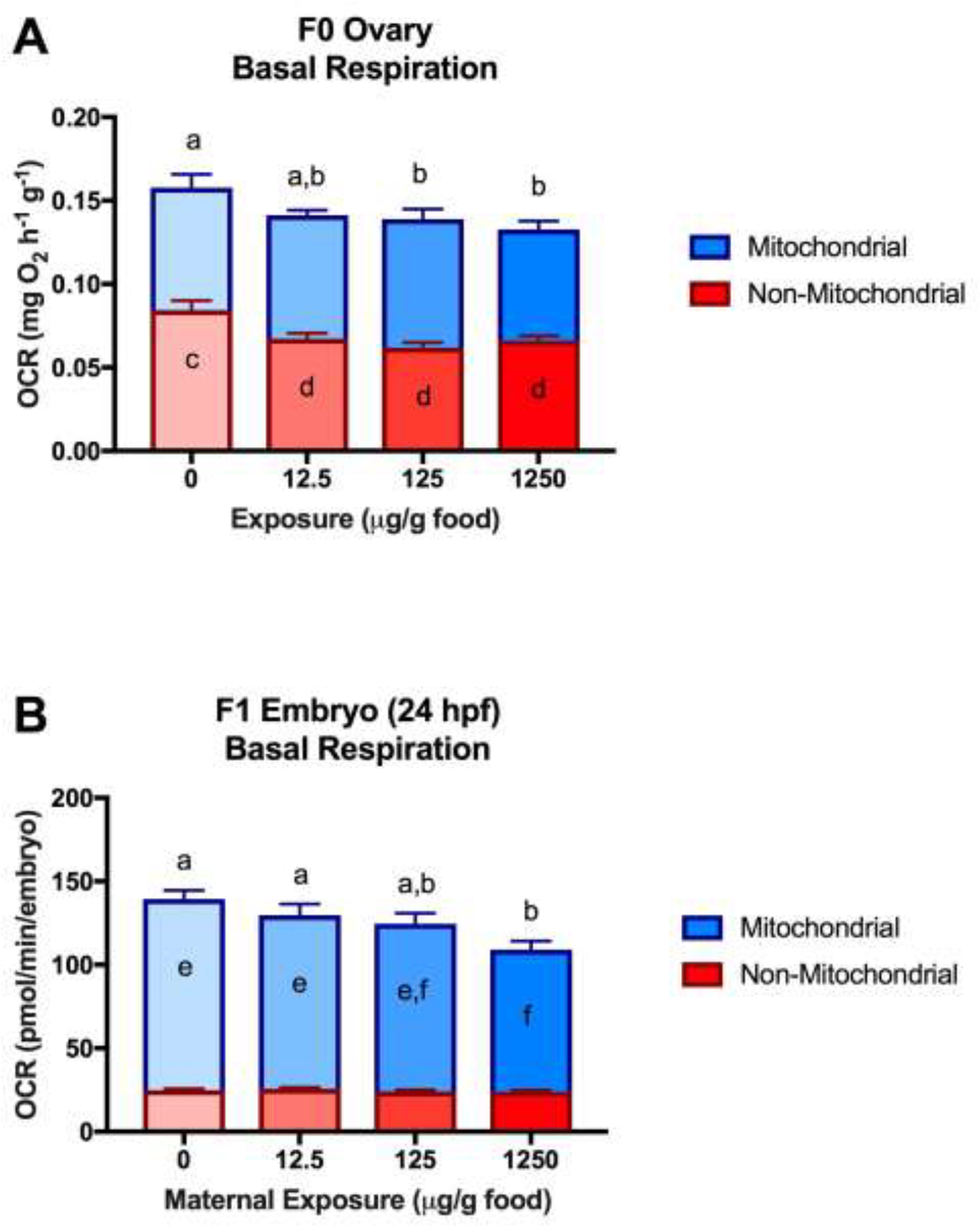
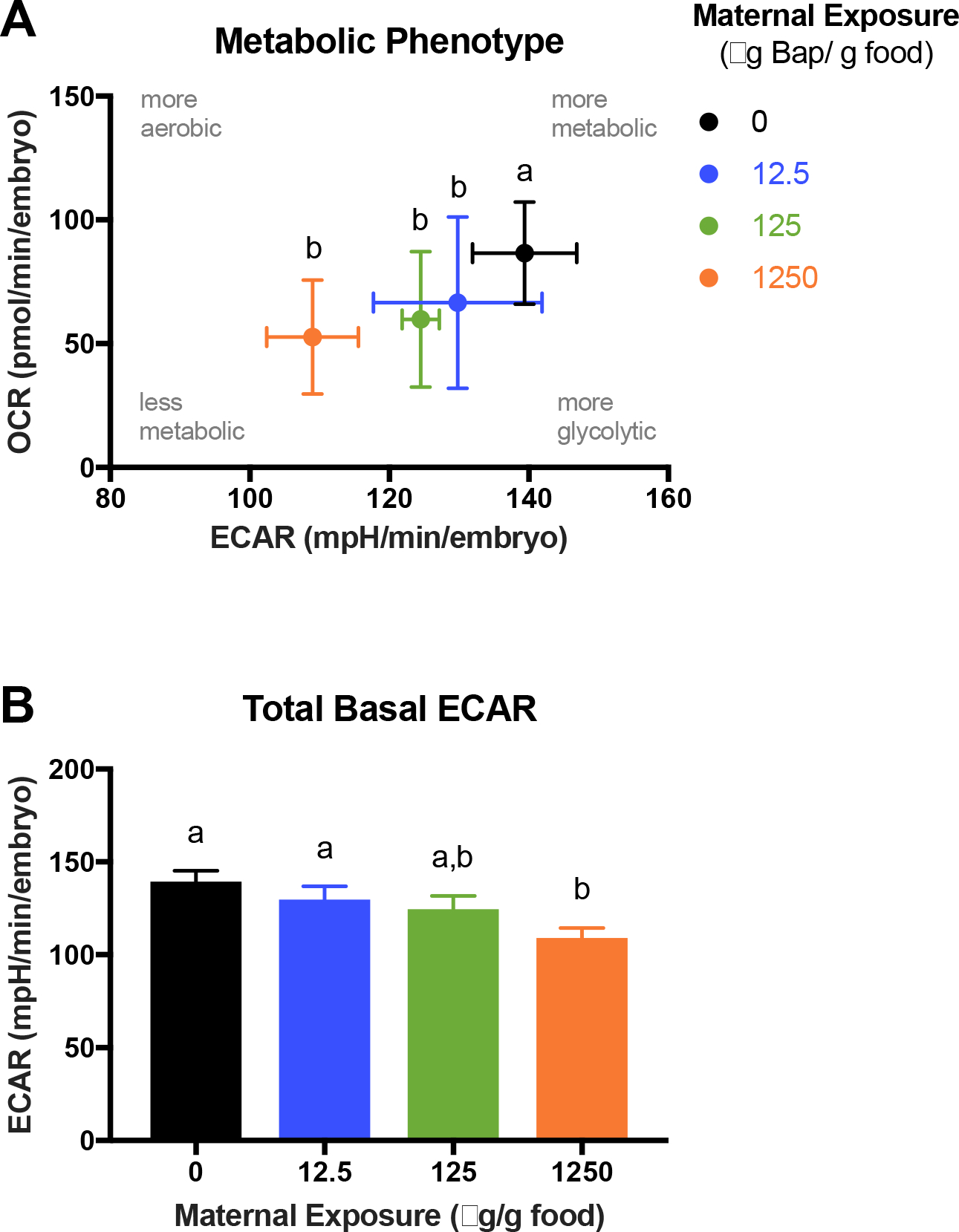
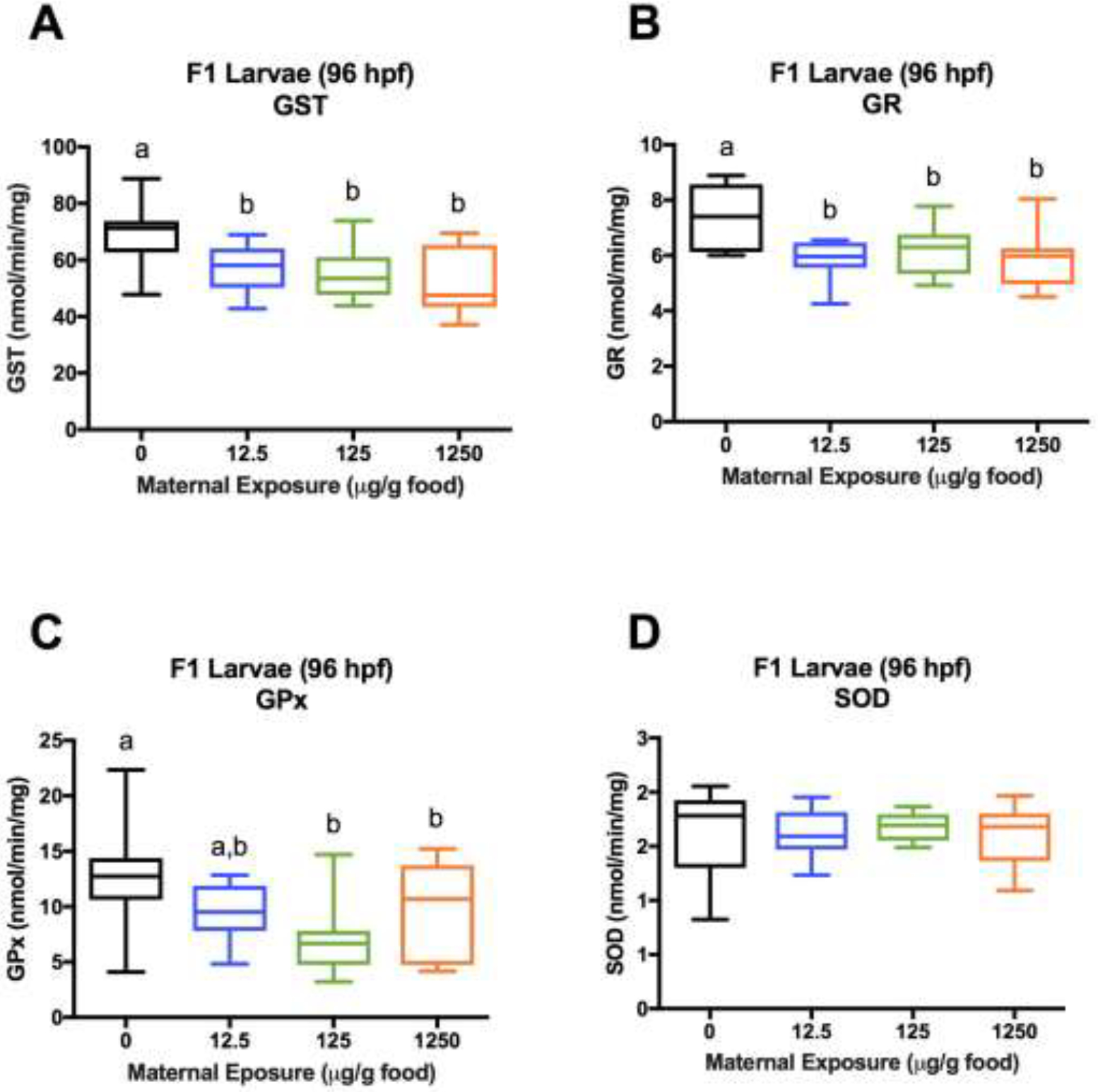
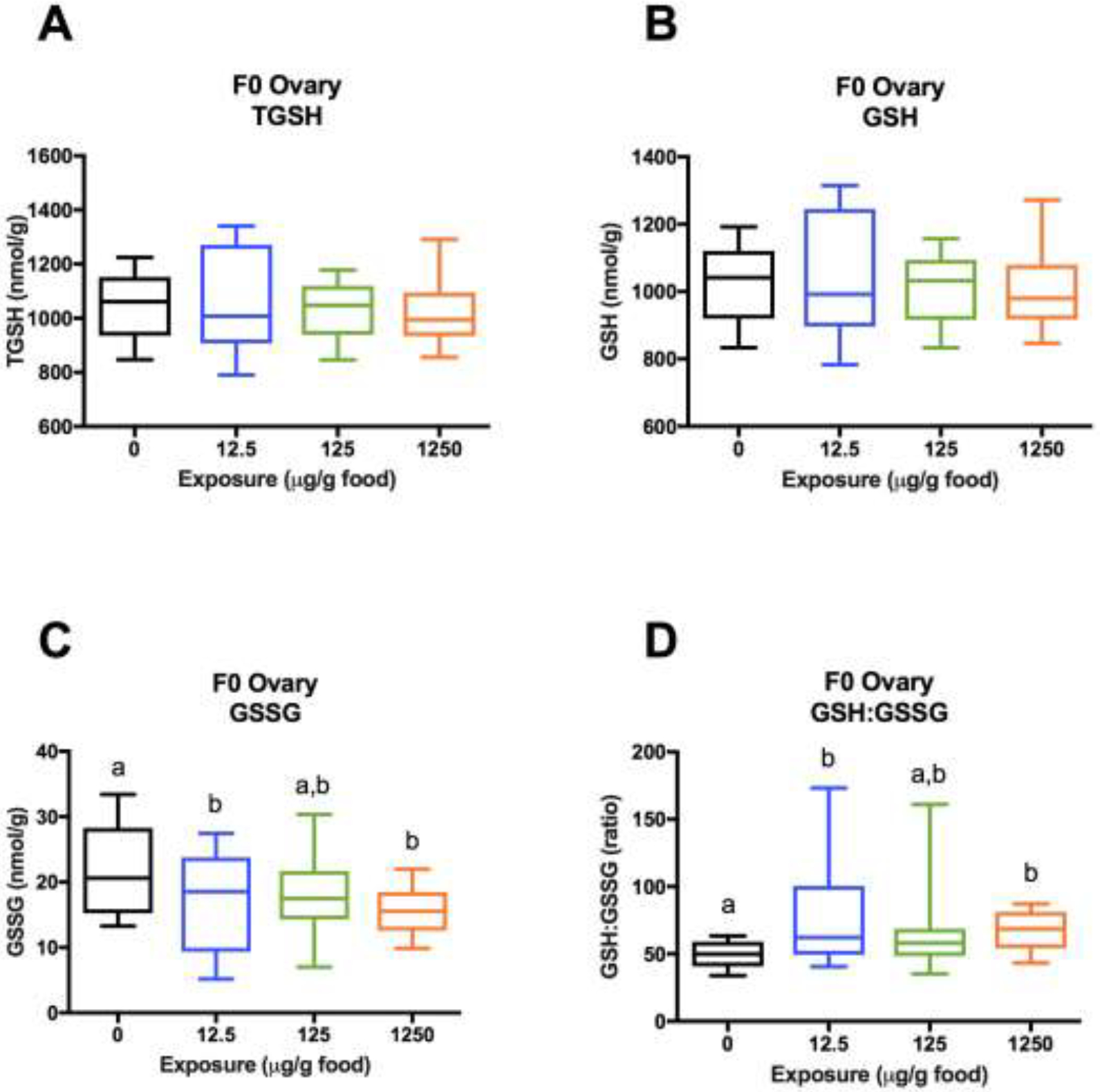
The potential for polycyclic aromatic hydrocarbons (PAHs) to have adverse effects that persist across generations is an emerging concern for human and wildlife health. This study evaluated the role of mitochondria, which are maternally inherited, in the cross-generational toxicity of benzo(a)pyrene (BaP), a model PAH and known mitochondrial toxicant. Mature female zebrafish (F0) were fed diets containing 0, 12.5, 125, or 1250 μg BaP/g at a feed rate of 1% body weight twice/day for 21 days. These females were bred with unexposed males, and the embryos (F1) were collected for subsequent analyses. Maternally-exposed embryos exhibited altered mitochondrial function and metabolic partitioning (i.e. the portion of respiration attributable to different cellular processes), as evidenced by in vivo oxygen consumption rates (OCRs). F1 embryos had lower basal and mitochondrial respiration and ATP turnover-mediated OCR, and increased proton leak and reserve capacity. Reductions in mitochondrial DNA (mtDNA) copy number, increases in mtDNA damage, and alterations in biomarkers of oxidative stress were also found in maternally-exposed embryos. Notably, the mitochondrial effects in offspring occurred largely in the absence of effects in maternal ovaries, suggesting that PAH-induced mitochondrial dysfunction may manifest in subsequent generations. Maternally-exposed larvae also displayed swimming hypoactivity. The lowest observed effect level (LOEL) for maternal BaP exposure causing mitochondrial effects in offspring was 12.5 µg BaP/g diet (nominally equivalent to 250 ng BaP/g fish). It was concluded that maternal BaP exposure can cause significant mitochondrial impairments in offspring.
Keywords: Benzo(a)pyrene; Cross-generational toxicity; Mitochondria; Oxidative stress; Polycyclic aromatic hydrocarbons; Zebrafish.
Copyright © 2023. Published by Elsevier B.V.
Conflict of interest statement
Declaration of Competing Interest The authors declare that they have no known competing financial interests or personal relationships that could have appeared to influence the work reported in this paper.
Figures






References
-
- Allen JF (1996). “Separate sexes and the mitochondrial theory of ageing.” J Theor Biol 180(2): 135–140. - PubMed
-
- Artuso L, Romano A, Verri T, Domenichini A, Argenton F, Santorelli FM and Petruzzella V (2012). “Mitochondrial DNA metabolism in early development of zebrafish (Danio rerio).” Biochim Biophys Acta 1817(7): 1002–1011. - PubMed
-
- Auer SK, Salin K, Rudolf AM, Anderson GJ and Metcalfe NB (2015). “The optimal combination of standard metabolic rate and aerobic scope for somatic growth depends on food availability.” Functional Ecology 29(4): 479–486.
-
- Bouhours-Nouet N, May-Panloup P, Coutant R, de Casson FB, Descamps P, Douay O, Reynier P, Ritz P, Malthièry Y and Simard G (2005). “Maternal smoking is associated with mitochondrial DNA depletion and respiratory chain complex III deficiency in placenta.” Am J Physiol Endocrinol Metab 288(1): E171–177. - PubMed
MeSH terms
Substances
Grants and funding
LinkOut - more resources
Full Text Sources
