


Optimal measurement of gastric emptying of solids in gastroparesis or functional dyspepsia: evidence to establish standard test
- PMID: 37726164
- PMCID: PMC10872889
- DOI: 10.1136/gutjnl-2023-330733
Optimal measurement of gastric emptying of solids in gastroparesis or functional dyspepsia: evidence to establish standard test
Abstract
Objective: Symptoms in gastroparesis (Gp) and functional dyspepsia (FD) overlap; using egg protein substitute to measure gastric emptying of solids (GES), ~40% of patients are reclassified from Gp to FD, and vice versa. Our aim was to assess inter-individual and intra-individual coefficients of variation (COV) in GES in symptomatic patients with Gp or FD with documented slow or normal GES, respectively.
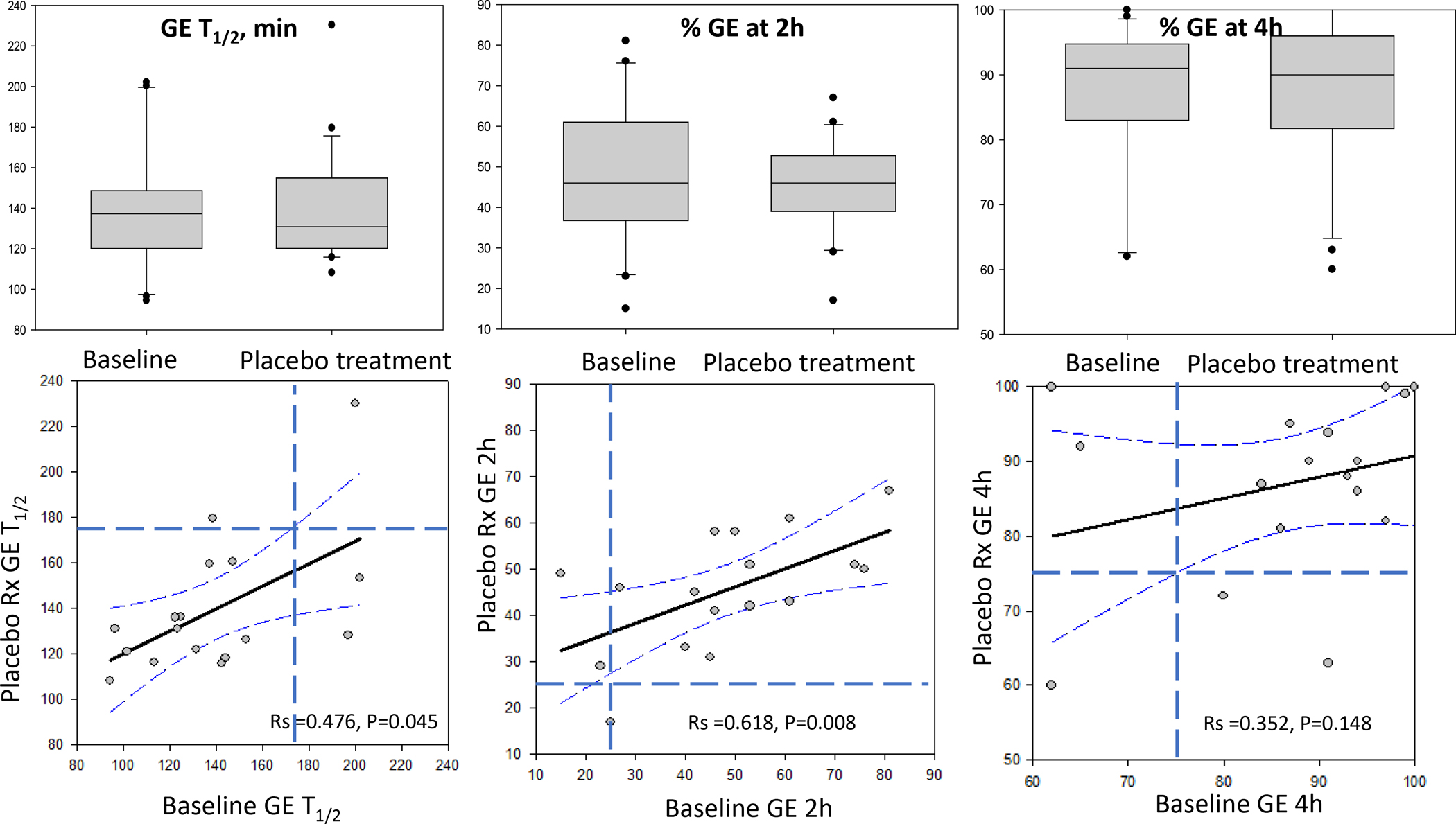
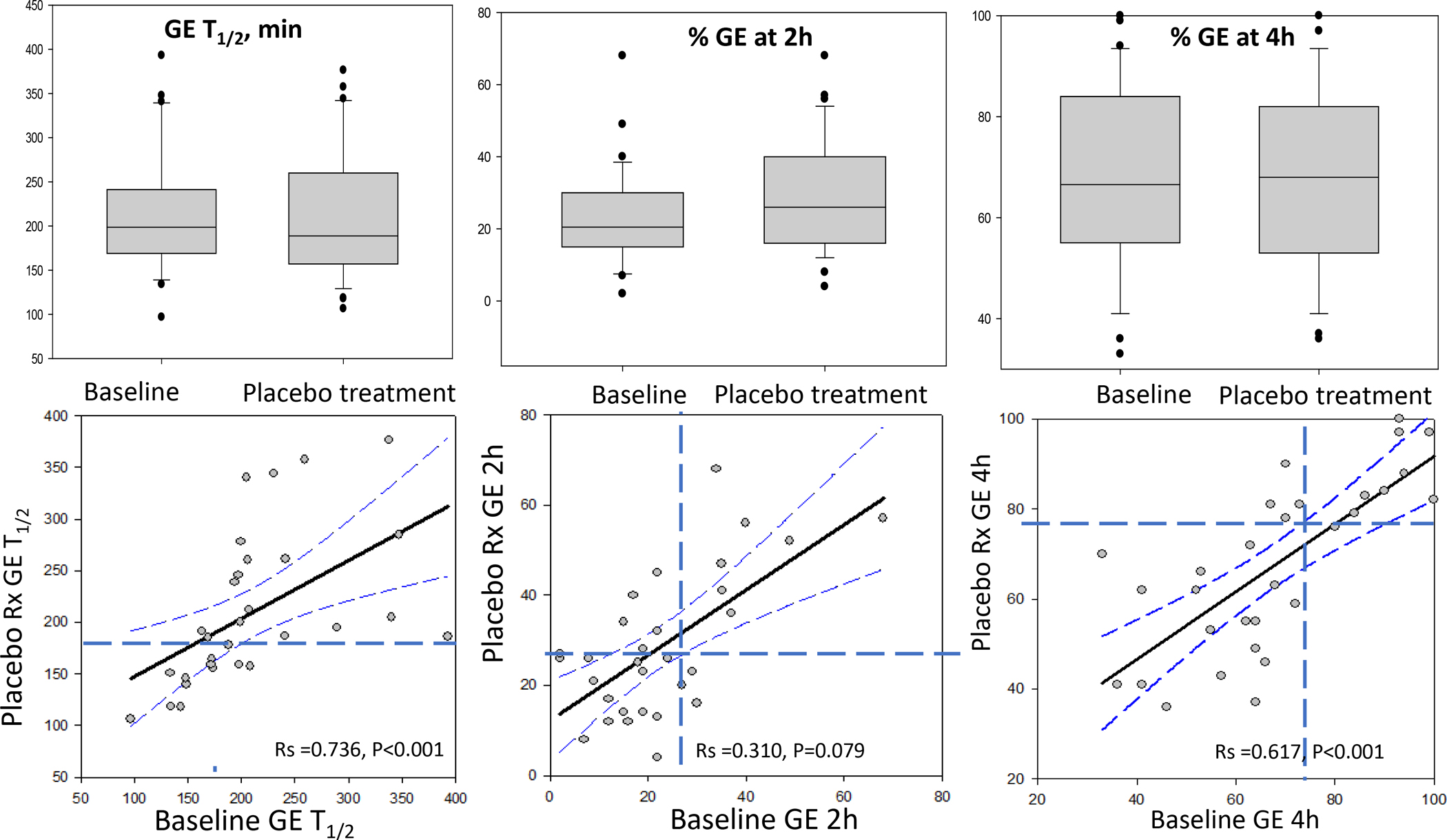
Design: Scintigraphic GES (T1/2 and GE% at 2 and 4 hours) using a 320 kcal real egg meal (30% fat) was tested in the following: single measurements in 20 patients with diabetes mellitus (10 each type 1 and type 2); repeat GES to estimate COVintra measured: 3 days apart in 9 Gp, 4 weeks apart in 21 Gp and 18 with FD with normal GE assigned to placebo and in 70 patients at 94.3 weeks (median) apart.
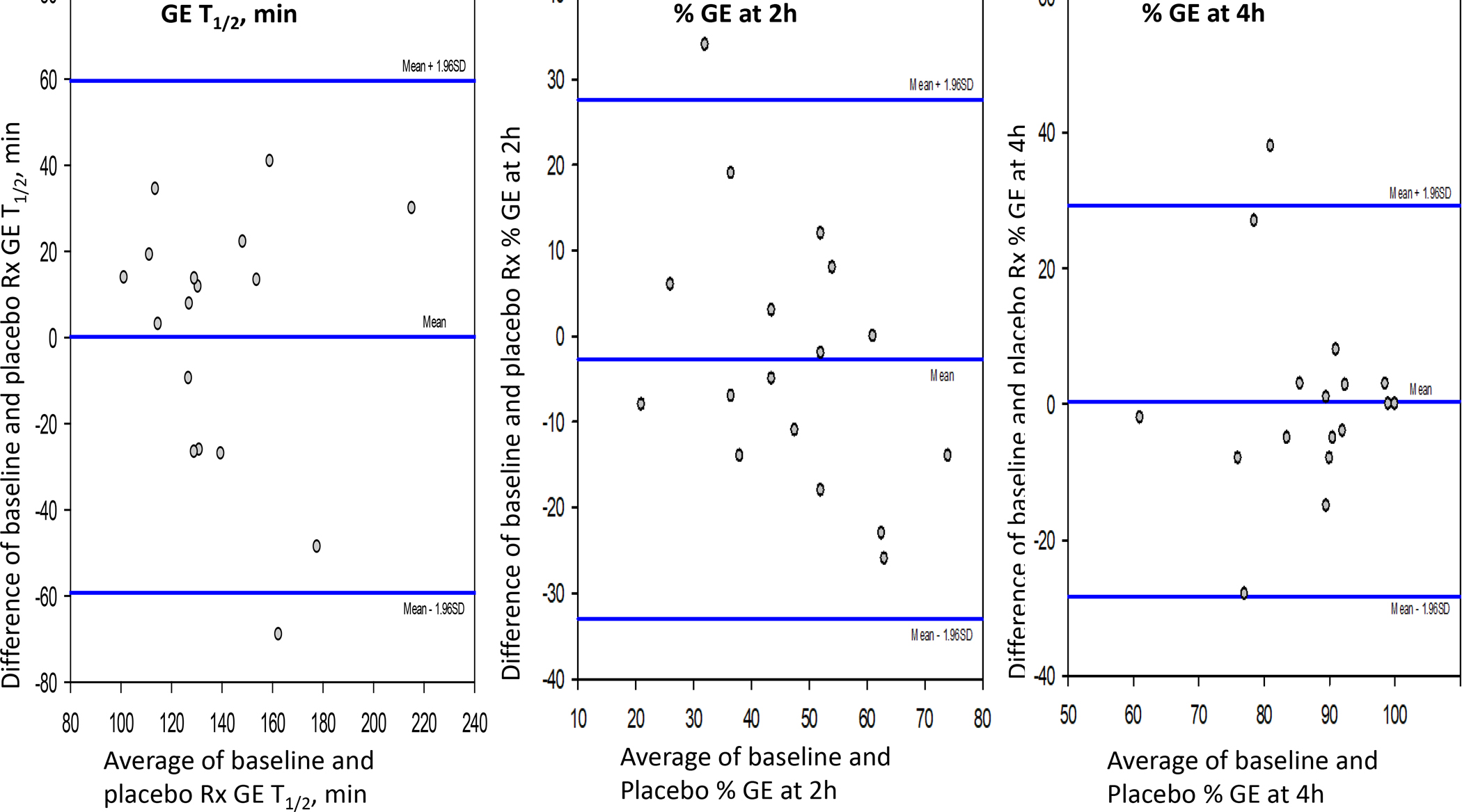
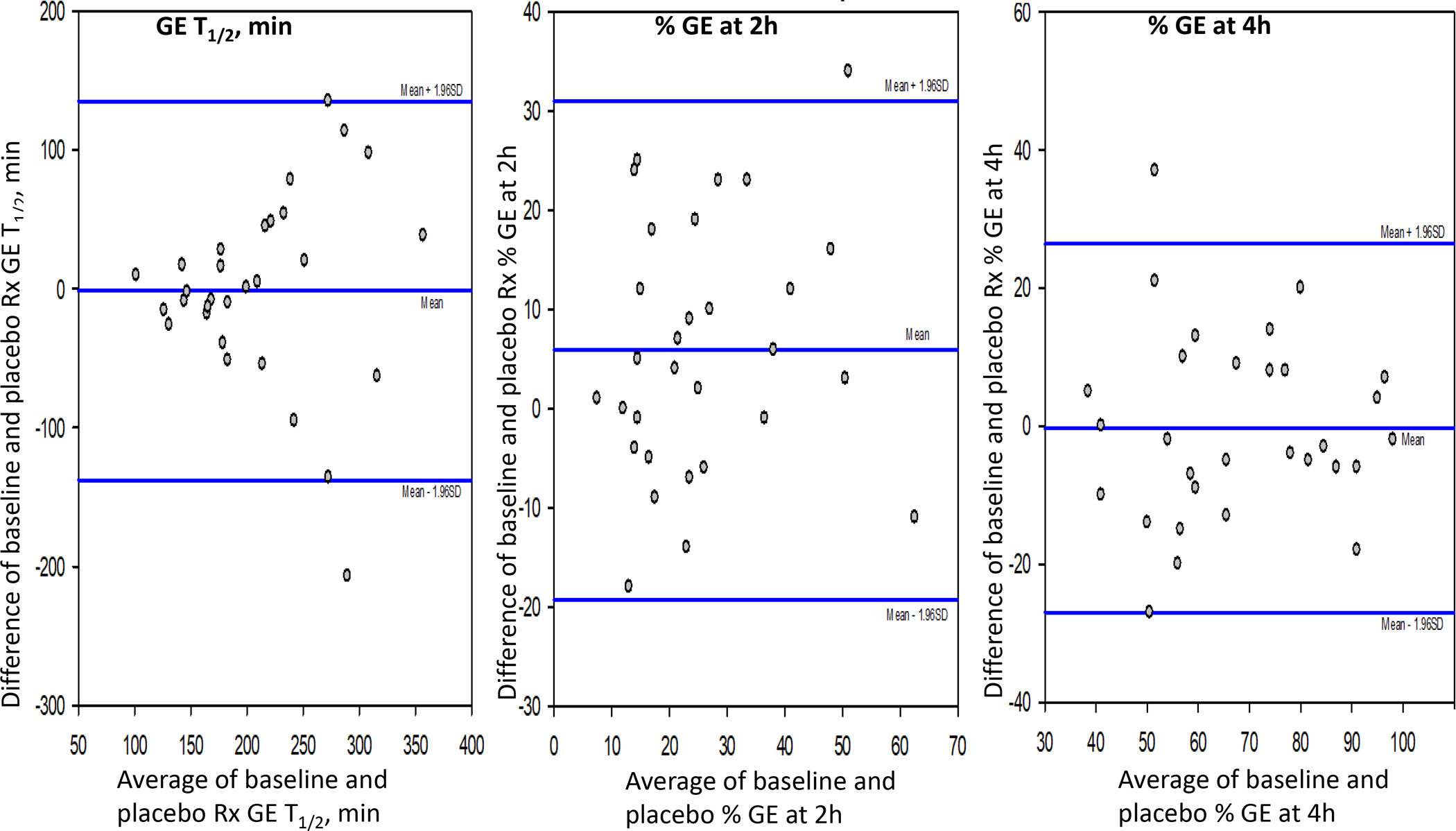
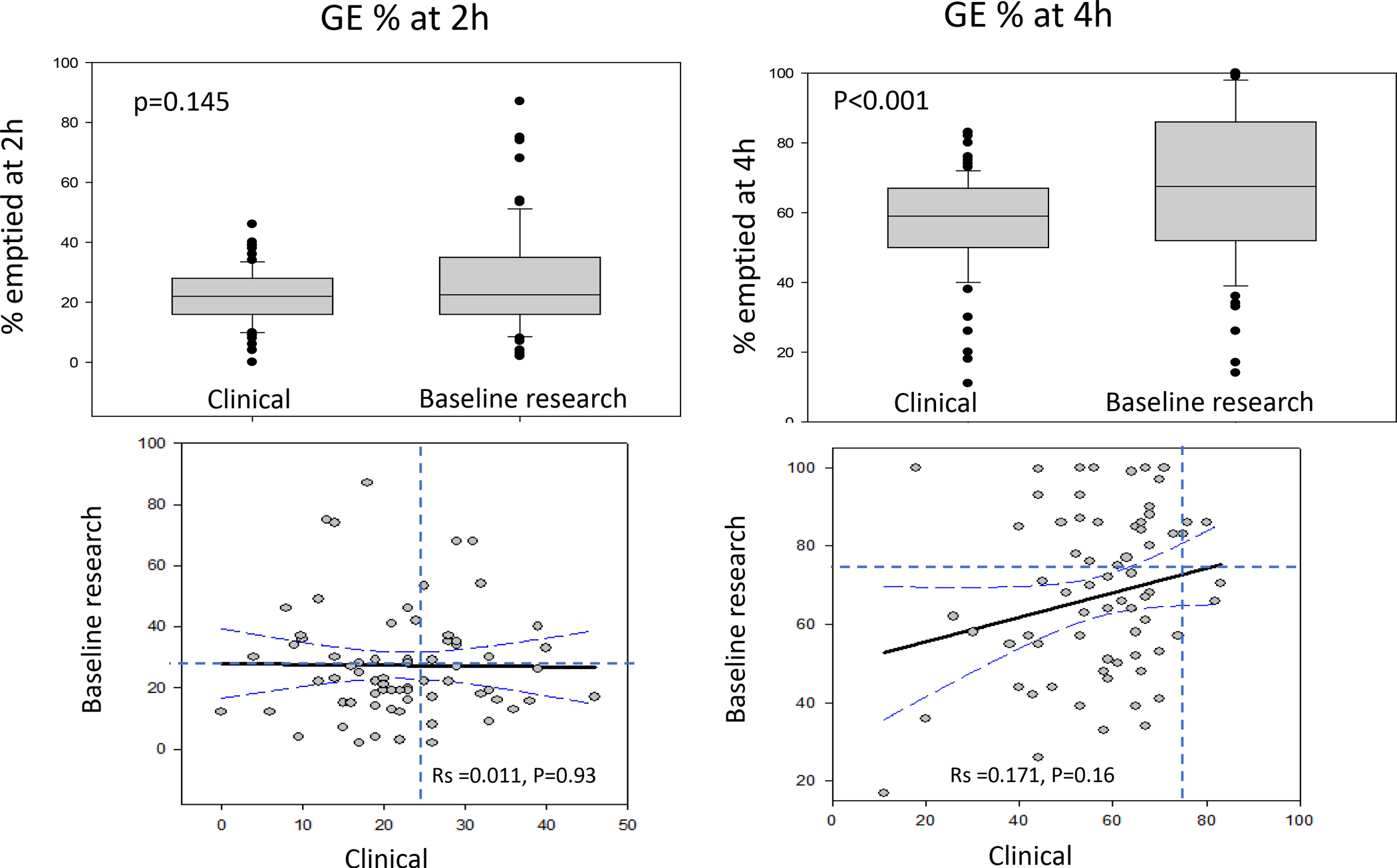
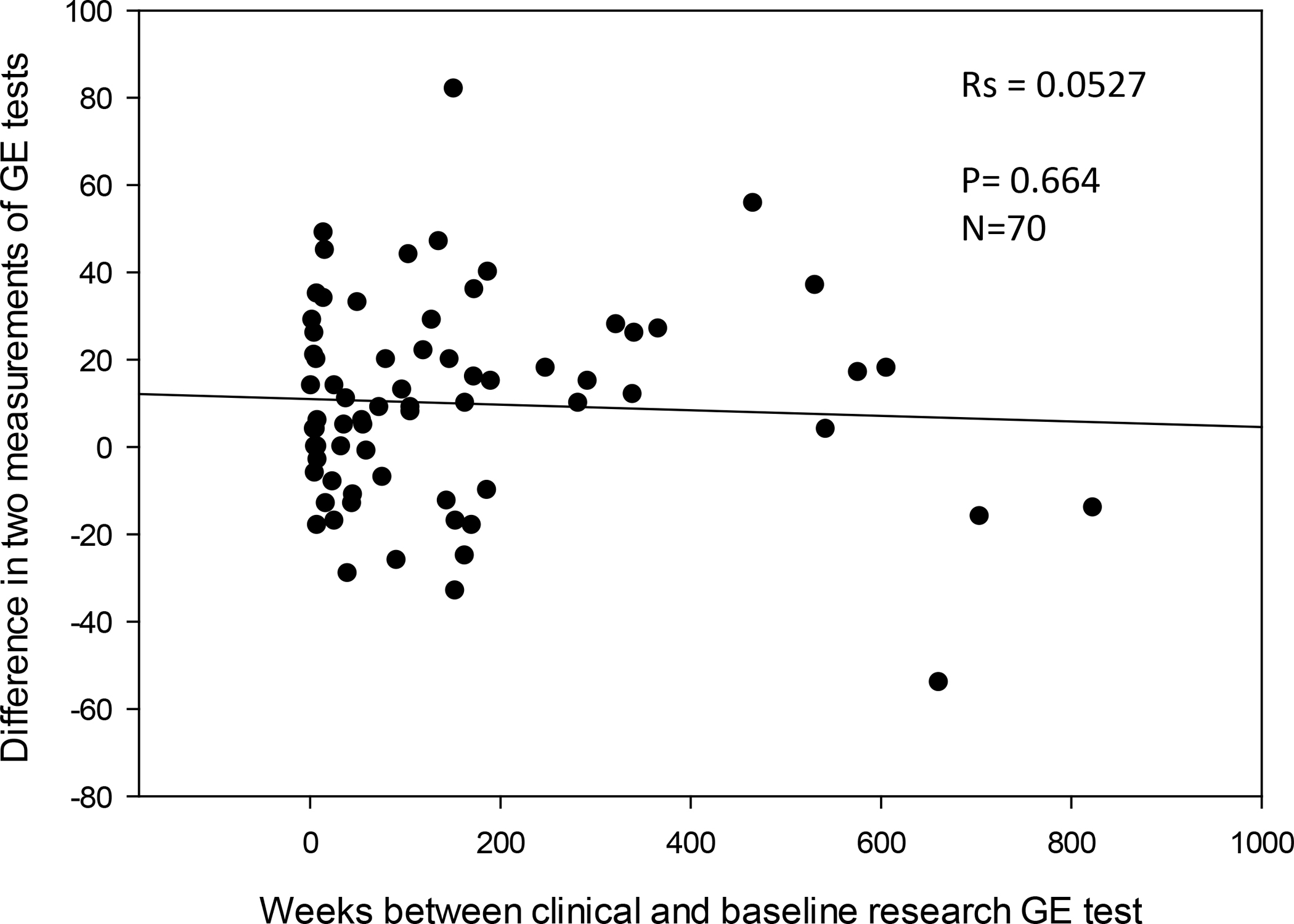
Results: COVinter for GE% at 4 hours and GE T1/2 were respectively 14.2% and 23.5% in FD and 27.5% and 33% in Gp; COVintra for GE% at 4 hours and GE T1/2 up to 4 weeks apart were 23.4% and 37.9% in FD and 20.1% and 33% in Gp. GE% at 2 hours showed less consistent results. However, >85% retained original diagnosis as normal or delayed. From clinical GES to baseline research for Gp group, repeat GES (after treatment) showed the COVintra for GE% at 4 hours was 37.3% at median 94.3 weeks, with 26/70 changed diagnoses.
Conclusion: The 320 kcal (30% fat) GES scintigraphic test provides consistent diagnosis in >85% and should be the standard test for suspected gastric emptying disorders.
Keywords: T1/2; emptying; percent; prokinetic.
© Author(s) (or their employer(s)) 2023. No commercial re-use. See rights and permissions. Published by BMJ.
Conflict of interest statement
Competing interests: MC is an Associate Editor of Gut. Data in these studies were acquired in previously published reports on the effects of relamorelin and felcisetrag, which were performed with funding from Rhythm Pharmaceuticals and Takeda, respectively and studies of effects of cannabidiol.
Figures
References
-
- Stanghellini V, Tosetti C, Paternico A, et al. Risk indicators of delayed gastric emptying of solids in patients with functional dyspepsia. Gastroenterology 1996;110:1036–1042. - PubMed
-
- Janssen P, Harris MS, Jones M, et al. The relation between symptom improvement and gastric emptying in the treatment of diabetic and idiopathic gastroparesis. Am J Gastroenterol 2013;108:1382–1391. - PubMed
-
- Vijayvargiya P, Jameie-Oskooei S, Camilleri M, et al. Association between delayed gastric emptying and upper gastrointestinal symptoms: a systematic review and meta-analysis. Gut 2019;68:804–813. - PubMed
-
- Vijayvargiya P, Camilleri M, Chedid V, et al. Effects of promotility agents on gastric emptying and symptoms: a systematic review and meta-analysis. Gastroenterology 2019;156:1650–1660. - PubMed
Publication types
MeSH terms
Grants and funding
LinkOut - more resources
Full Text Sources
Medical
