


E-scooter-related orthopedic injuries and the treatments applied: are these scooters a new means of transportation or a new source of trauma?
- PMID: 37726669
- PMCID: PMC10510217
- DOI: 10.1186/s12873-023-00873-z
E-scooter-related orthopedic injuries and the treatments applied: are these scooters a new means of transportation or a new source of trauma?
Abstract
Introduction: E-scooters have become increasingly popular in Turkey due to easy accessibility. In parallel with this, the number of e-scooter-related injuries has increased gradually. The aim of this study was to determine the types of e-scooter-related orthopedic injuries, to evaluate hospitalization and surgical treatments, and to investigate the loss of work of patients and the burden incurred by the healthcare system.
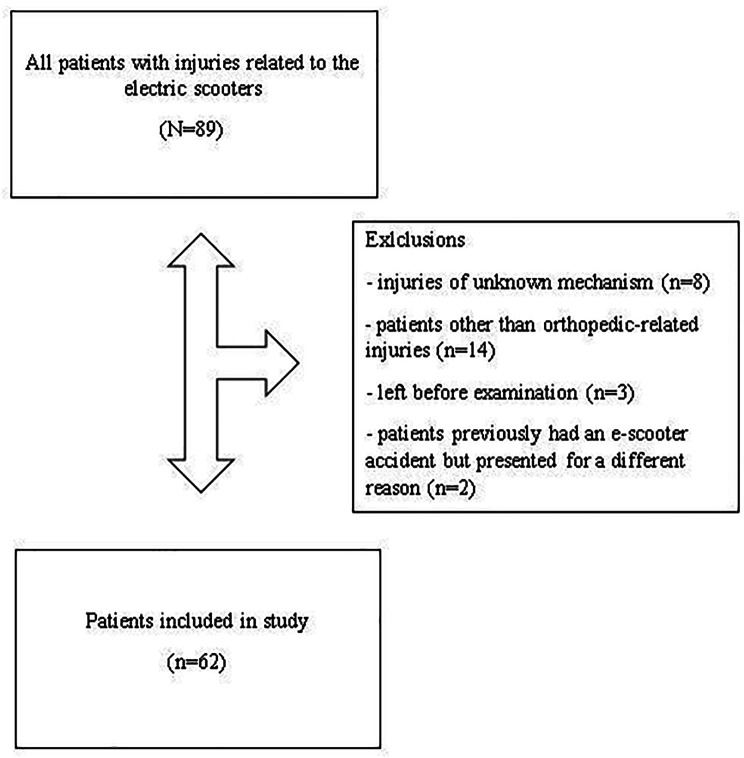
Materials and methods: This retrospective multicentre study included all orthopaedic referrals, who were admitted to two major trauma departments in Diyarbakır from January 2022 to July 2022. Patient data were analyzed, including demographic characteristics, injury pattern, types of injury and subsequent treatment.
Results: In a total of 62 patients, 105 orthopaedic injuries were identified, comprising 72.5% males and 27.5% females, with a median age of 34.21 years. Fifty-six (90.3%) patients were riders, and six were pedestrians. All associated e-scooters were rented. There were 44 fractures (41.9% of the total recorded injuries) including 8 (12.9%) open fractures. Surgery was required by 32 patients (51.6%) and 35 (56.4%) required hospital admission leading to hospitalization of 3.7 days on average. The average job loss of working patients after injury was determined as 2.4 months. Helmet use was detected in 6.4% of the e-scooter users, but no other protective equipment was detected in any of the patients. Furthermore, 19,3% of the patients had a blood alcohol level of > 10 mg/dl.
Conclusions: The injuries that may result from an e-scooter accident can have long-term hospitalization and long-term job loss in the community. This imposes a significant financial burden on the national healthcare system and adversely affects public health. There is a need for precautions to be implemented such as infrastructure organisation, increased awareness of motor vehicle riders and e-scooter riders, and increased enforcement of rule compliance including not using e scooters after alcohol consumption and the use of protective equipment.
Keywords: E-scooter; Electric scooter; Fracture; Injury; Orthopaedic; Trauma.
© 2023. BioMed Central Ltd., part of Springer Nature.
Conflict of interest statement
The authors have no relevant financial or non-financial interests to disclose. Servet İğrek and İbrahim Ulusoy have no conflicts of interest to declare that are relevant to the content of this article.
The authors declare no competing interests.
Figures
References
-
- Brownson AB, Fagan PV, Dickson S, Civil ID. Electric scooter injuries at Auckland City Hospital. N Z Med J. 2019;132(1505):62–72. - PubMed
-
- Moftakhar T, Wanzel M, Vojcsik A, Kralinger F, Mousavi M, Hajdu S, et al. Incidence and severity of electric scooter related injuries after introduction of an urban rental programme in Vienna: a retrospective multicentre study. Arch Orthop Trauma Surg. 2021;141(7):1207–13. doi: 10.1007/s00402-020-03589-y. - DOI - PMC - PubMed
Publication types
MeSH terms
Substances
LinkOut - more resources
Full Text Sources
