


The Impact of Surgical Timing of Hip Fracture on Mortality: Do the Cause and Duration of Delay Matter?
- PMID: 37727296
- PMCID: PMC10505843
- DOI: 10.5371/hp.2023.35.3.206
The Impact of Surgical Timing of Hip Fracture on Mortality: Do the Cause and Duration of Delay Matter?
Abstract
Purpose: Delay in performance of hip fracture surgery can be caused by medical and/or administrative reasons. Although early surgery is recommended, it is unclear what constitutes a delayed surgery and whether the impact of delayed surgery can differ depending on the reason for the delay.
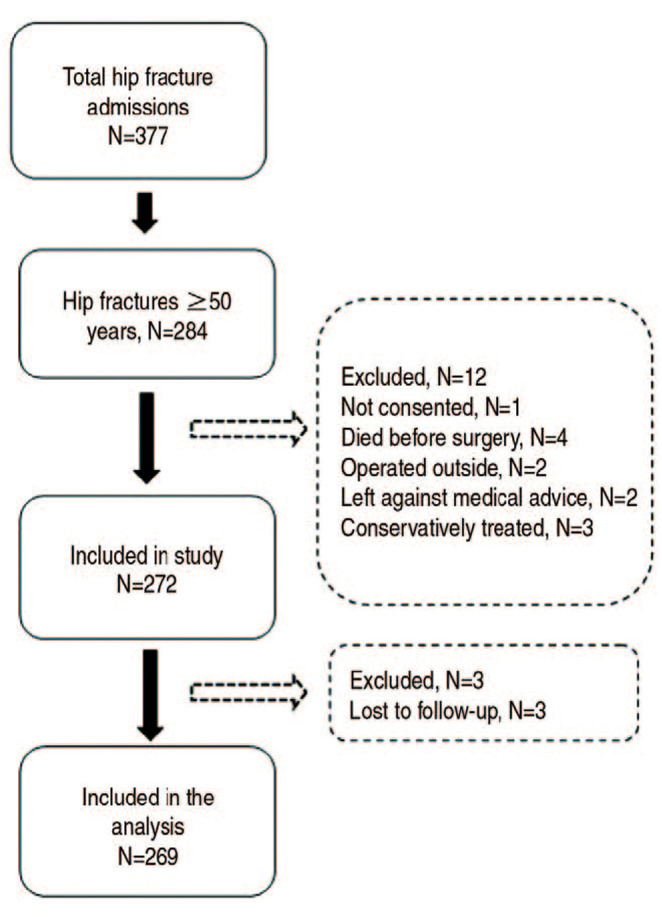
Materials and methods: A total of 269 consecutive hip fracture patients over 50 years of age who underwent surgery were prospectively enrolled. They were divided into two groups: early and delayed (time from reaching the hospital to surgery less than or more than 48 hours). Patients were also categorized as fit or unfit based on anesthetic fitness. One-year mortality was recorded, and regression analyses were performed to assess the impact of delay on mortality.
Results: A total of 153 patients (56.9%) had delayed surgery with a mean time to surgery of 87±70 hours. A total of 115 patients (42.8%) were considered medically fit to undergo surgery. No difference in one-year mortality was observed between patients with early surgery and those with delayed surgery (P=0.854). However, when assessment of the time to surgery was performed in a continuous manner, mortality increased with prolonged time to surgery, particularly in unfit patients, and higher mortality was observed when the delay exceeded six days (fit: P=0.117; unfit: P=0.035).
Conclusion: The effect of delay on mortality was predominantly observed in patients who were not considered medically fit, suggesting that surgical delays might have a greater impact on patients with medical reasons for delay.
Keywords: Delay; Hip fractures; Mortality; Preoperative care; Time factors.
Copyright © 2023 by Korean Hip Society.
Conflict of interest statement
CONFLICT OF INTEREST: No potential conflict of interest relevant to this article was reported.
Figures


References
-
- Handoll HH, Farrar MJ, McBirnie J, Tytherleigh-Strong G, Milne AA, Gillespie WJ. Heparin, low molecular weight heparin and physical methods for preventing deep vein thrombosis and pulmonary embolism following surgery for hip fractures. Cochrane Database Syst Rev. 2002;(4):CD000305. doi: 10.1002/14651858.CD000305. - DOI - PubMed
LinkOut - more resources
Full Text Sources
