


Development of a risk score to increase detection of severe alpha-1 antitrypsin deficiency
- PMID: 37727673
- PMCID: PMC10505949
- DOI: 10.1183/23120541.00302-2023
Development of a risk score to increase detection of severe alpha-1 antitrypsin deficiency
Abstract
Background: Alpha-1 antitrypsin deficiency (AATD) is an under-recognised genetic cause of chronic obstructive lung disease, and many fewer cases than estimated have been identified. Can a reported respiratory and hepatic disease history from a large AATD testing database be used to stratify a person's risk of severe AATD?
Methods: We analysed data extracted from the AATD National Detection Program. Demographics and medical history were evaluated to predict AATD PI*ZZ genotype. Logistic regression and integer programming models identified predictors and obtained risk scores. These were internally validated on a subset of the data.
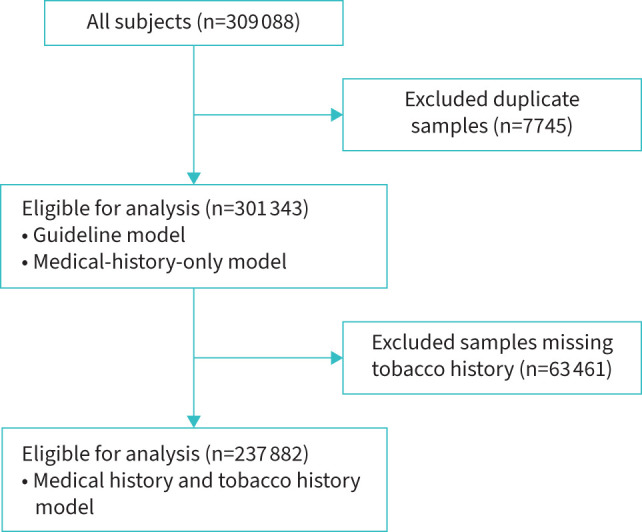
Results: Out of 301 343 subjects, 1529 (0.5%) had PI*ZZ genotype. Predictors of severe AATD were asthma, bronchitis, emphysema, allergies, bronchiectasis, family history of AATD, cirrhosis, hepatitis and history of abnormal liver function tests. The derived model establishes a subject's risk of severe AATD, and scores ≥0 had an estimated risk of 0.41%, sensitivity 84.62% and specificity 24.32%. A model simulating guideline recommendations had an estimated risk of 0.51% with a sensitivity of 37.98% and specificity 46.60%. By recommending screening for scores ≥0, we estimate that more subjects would be screened (75.7% versus 53.4%) and detected (84.6% versus 58.2%) compared to a guideline-simulated model.
Conclusion: This medical history risk model is a useful predictive tool to detect subjects at greater risk of having severe AATD and improves sensitivity of detection. Scores <0 are at lower risk and may need not be screened; testing is recommended for scores ≥0 and consistent with current guidelines.
Copyright ©The authors 2023.
Conflict of interest statement
Conflict of interest: None declared.
Figures


References
LinkOut - more resources
Full Text Sources
Research Materials
Miscellaneous