


The effect of cytosorb® application on kidney recovery in critically ill patients with severe rhabdomyolysis: a propensity score matching analysis
- PMID: 37728069
- PMCID: PMC10512801
- DOI: 10.1080/0886022X.2023.2259231
The effect of cytosorb® application on kidney recovery in critically ill patients with severe rhabdomyolysis: a propensity score matching analysis
Abstract
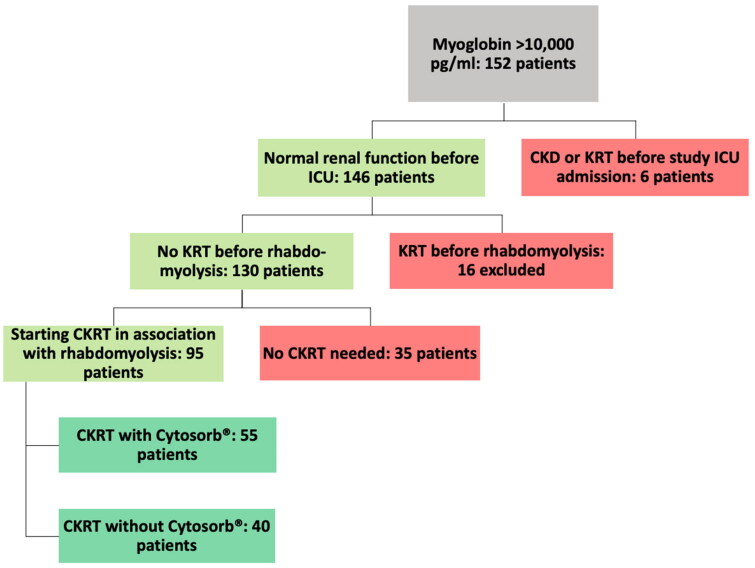
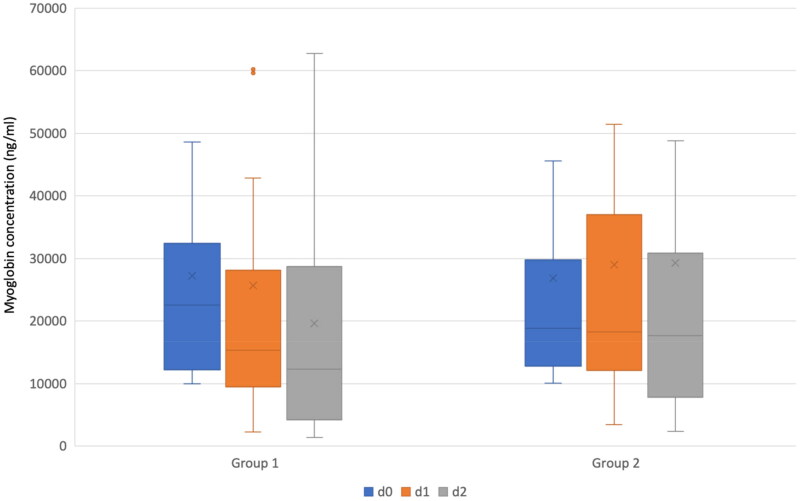
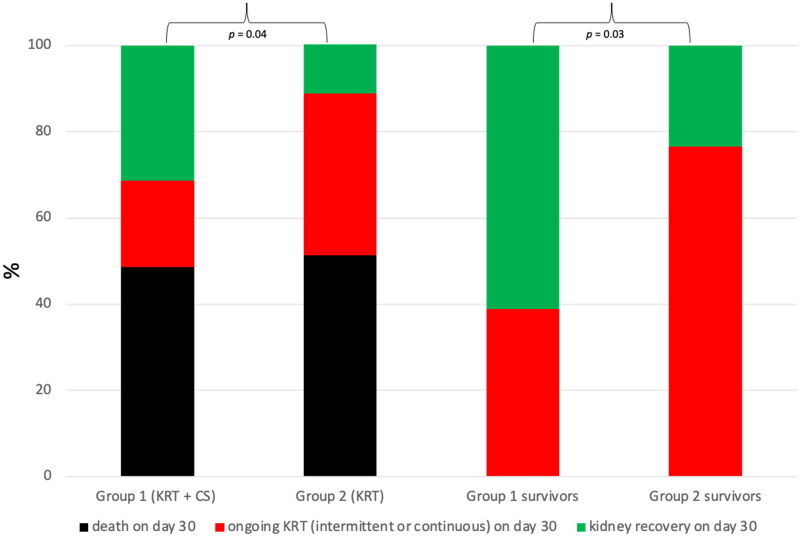
Severe rhabdomyolysis frequently results in acute kidney injury (AKI) due to myoglobin accumulation with the need of kidney replacement therapy (KRT). The present study investigated whether the application of Cytosorb® (CS) led to an increased rate of kidney recovery in patients with KRT due to severe rhabdomyolysis. Adult patients with a myoglobin-concentration >10,000 ng/ml and KRT were included from 2014 to 2021. Exclusion criteria were chronic kidney disease and CS-treatment before study inclusion. Groups 1 and 2 were defined as KRT with and without CS, respectively. The primary outcome parameter was independence from KRT after 30 days. Propensity score (PS) matching was performed (predictors: myoglobin, SAPS-II, and age), and the chi2-test was used. 35 pairings could be matched (mean age: 57 vs. 56 years; mean myoglobin: 27,218 vs. 26,872 ng/ml; mean SAPS-II: 77 vs. 76). The probability of kidney recovery was significantly (p = .04) higher in group 1 (31.4 vs. 11.4%, mean difference: 20.0%, odds ratio (OR): 3.6). Considering patients who survived 30 days, kidney recovery was also significantly (p = .03) higher in patients treated with CS (61.1 vs. 23.5%, mean difference: 37.6%, OR: 5.1). In conclusion, the use of CS might positively affect renal recovery in patients with severe rhabdomyolysis. A prospective randomized controlled trial is needed to confirm this hypothesis.
Keywords: Rhabdomyolysis; blood purification; cytosorb®; kidney recovery; kidney replacement therapy; myoglobin.
Conflict of interest statement
No potential conflict of interest was reported by the author(s).
Figures
References
MeSH terms
Substances
LinkOut - more resources
Full Text Sources
Research Materials
