


Metagenome meta-analysis reveals an increase in the abundance of some multidrug efflux pumps and mobile genetic elements in chemically polluted environments
- PMID: 37728942
- PMCID: PMC10617411
- DOI: 10.1128/aem.01047-23
Metagenome meta-analysis reveals an increase in the abundance of some multidrug efflux pumps and mobile genetic elements in chemically polluted environments
Abstract
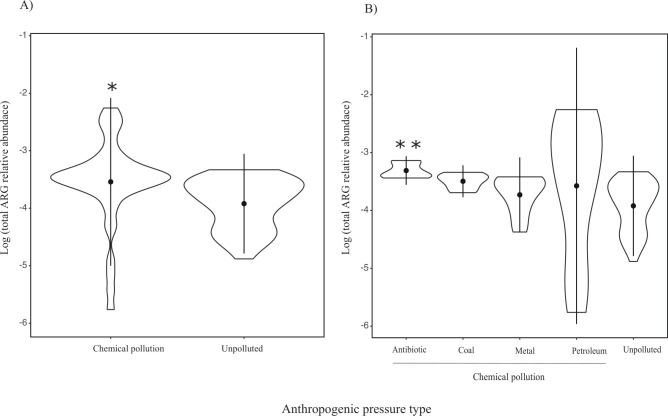
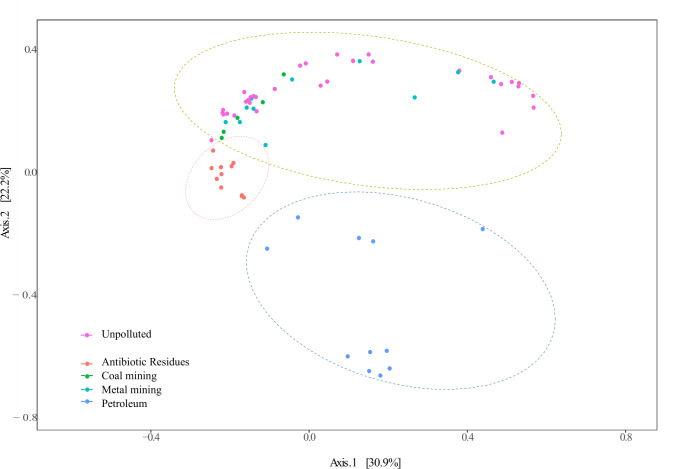
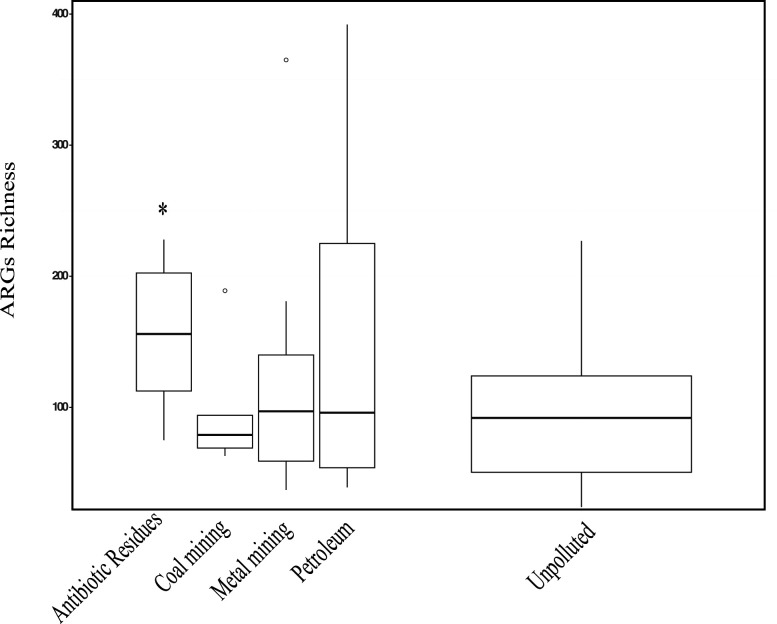
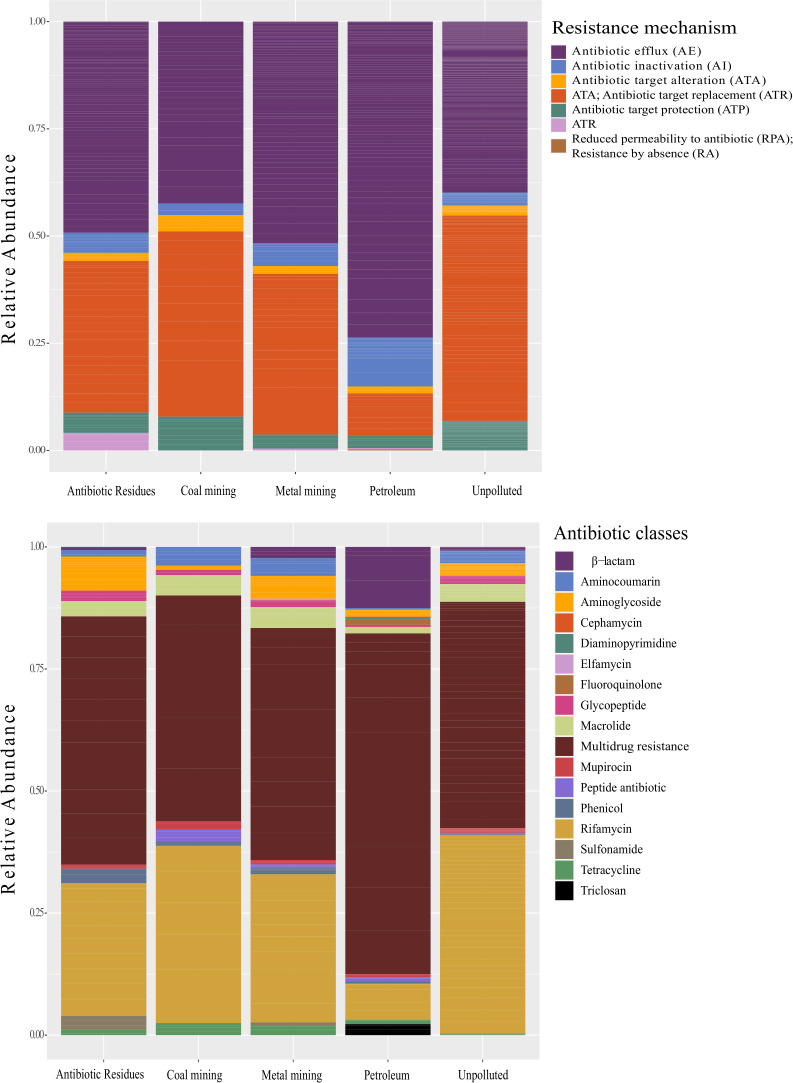
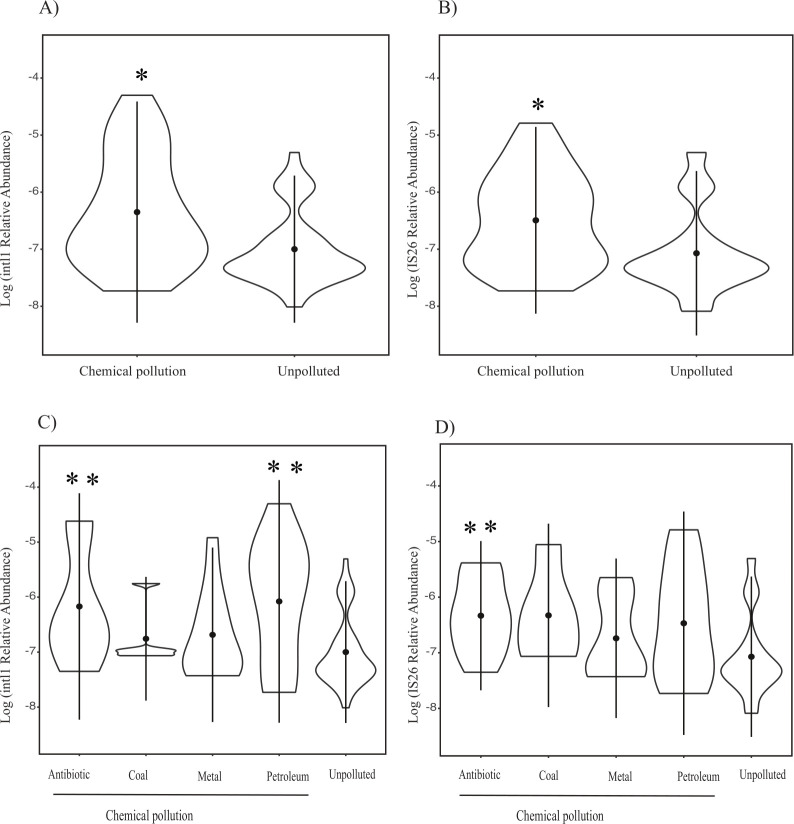
Many human activities contaminate terrestrial and aquatic environments with numerous chemical pollutants that not only directly alter the environment but also affect microbial communities in ways that are potentially concerning to human health, such as selecting for the spread of antibiotic-resistance genes (ARGs) through horizontal gene transfer. In the present study, metagenomes available in the public domain from polluted (with antibiotics, with petroleum, with metal mining, or with coal-mining effluents) and unpolluted terrestrial and aquatic environments were compared to examine whether pollution has influenced the abundance and composition of ARGs and mobile elements, with specific focus on IS26 and class 1 integrons (intI1). When aggregated together, polluted environments had a greater relative abundance of ARGs than unpolluted environments and a greater relative abundance of IS26 and intI1. In general, chemical pollution, notably with petroleum, was associated with an increase in the prevalence of ARGs linked to multidrug efflux pumps. Included in the suite of efflux pumps were mexK, mexB, mexF, and mexW that are polyspecific and whose substrate ranges include multiple classes of critically important antibiotics. Also, in some instances, β-lactam resistance (TEM181 and OXA-541) genes increased, and genes associated with rifampicin resistance (RNA polymerases subunits rpoB and rpoB2) decreased in relative abundance. This meta-analysis suggests that different types of chemical pollution can enrich populations that carry efflux pump systems associated with resistance to multiple classes of medically critical antibiotics.IMPORTANCEThe United Nations has identified chemical pollution as being one of the three greatest threats to environmental health, through which the evolution of antimicrobial resistance, a seminally important public health challenge, may be favored. While this is a very plausible outcome of continued chemical pollution, there is little evidence or research evaluating this risk. The objective of the present study was to examine existing metagenomes from chemically polluted environments and evaluate whether there is evidence that pollution increases the relative abundance of genes and mobile genetic elements that are associated with antibiotic resistance. The key finding is that for some types of pollution, particularly in environments exposed to petroleum, efflux pumps are enriched, and these efflux pumps can confer resistance to multiple classes of medically important antibiotics that are typically associated with Pseudomonas spp. or other Gram-negative bacteria. This finding makes clear the need for more investigation on the impact of chemical pollution on the environmental reservoir of ARGs and their association with mobile genetic elements that can contribute to horizontal gene transfer events.
Keywords: antibiotic pollution; antimicrobial resistance; coal mining pollution; metal pollution; petroleum pollution.
Conflict of interest statement
The authors declare no conflict of interest.
Figures
References
-
- United Nations Environmental Programme . 2021. Making peace with nature: a scientific blueprint to tackle the climate, biodiversity and pollution emergencies. Nairobi. Available from: https://www.unep.org/resources/making-peace-nature
-
- Brandt KK, Amézquita A, Backhaus T, Boxall A, Coors A, Heberer T, Lawrence JR, Lazorchak J, Schönfeld J, Snape JR, Zhu Y-G, Topp E. 2015. Ecotoxicological assessment of antibiotics: a call for improved consideration of microorganisms. Environ Int 85:189–205. doi: 10.1016/j.envint.2015.09.013 - DOI - PubMed
-
- Wolfgang MC, Kulasekara BR, Liang X, Boyd D, Wu K, Yang Q, Miyada CG, Lory S. 2003. Conservation of genome content and virulence determinants among clinical and environmental isolates of Pseudomonas aeruginosa . Proc Natl Acad Sci U S A 100:8484–8489. doi: 10.1073/pnas.0832438100 - DOI - PMC - PubMed
Publication types
MeSH terms
Substances
LinkOut - more resources
Full Text Sources
Miscellaneous
