


The Role of Social Media in Health Misinformation and Disinformation During the COVID-19 Pandemic: Bibliometric Analysis
- PMID: 37728981
- PMCID: PMC10551800
- DOI: 10.2196/48620
The Role of Social Media in Health Misinformation and Disinformation During the COVID-19 Pandemic: Bibliometric Analysis
Abstract
Background: The use of social media platforms to seek information continues to increase. Social media platforms can be used to disseminate important information to people worldwide instantaneously. However, their viral nature also makes it easy to share misinformation, disinformation, unverified information, and fake news. The unprecedented reliance on social media platforms to seek information during the COVID-19 pandemic was accompanied by increased incidents of misinformation and disinformation. Consequently, there was an increase in the number of scientific publications related to the role of social media in disseminating health misinformation and disinformation at the height of the COVID-19 pandemic. Health misinformation and disinformation, especially in periods of global public health disasters, can lead to the erosion of trust in policy makers at best and fatal consequences at worst.
Objective: This paper reports a bibliometric analysis aimed at investigating the evolution of research publications related to the role of social media as a driver of health misinformation and disinformation since the start of the COVID-19 pandemic. Additionally, this study aimed to identify the top trending keywords, niche topics, authors, and publishers for publishing papers related to the current research, as well as the global collaboration between authors on topics related to the role of social media in health misinformation and disinformation since the start of the COVID-19 pandemic.
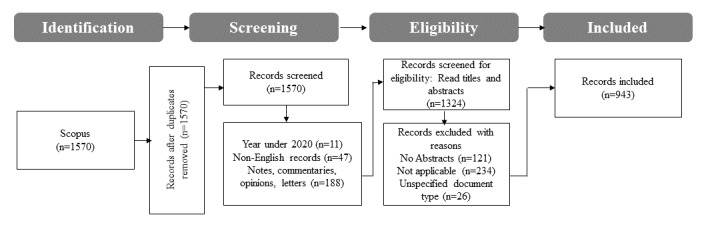
Methods: The Scopus database was accessed on June 8, 2023, using a combination of Medical Subject Heading and author-defined terms to create the following search phrases that targeted the title, abstract, and keyword fields: ("Health*" OR "Medical") AND ("Misinformation" OR "Disinformation" OR "Fake News") AND ("Social media" OR "Twitter" OR "Facebook" OR "YouTube" OR "WhatsApp" OR "Instagram" OR "TikTok") AND ("Pandemic*" OR "Corona*" OR "Covid*"). A total of 943 research papers published between 2020 and June 2023 were analyzed using Microsoft Excel (Microsoft Corporation), VOSviewer (Centre for Science and Technology Studies, Leiden University), and the Biblioshiny package in Bibliometrix (K-Synth Srl) for RStudio (Posit, PBC).
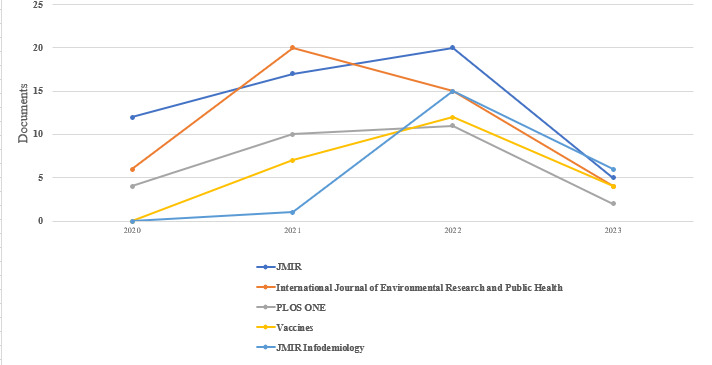
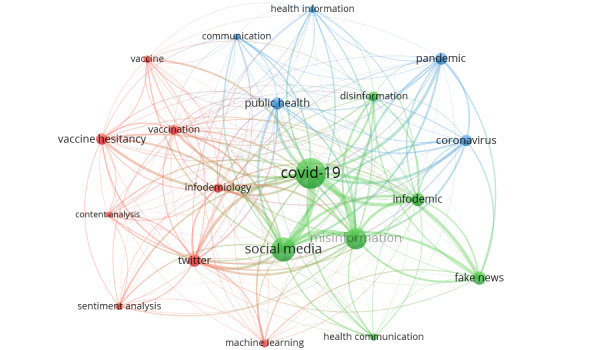
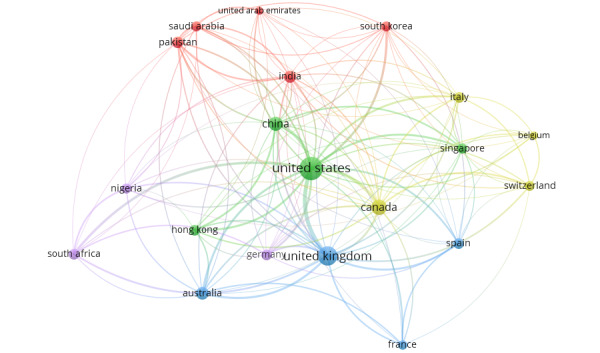
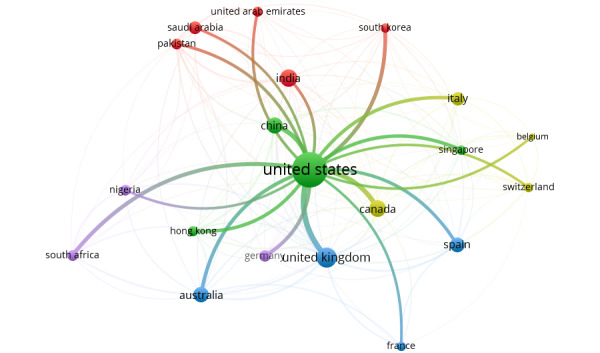
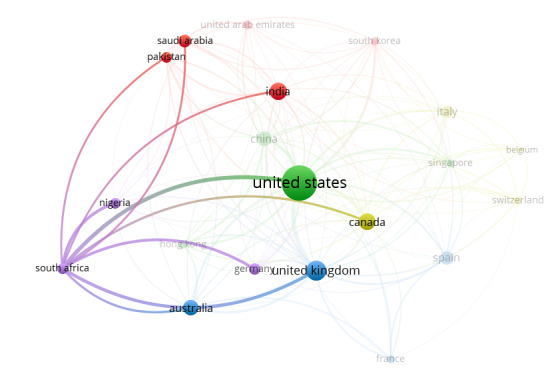
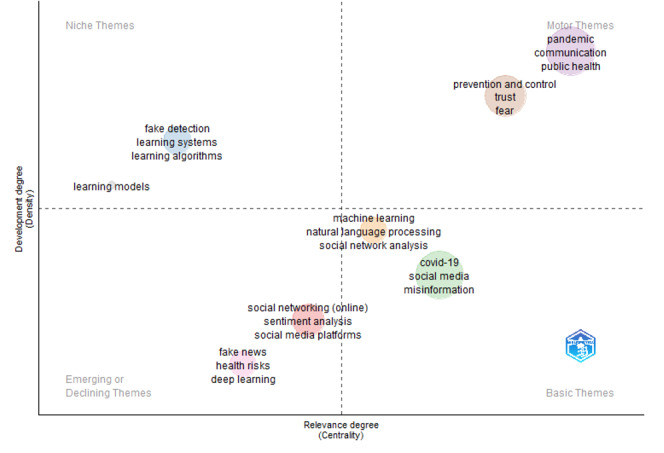
Results: The highest number of publications was from 2022 (387/943, 41%). Most publications (725/943, 76.9%) were articles. JMIR published the most research papers (54/943, 5.7%). Authors from the United States collaborated the most, with 311 coauthored research papers. The keywords "Covid-19," "social media," and "misinformation" were the top 3 trending keywords, whereas "learning systems," "learning models," and "learning algorithms" were revealed as the niche topics on the role of social media in health misinformation and disinformation during the COVID-19 outbreak.
Conclusions: Collaborations between authors can increase their productivity and citation counts. Niche topics such as "learning systems," "learning models," and "learning algorithms" could be exploited by researchers in future studies to analyze the influence of social media on health misinformation and disinformation during periods of global public health emergencies.
Keywords: COVID-19; bibliometric analysis; fake news; health disinformation; health misinformation; social media.
©Funmi Adebesin, Hanlie Smuts, Tendani Mawela, George Maramba, Marie Hattingh. Originally published in JMIR Infodemiology (https://infodemiology.jmir.org), 20.09.2023.
Conflict of interest statement
Conflicts of Interest: None declared.
Figures
References
-
- Kross E, Verduyn P, Sheppes G, Costello CK, Jonides J, Ybarra O. Social media and well-being: pitfalls, progress, and next steps. Trends Cogn Sci. 2021 Jan;25(1):55–66. doi: 10.1016/j.tics.2020.10.005. https://linkinghub.elsevier.com/retrieve/pii/S1364-6613(20)30251-5 S1364-6613(20)30251-5 - DOI - PubMed
-
- Kemp S Digital 2023: global overview report. DataReportal. 2023. [2023-04-14]. https://datareportal.com/reports/digital-2023-global-overview-report .
-
- Neely S, Eldredge C, Sanders R. Health information seeking behaviors on social media during the COVID-19 pandemic among American social networking site users: survey study. J Med Internet Res. 2021 Jun 11;23(6):e29802. doi: 10.2196/29802. https://www.jmir.org/2021/6/e29802/ v23i6e29802 - DOI - PMC - PubMed
-
- Naeem SB, Bhatti R, Khan A. An exploration of how fake news is taking over social media and putting public health at risk. Health Info Libr J. 2021 Jun;38(2):143–9. doi: 10.1111/hir.12320. https://europepmc.org/abstract/MED/32657000 - DOI - PMC - PubMed
-
- Pang PC, Cai Q, Jiang W, Chan KS. Engagement of government social media on Facebook during the COVID-19 pandemic in Macao. Int J Environ Res Public Health. 2021 Mar 28;18(7):3508. doi: 10.3390/ijerph18073508. https://www.mdpi.com/resolver?pii=ijerph18073508 ijerph18073508 - DOI - PMC - PubMed
Publication types
MeSH terms
LinkOut - more resources
Full Text Sources
Medical
Miscellaneous
