


Using Technology to Detect Erythema Across Skin Tones
- PMID: 37729162
- PMCID: PMC10545068
- DOI: 10.1097/ASW.0000000000000043
Using Technology to Detect Erythema Across Skin Tones
Abstract
Objective: To examine the effectiveness of the ColorMeter DSM III (ColorMeter; Cortex Technology) at grouping individuals by skin tone and measuring erythema/skin discoloration after erythema induction across skin tones.
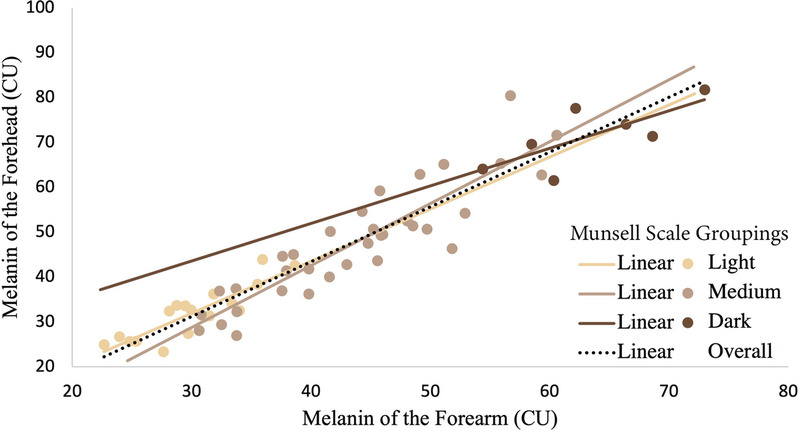
Methods: This pre/post experimental study induced erythema on a convenience sample of 61 healthy adults. Skin tone at baseline was measured using the ColorMeter, Munsell Soil Color Chart 5YR (Munsell), and Pantone SkinTone Guide (Pantone) and compared with the Eumelanin Human Skin Colour Scale (Eumelanin Scale) groupings. Erythema and melanin values on the arm immediately and after recovery time were compared with baseline values. Melanin was measured at five body regions on the face and arm.
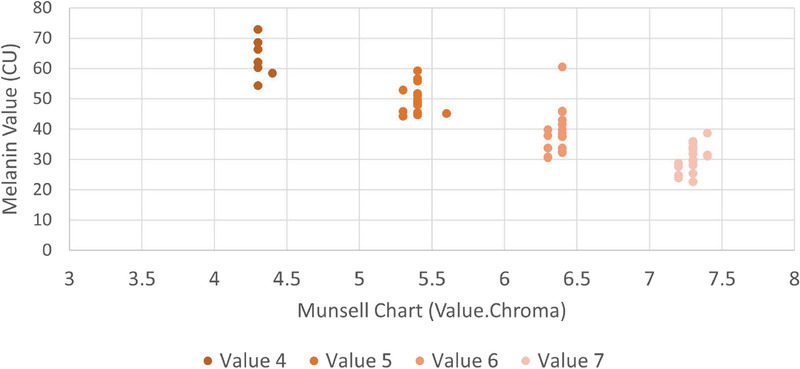
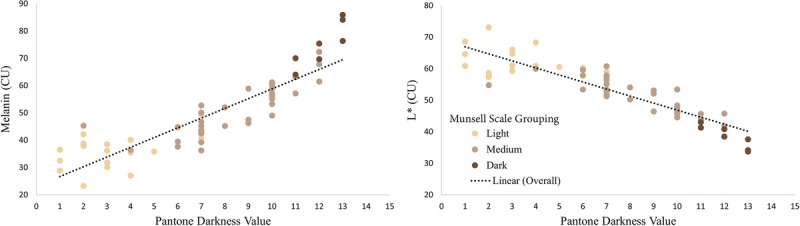
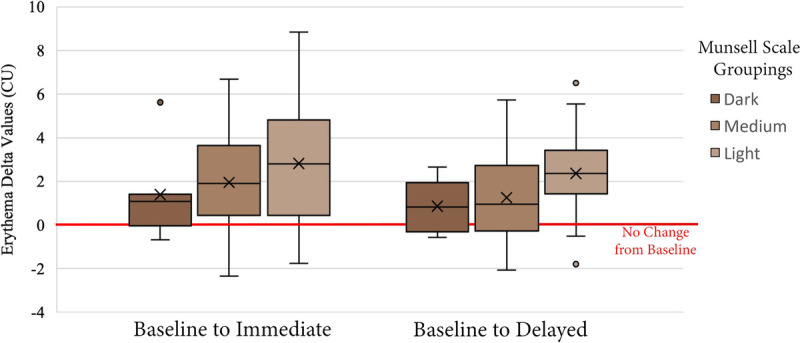
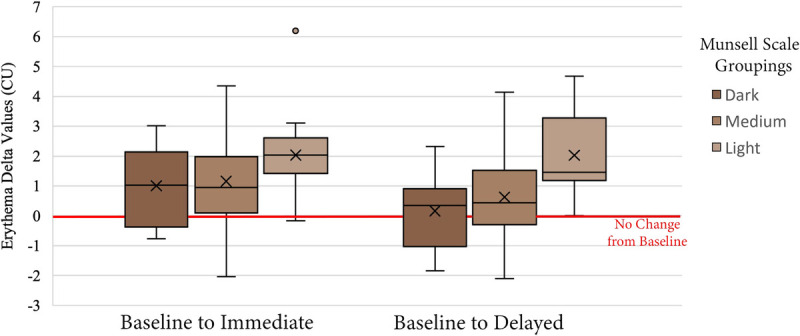
Results: Participants were predominantly women (64% [n = 39] women, 36% [n = 22] men) and young (mean, 28.8 ± 14.3 years); 5% (n = 3) were Hispanic, 26% (n = 16) Asian, 29% (n = 18) Black, 38% (n = 23) White, and 7% (n = 4) identified with more than one race. ColorMeter lightness (L*) and melanin measures were strongly correlated with both Munsell and Pantone values. Munsell skin tone groups were not aligned with Eumelanin Scale groupings. Most participants were in the Eumelanin intermediate-low group, and this changed depending on which body location melanin value was used. The change in erythema from baseline did not differ significantly across skin tone groups at the ulnar head, but on the forearm at the delayed time point, significant differences existed between light and both medium and dark skin tone groups (P = .001; 95% CI, 0.04-0.37).
Conclusions: The ColorMeter provides an effective objective measure of skin tone and erythema/discoloration across various skin tones and may improve on current standards for detection. The proposed Eumelanin Scale-Modified provides additional sensitivity for persons with medium skin tones.
Copyright © 2023 the Author(s). Published by Wolters Kluwer Health, Inc.
Figures
References
-
- Dhoonmoon L, Fletcher J. Assessing skin tones in practice: results of an international survey. Wounds Int 2022;13(2):6–9.
-
- European Pressure Ulcer Advisory Panel, National Pressure Ulcer Advisory Panel, Pan-Pacific Pressure Injury Alliance . Prevention and Treatment of Pressure Ulcers/Injuries: Quick Reference Guide. EPUAP/NPIAP/PPPIA; 2019.
-
- Francis KF. Assessment and Identification of skin disorders in skin of color: an integrative review. J Wound Ostomy Continence Nurs 2023;50(2):107–14. - PubMed
-
- Maya-Enero S, Candel-Pau J, Garcia-Garcia J, Gimenez-Arnau AM, Lopez-Vilchez MA. Validation of a neonatal skin color scale. Eur J Pediatr 2020;179(9):1403–11. - PubMed
MeSH terms
Substances
LinkOut - more resources
Full Text Sources
