


Integrated analysis of phase 1a and 1b randomized controlled trials; Treg-targeted cancer immunotherapy with the humanized anti-CCR4 antibody, KW-0761, for advanced solid tumors
- PMID: 37729184
- PMCID: PMC10511099
- DOI: 10.1371/journal.pone.0291772
Integrated analysis of phase 1a and 1b randomized controlled trials; Treg-targeted cancer immunotherapy with the humanized anti-CCR4 antibody, KW-0761, for advanced solid tumors
Abstract
Introduction: Regulatory T cells (Tregs) have attracted attention as a novel therapeutic target to augment the clinical efficacy of immunotherapy. We conducted phase Ia and Ib trials to examine the safety and efficacy of the anti-CCR4 antibody, KW-0761 (mogamulizumab), which may eliminate effector Tregs (eTregs). We herein overviewed the results of these trials, presented cases with a durable clinical response, and investigated factors associated with the clinical effects of KW-0761.
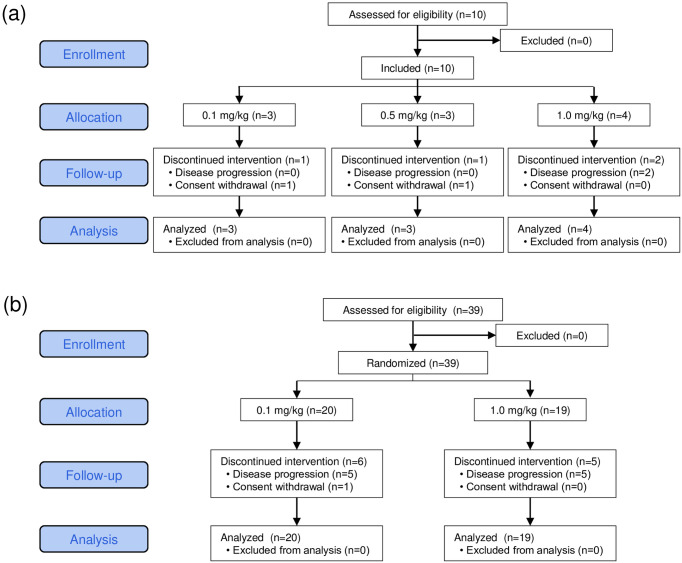
Methods: Forty-nine patients with CCR4-negative solid cancers were enrolled in the phase Ia and Ib trials on KW-0761. An integral analysis of safety, clinical responses, prognosis, blood laboratory data, and cancer testis antigen-specific immune responses was performed.
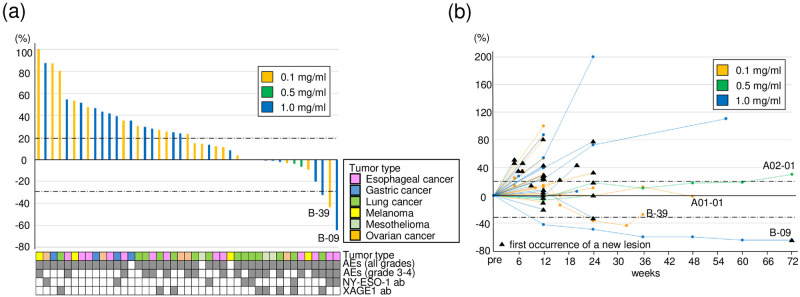
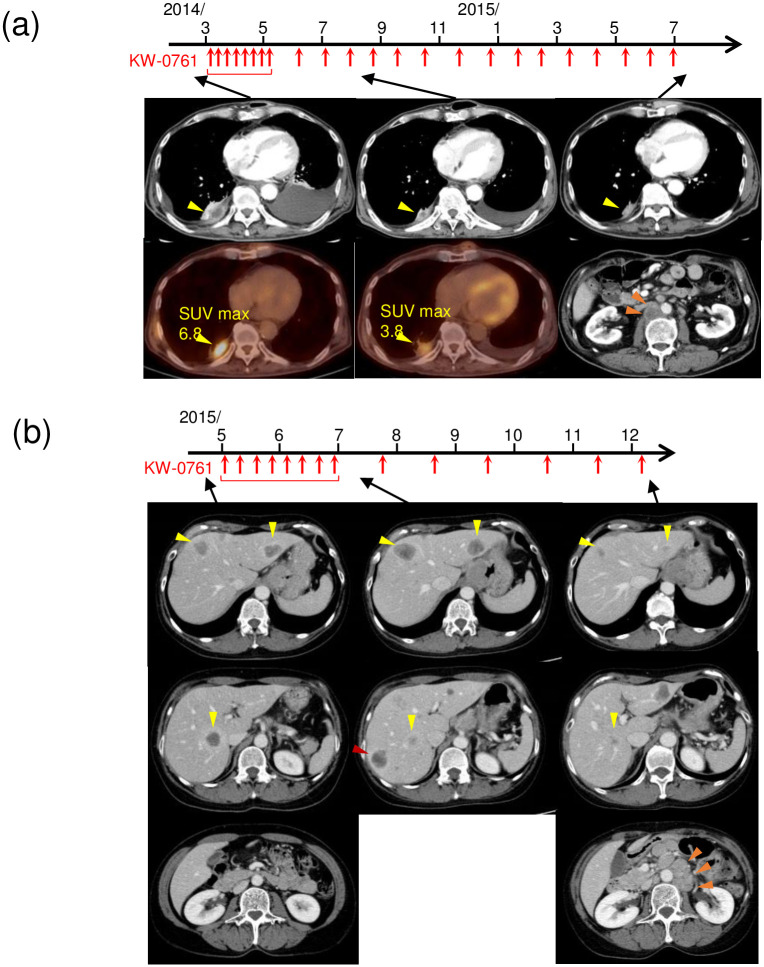
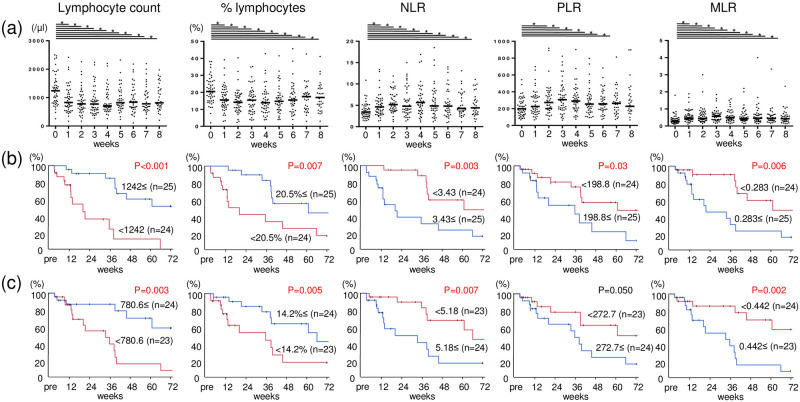
Results: Grade 3-4 treatment-related adverse events were reported in 21 (42.9%) out of 49 patients, all of which were manageable. A partial response and stable disease were observed in 1 and 9 patients, respectively. A durable clinical response was noted in 2 esophageal and 2 lung cancer patients. eTreg depletion in peripheral blood was confirmed in most patients, and eTreg depletion was sustained during the KW-0761 treatment. High lymphocyte levels at baseline and 2 weeks after the initiation of KW-0761 were associated with a favorable clinical outcome.
Conclusions: A durable clinical response was noted in some patients, and high lymphocyte levels before treatment initiation may be a biomarker for the efficacy of KW-0761. The synergistic effect of KW-0761 for depleting Tregs and other immunotherapies is expected in the future.
Trial registration: ClinicalTrials.gov NCT01929486.
Copyright: © 2023 Fujikawa et al. This is an open access article distributed under the terms of the Creative Commons Attribution License, which permits unrestricted use, distribution, and reproduction in any medium, provided the original author and source are credited.
Conflict of interest statement
T.K. received honoraria and research funding from Ono Pharmaceutical, MSD, Shionogi, Bristol-Myers Squibb, Chugai Pharmaceutical, Amgen, Astellas Pharmaceutical, Oncolys BioPharma, Parexel, BeiGene Ltd, EPS Corporation., TAIHO PHARMACEUTICAL CO., LTD., Covidien Japan, Inc., Nippon Boehringer Ingelheim Co., Ltd., Kyowa Kirin Co., Ltd., EA Pharma Co., Ltd. and Merck Serono outside of this study. T.F. received research funding from Ono Pharmaceutical outside of this study. K.K. received research funding from TAKARA BIO outside of this study. The Department of Immunotherapeutics, The University of Tokyo Hospital is endowed by TAKARA BIO. S.I. received honoraria and research funding from Ono Pharmaceutical, Takeda, Sanofi, Bristol-Myers Squibb, and Janssen and research funding from Daichi-Sankyo, Pfizer, Abbvie, Chugai Pharmaceutical, Daichi-Sankyo, Glaxo SmithKlein, Novartis, Celgene, Amgen, Alexion and Otsuka outside of this study. Y.D. received honoraria and research funding from Ono Pharmaceutical, Taiho Pharmaceutical, and research funding from Chugai Pharmaceutical, Covidien Japan, Johnson & Johnson, and honoraria from Otsuka Pharmaceutical outside of this study. M.O. received research funding from Sysmex outside of this study. The Department of Immuno-Oncology, Kawasaki Medical School is endowed by Pole Star Co., Ltd. R.U. received research funding from Ono Pharmaceutical, Chugai Pharmaceutical, and Kyowa Kirin outside of this study, and other support from Sustainable Cell Therapeutics. H.W. received research funding from Ono Pharmaceutical and Kyowa Kirin, and honoraria from Ono Pharmaceutical, Chugai Pharmaceutical, MSD, and Bristol-Myers Squibb outside of this study. The Department of Clinical Research in Tumor Immunology, Osaka University Graduate School of Medicine is a joint research laboratory with Shionogi & Co., Ltd. This does not alter our adherence to PLOS ONE policies on sharing data and materials.
Figures
References
-
- Kang Y-K, Boku N, Satoh T, Ryu M-H, Chao Y, Kato K, et al.. Nivolumab in patients with advanced gastric or gastro-oesophageal junction cancer refractory to, or intolerant of, at least two previous chemotherapy regimens (ONO-4538-12, ATTRACTION-2): a randomised, double-blind, placebo-controlled, phase 3 trial. The Lancet. 2017; 390(10111): 2461–2471. doi: 10.1016/S0140-6736(17)31827-5 - DOI - PubMed
-
- Sakaguchi S, Sakaguchi N, Asano M, Itoh M, Toda M. Immunologic self-tolerance maintained by activated T cells expressing IL-2 receptor alpha-chains (CD25). Breakdown of a single mechanism of self-tolerance causes various autoimmune diseases. J Immunol. 1995; 155(3): 1151–1164. . - PubMed
Publication types
MeSH terms
Substances
Associated data
LinkOut - more resources
Full Text Sources
Medical
