


Oxygenolytic sulfoquinovose degradation by an iron-dependent alkanesulfonate dioxygenase
- PMID: 37731605
- PMCID: PMC10507154
- DOI: 10.1016/j.isci.2023.107803
Oxygenolytic sulfoquinovose degradation by an iron-dependent alkanesulfonate dioxygenase
Abstract
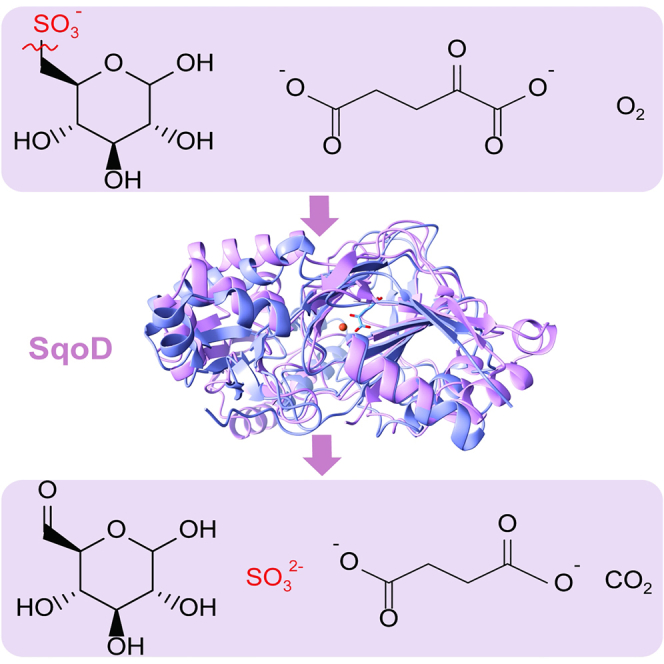
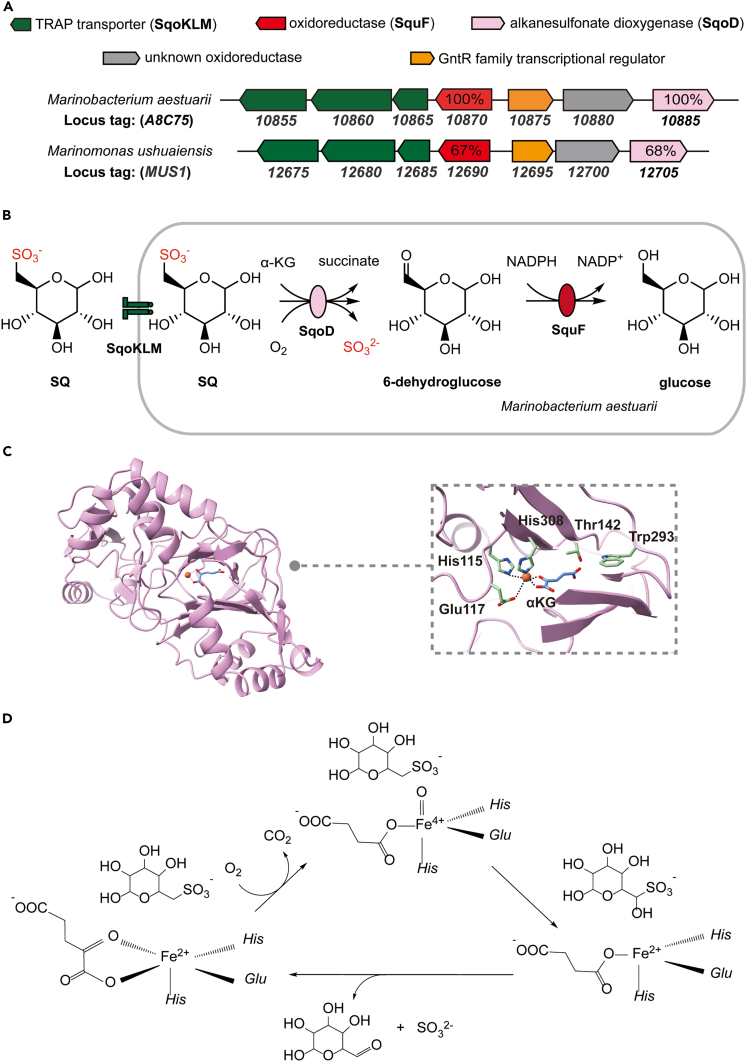
Sulfoquinovose (6-deoxy-6-sulfo-D-glucose, SQ), the polar head group of sulfolipids in plants, is abundant in nature. Many bacteria degrade SQ through pathways termed sulfoglycolysis producing C3 or C2 sulfonates, while certain bacteria degrade SQ through direct oxygenolytic cleavage of the SQ C-S bond, catalyzed by a flavin-dependent alkanesulfonate monooxygenase (sulfo-ASMO pathway). Here we report bioinformatics and biochemical studies revealing an alternative mechanism for oxygenolytic cleavage of the SQ C-S bond, catalyzed by an iron and α-ketoglutarate-dependent alkanesulfonate dioxygenase (SqoD, sulfo-ASDO pathway). In both the ASMO and ASDO pathways, the product 6-dehydroglucose is reduced to glucose by NAD(P)H-dependent SquF. Marinomonas ushuaiensis, a marine bacterium, which harbors the sulfo-ASDO gene cluster is shown utilizing SQ as a carbon source for growth, accompanied by increased transcription of SqoD. The sulfo-ASDO pathway highlights the range of microbial strategies for degradation of this ubiquitous sulfo-sugar, with potential implications for sulfur recycling in different biological environments.
Keywords: Biochemistry; Bioinformatics; Microbial metabolism.
© 2023 The Authors.
Conflict of interest statement
The authors declare no competing interests.
Figures
References
-
- Benson A.A. In: Advances in Lipid Research. Paoletti R., Kritchevsky D., editors. Elsevier; 1963. The Plant Sulfolipid; pp. 387–394. - DOI
LinkOut - more resources
Full Text Sources
Molecular Biology Databases
Miscellaneous
