


Clinical Manifestations and Risk Factors of Tigecycline-Associated Thrombocytopenia
- PMID: 37732172
- PMCID: PMC10508280
- DOI: 10.2147/IDR.S426259
Clinical Manifestations and Risk Factors of Tigecycline-Associated Thrombocytopenia
Abstract
Background: Thrombocytopenia, characterized by a diminished platelet count, emerged as the most frequently reported coagulation dysfunction event according to the FDA Adverse Event Reporting System (FAERS) database. In recent years, numerous clinical studies have investigated the potential link between tigecycline usage and the occurrence of hypofibrinogenemia. However, a research gap remains in comprehensively examining the association between tigecycline and thrombocytopenia in real-world settings.
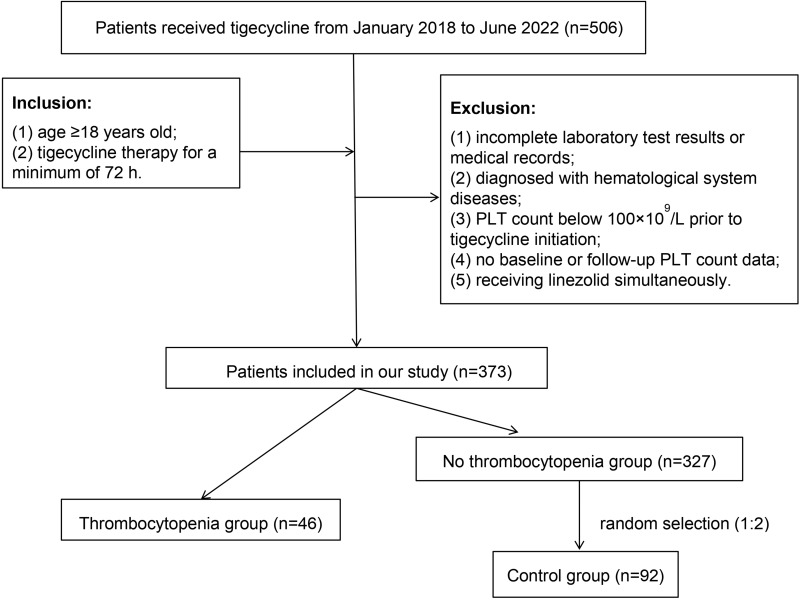
Methods: This study was conducted to explore the incidence and clinical manifestations of tigecycline-associated thrombocytopenia. A retrospective case-control study of patients treated with tigecycline was conducted between January 2018 and June 2022.
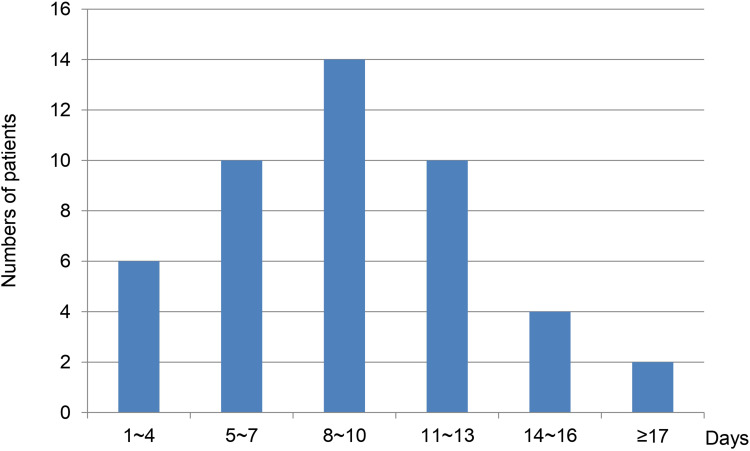
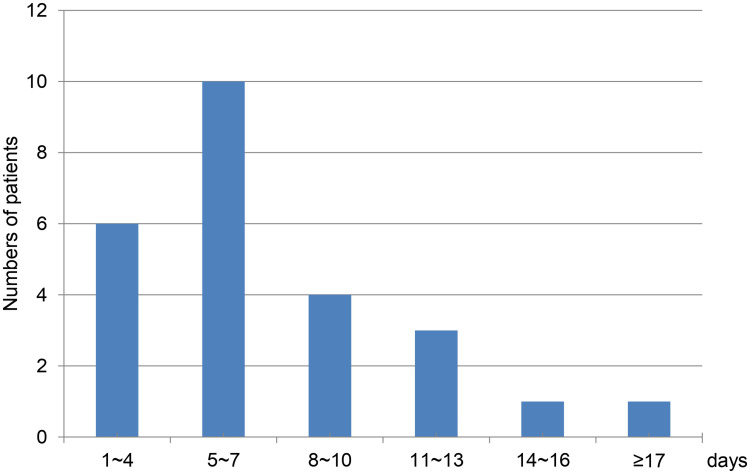
Results: In total, 373 patients were included in this study. Among these patients, 12.3% experienced thrombocytopenia. The onset of thrombocytopenia occurred within a range of 2 to 22 days after the initiation of tigecycline, with a median period (25-75th percentile) of 9 (6-11) days. Among the patients manifesting thrombocytopenia, 60.9% exhibited mild-to-moderate cases (grades 1-2) while 39.1% endured severe cases (grades 3-4). Multivariate analysis delineated several factors as independent risk factors for thrombocytopenia. Notably, advanced age (≥74 years) (p=0.028), risk of malnutrition (p<0.001), tigecycline therapy for ≥7 days (p=0.003), DBIL>8.1μmol/L (p<0.001)), BUN>8.1mmol/L (p=0.002) emerged as independent risk factors associated with thrombocytopenia. When comparing the control group to the thrombocytopenia group, 70.7% of patients in the control group exhibited 0-2 risk factors, while all patients in the thrombocytopenia group demonstrated risk factors. Specifically, 95.7% of patients in the thrombocytopenia group presented with three to five risk factors, with only 4.4% having 0-2 risk factors.
Conclusion: Tigecycline administration is associated with thrombocytopenia. Healthcare professionals should exercise vigilance, particularly in cases of severe tigecycline-associated thrombocytopenia, and undertake routine monitoring of patients' platelet counts, especially for those who possess three or more risk factors.
Keywords: coagulation disorder; pharmacovigilance; risk factor; thrombocytopenia; tigecycline.
© 2023 Zhu et al.
Conflict of interest statement
The authors declare the absence of known competing financial interests or personal relationships that could potentially influence the work reported in this paper.
Figures
References
LinkOut - more resources
Full Text Sources
Miscellaneous
