


National prevalence estimates for steatotic liver disease and subclassifications using consensus nomenclature
- PMID: 37732946
- PMCID: PMC11232657
- DOI: 10.1097/HEP.0000000000000604
National prevalence estimates for steatotic liver disease and subclassifications using consensus nomenclature
Abstract
Background and aims: The multisociety consensus nomenclature has renamed NAFLD to steatotic liver disease (SLD) with various subclassifications. There is a paucity of data regarding how the new nomenclature modifies our understanding of disease prevalence and patient phenotypes.
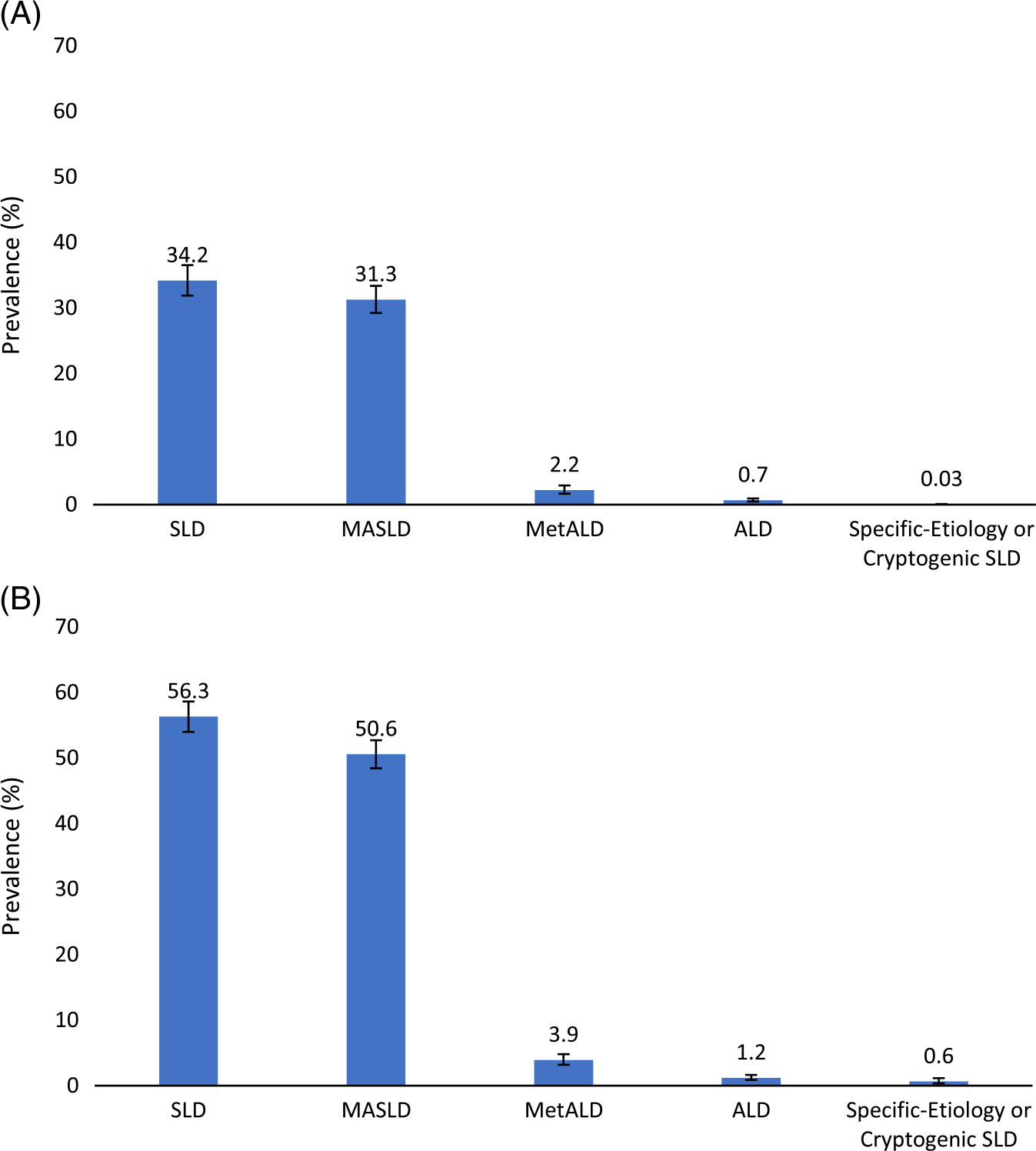
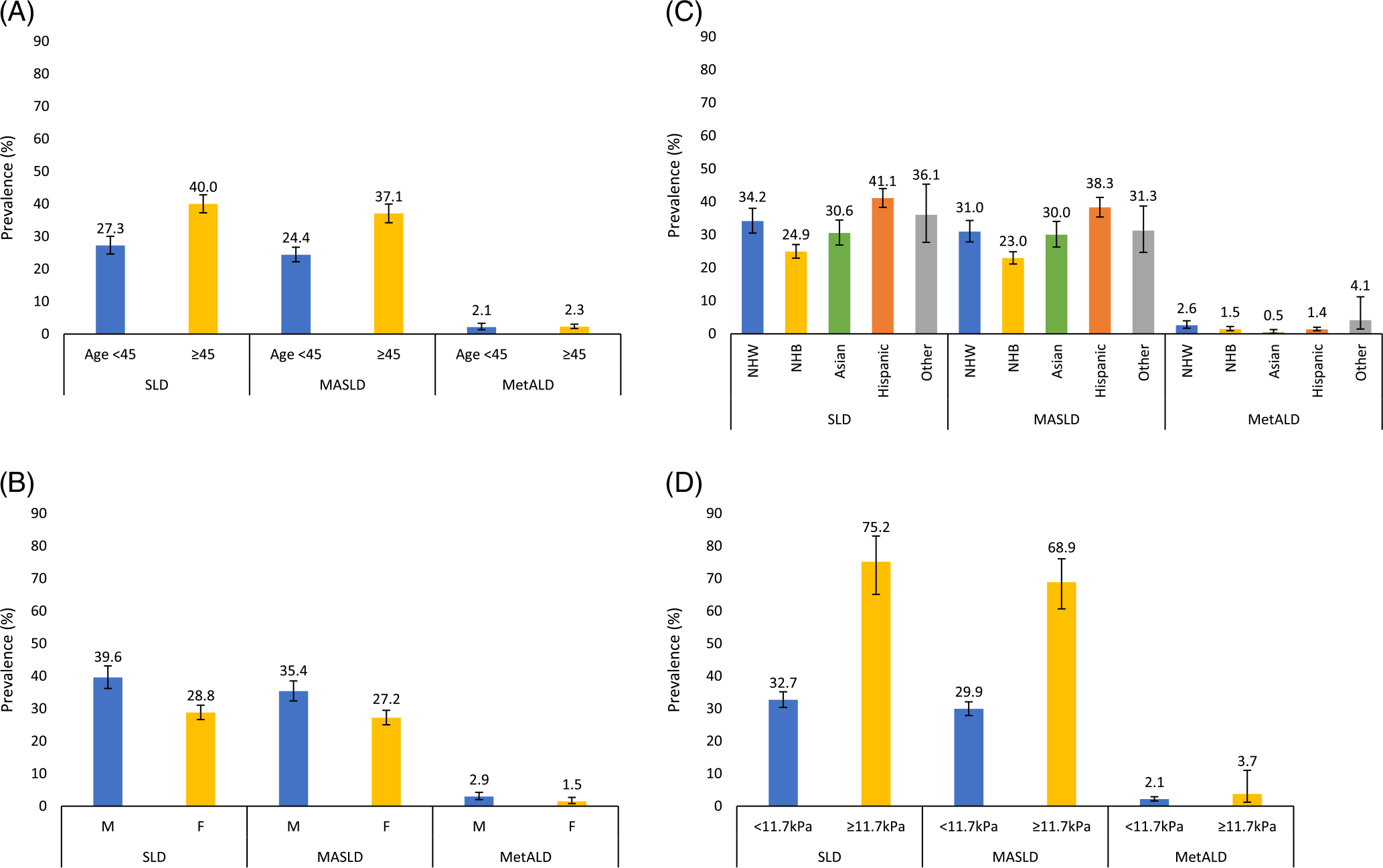
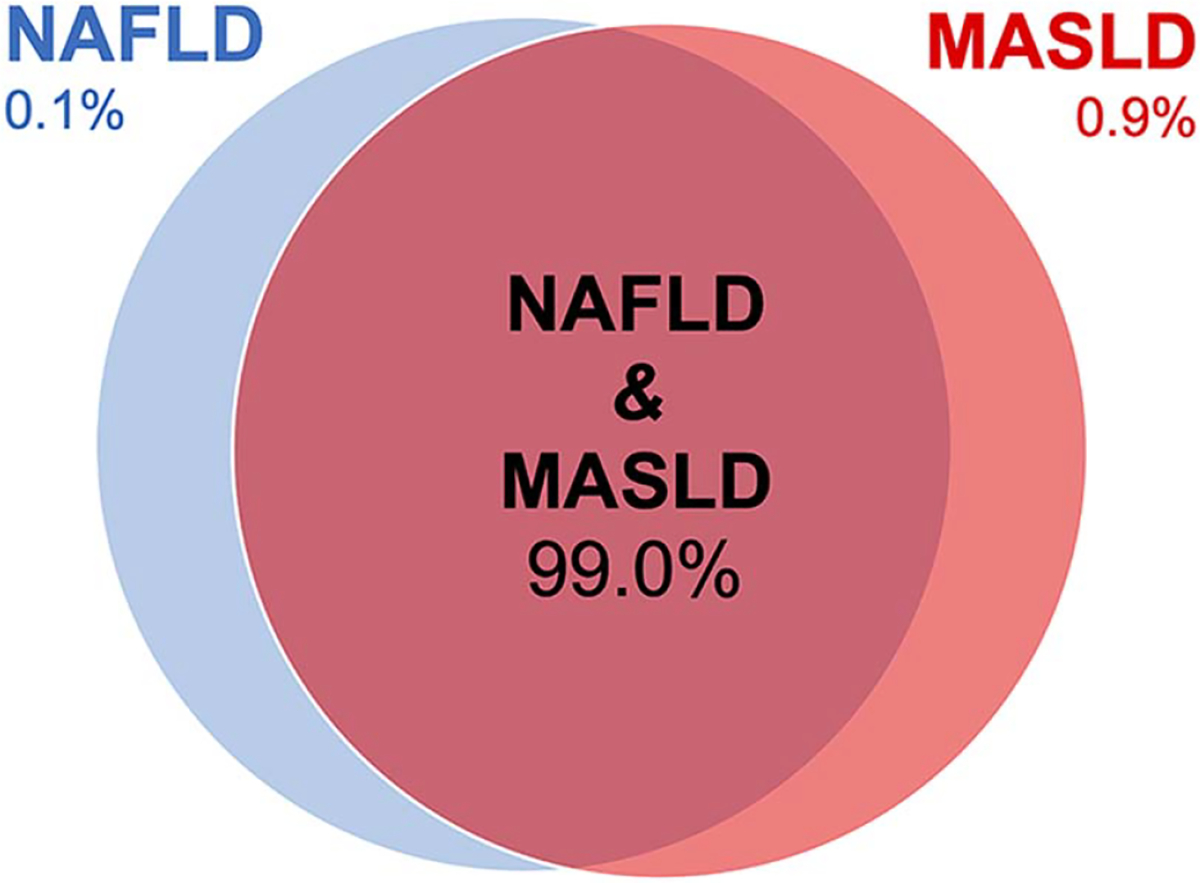
Approach and results: Using the National Health and Nutrition Examination Survey from January 2017 to March 2020, we included all participants aged 18 years or above with complete vibration-controlled transient elastography measures. SLD and its subclassifications [metabolic dysfunction-associated SLD (MASLD), MASLD + increased alcohol intake (MetALD), alcohol-associated liver disease (ALD), etiology-specific/cryptogenic] were defined according to consensus nomenclature. National SLD prevalence and subclassifications were estimated, and among key subgroups [age, sex, race/ethnicity, advanced liver fibrosis (liver stiffness measurement [LSM] ≥11.7 kPa)]. Among 7367 participants, 2549 had SLD (mean age 51 y, 57.7% male, 63.2% non-Hispanic White). The estimated prevalence of SLD was 34.2% (95% CI 31.9%-36.5%): MASLD 31.3% (29.2%-33.4%), MetALD 2% (1.6%-2.9%), ALD 0.7% (0.5-0.9%), etiology-specific/cryptogenic 0.03% (0.01%-0.08%). In exploratory analyses, participants classified as non-SLD with (vs. without) advanced fibrosis had a higher mean number of metabolic risk factors [2.7 (2.3-3.1) vs. 2.0 (1.9-2.0)] and a higher proportion with average alcohol use ≥20 g/d (women)/≥30 g/d (men) [20.9% (6.2%-51.3%) vs. 7.2% (6.1%-8.4%)]. In another exploratory analysis, increasing quantities of alcohol use remaining below the threshold for MASLD + increased alcohol intake were associated with advanced liver fibrosis in men, but not women. There was 99% overlap in cases of NAFLD and MASLD.
Conclusions: Our findings highlight the utility of the new consensus nomenclature to address deficiencies present with the old nomenclature, and identify areas that require research to further refine classifications of SLD.
Copyright © 2023 American Association for the Study of Liver Diseases.
Conflict of interest statement
CONFLICTS OF INTEREST
Brian P. Lee advises Durect, GlaxoSmithKline, and HepaTx. He received grants from Siemens Healthineers. Norah A. Terrault received grants from Durect, Eiger, Genentech-Roche, Gilead, GlaxoSmithKline, Helio Health, Madrigal, and the NIH. She has other interests with Clinical Care Options and Simply Speaking. The remaining author has no conflicts to report.
Figures
References
-
- Ng CH, Chan KE, Muthiah M, Tan C, Tay P, Lim WH, et al. Examining the interim proposal for name change to steatotic liver disease in the US population. Hepatology. 2023;77:1712–21. - PubMed
Publication types
MeSH terms
Grants and funding
LinkOut - more resources
Full Text Sources
Other Literature Sources
Medical
