


The effect of dispersal on asymptotic total population size in discrete- and continuous-time two-patch models
- PMID: 37733146
- PMCID: PMC10514157
- DOI: 10.1007/s00285-023-01984-8
The effect of dispersal on asymptotic total population size in discrete- and continuous-time two-patch models
Abstract
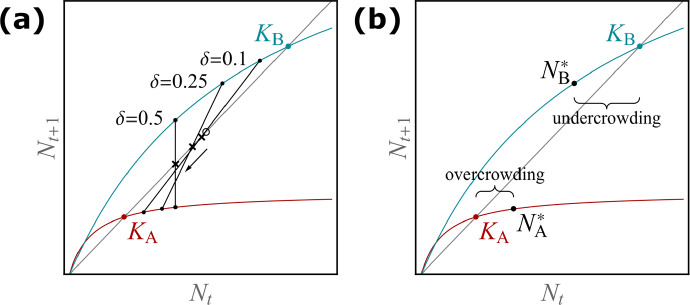
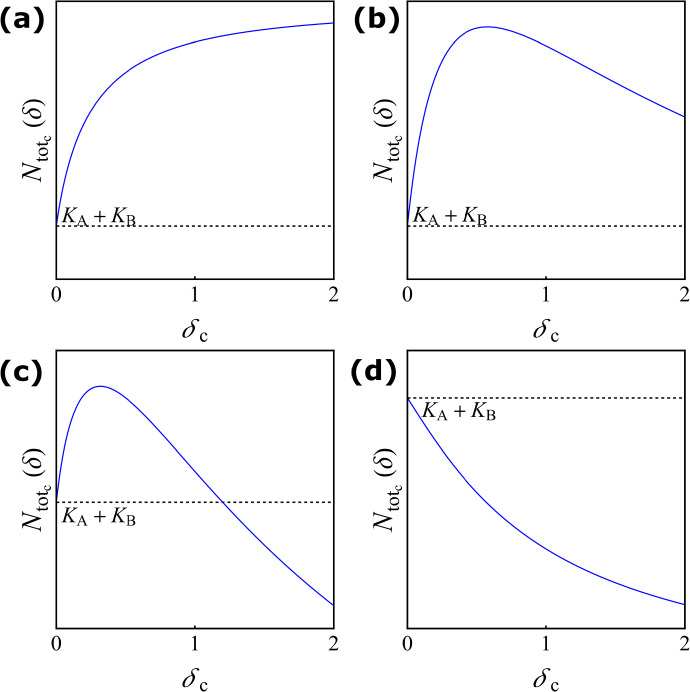
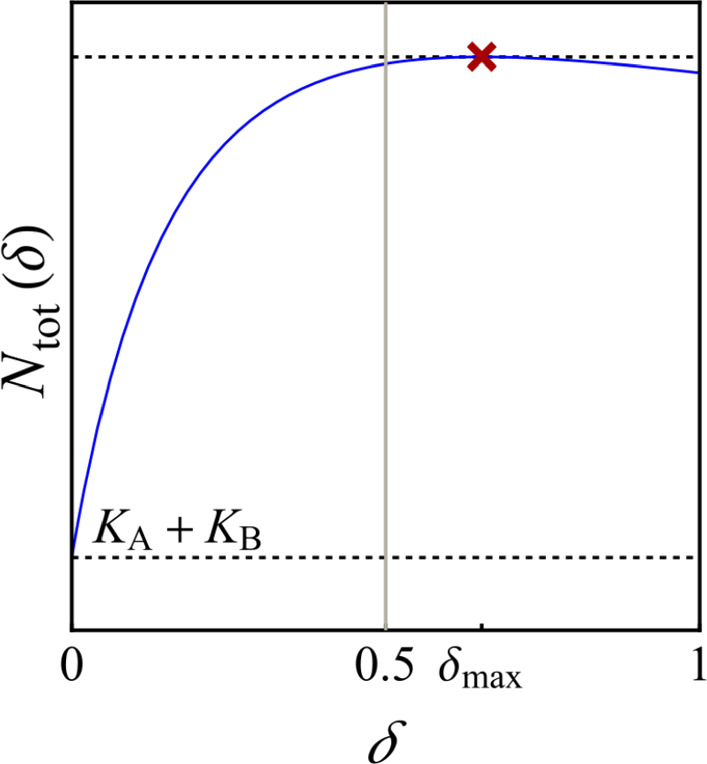
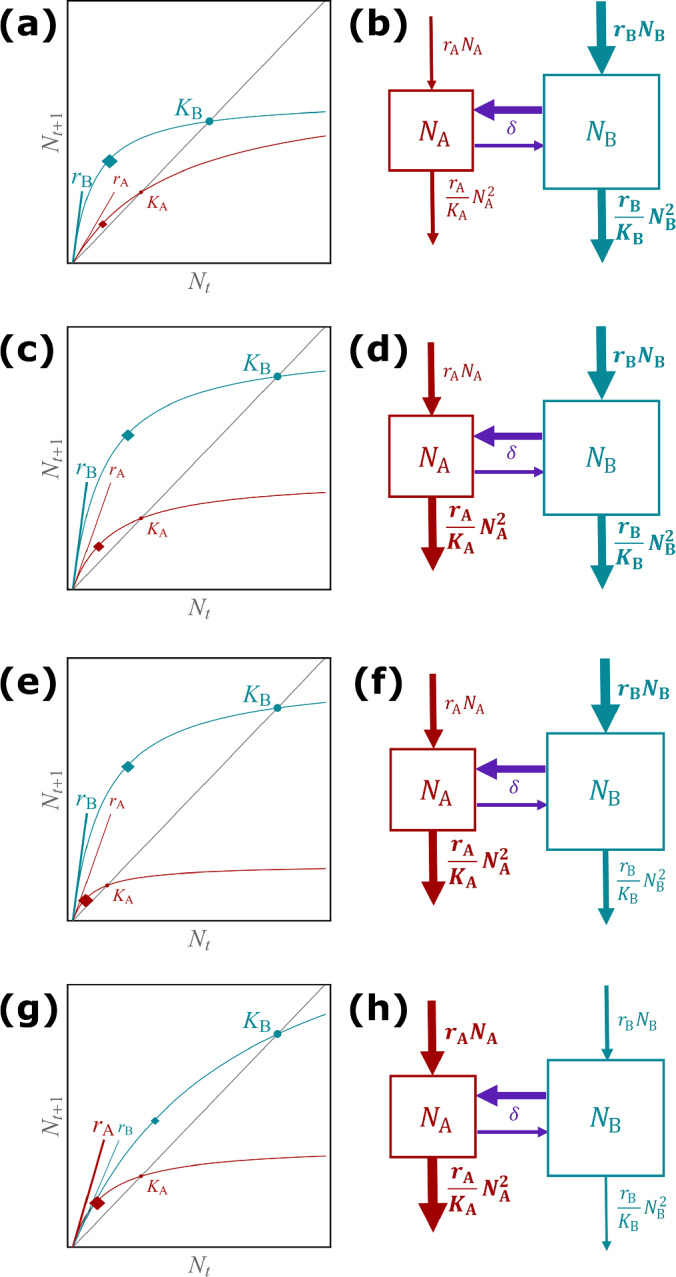
Many populations occupy spatially fragmented landscapes. How dispersal affects the asymptotic total population size is a key question for conservation management and the design of ecological corridors. Here, we provide a comprehensive overview of two-patch models with symmetric dispersal and two standard density-dependent population growth functions, one in discrete and one in continuous time. A complete analysis of the discrete-time model reveals four response scenarios of the asymptotic total population size to increasing dispersal rate: (1) monotonically beneficial, (2) unimodally beneficial, (3) beneficial turning detrimental, and (4) monotonically detrimental. The same response scenarios exist for the continuous-time model, and we show that the parameter conditions are analogous between the discrete- and continuous-time setting. A detailed biological interpretation offers insight into the mechanisms underlying the response scenarios that thus improve our general understanding how potential conservation efforts affect population size.
Keywords: Dispersal; Population dynamics; Spatial fragmentation; Total population size; Two-patch model.
© 2023. The Author(s).
Conflict of interest statement
The authors declare that they have no conflict of interest.
Figures


References
-
- Adler FR. Migration alone can produce persistence of host-parasitoid models. Am Nat. 1993;141:642–650. doi: 10.1086/285496. - DOI
-
- Allen LJS, Bolker BM, Lou Y, et al. Asymptotic profiles of the steady states for an SIS epidemic patch model. SIAM J Appl Math. 2007;67:1283–1309. doi: 10.1137/060672522. - DOI
Publication types
MeSH terms
LinkOut - more resources
Full Text Sources
