


Incidence and predictors of tuberculosis among children receiving antiretroviral therapy in the Wolaita Zone: A retrospective cohort study
- PMID: 37733689
- PMCID: PMC10513190
- DOI: 10.1371/journal.pone.0291502
Incidence and predictors of tuberculosis among children receiving antiretroviral therapy in the Wolaita Zone: A retrospective cohort study
Abstract
Background: Tuberculosis is the leading cause of morbidity and mortality among children living with the human immunodeficiency virus (HIV), mainly in sub-Saharan Africa, including Ethiopia. Tuberculosis remains a significant health concern for HIV-positive children in Ethiopia. There is a paucity of data on the incidence and predictors of tuberculosis among children living with HIV on antiretroviral therapy in the Wolaita zone. Hence, this study aimed to assess the incidence and predictors of tuberculosis among children living with HIV on antiretroviral therapy in the Wolaita zone between January 2010 to December 2020.
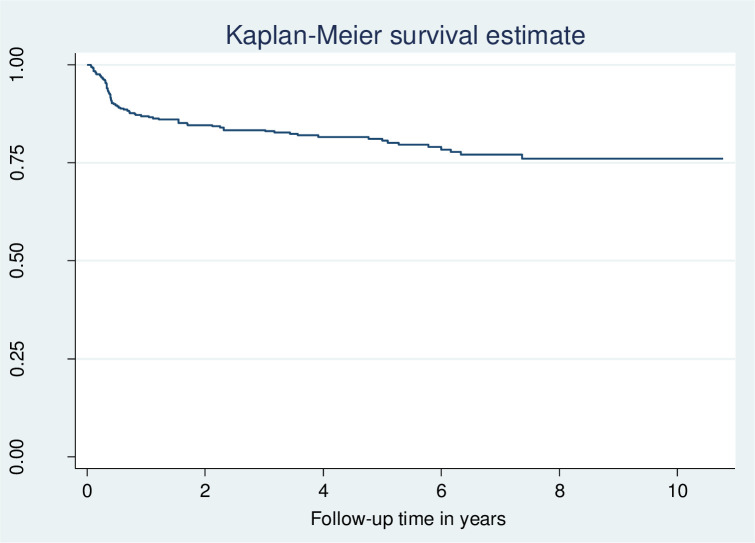
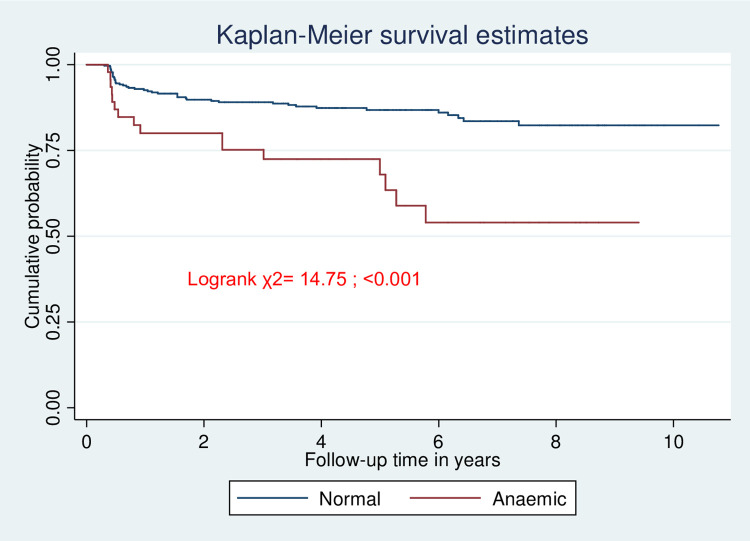
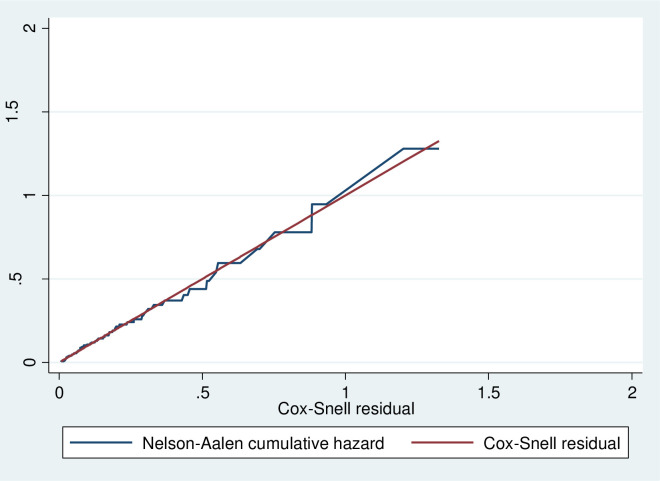
Methods: A retrospective cohort study was conducted among 389 children receiving antiretroviral therapy in Wolaita zone health facilities between January 2010 to December 2020. The checklist was adapted from the standardized antiretroviral treatment (ART) follow-up form currently used by the institutions' ART clinics. The Kaplan-Meier survival function and Log-rank were used to estimate the survival for each categorical variable to compare the survival between different exposure groups. Both bivariable and multivariable parametric survival Gompertz models were fitted to identify predictors of tuberculosis among HIV-positive children. The association was summarized using an adjusted hazard ratio (AHR), and statistical significance was declared at 95% CI and p-value < 0.05. The goodness of the model fit was assessed using a Cox-Snell residual plot.
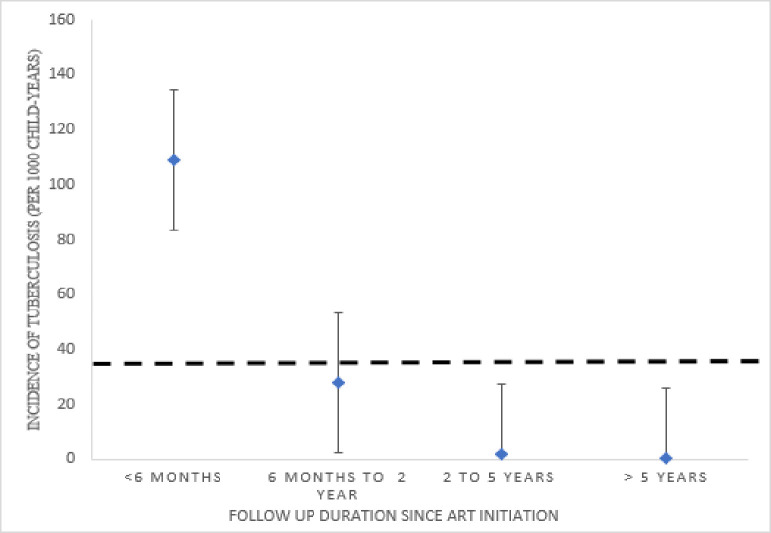
Results: The incidence rate of tuberculosis among children living with HIV was 3.5 (95% CI 2.7-4.5) per 100 child years. World Health Organization clinical stage III or IV (AHR = 2.31, 95% CI [1.26, 4.22]), hemoglobin level <10 g/dL (AHR = 2.87, 95% CI [1.51, 5.45]), fair or poor ART adherence (AHR = 4.4, 95% CI[2.18, 9.05]), underweight (AHR = 2.55, 95% CI [1.45, 4.51]), age >10 years (AHR = 3.62; 95% CI [1.29, 10.0]), and cotrimoxazole preventive therapy (AHR = 0.23; 95% CI [0.08, 0.60]) were among the independent predictors of TB occurrence.
Conclusion: The incidence of tuberculosis among children on ART was high. HIV-positive children presenting with advanced disease staging (III and IV), anemia, "fair" and "poor" ART adherence, underweight, age above ten years, and not receiving cotrimoxazole preventive therapy were at higher risk of TB. Therefore, counseling on ART adherence, early diagnosis, and prompt treatment of anemia and malnutrition are recommended to avert tuberculosis.
Copyright: This is an open access article, free of all copyright, and may be freely reproduced, distributed, transmitted, modified, built upon, or otherwise used by anyone for any lawful purpose. The work is made available under the Creative Commons CC0 public domain dedication.
Conflict of interest statement
The authors have declared that no competing interests exist.
Figures
References
-
- WHO. World Health Organization: Tuberculosis. https://www.who.int/news-room/fact-sheets/detail/tuberculosis. Accessed June 11, 2021 2020.
-
- WHO. Global tuberculosis report. Geneva: World Health organization; 2022. licence: cc bY-Nc-sa 3.0 iGo. 2022.
MeSH terms
Substances
LinkOut - more resources
Full Text Sources
Other Literature Sources
Medical
