


Clonal Hematopoiesis as a Molecular Risk Factor for Doxorubicin-Induced Cardiotoxicity: A Proof-of-Concept Study
- PMID: 37738545
- PMCID: PMC10581654
- DOI: 10.1200/PO.23.00208
Clonal Hematopoiesis as a Molecular Risk Factor for Doxorubicin-Induced Cardiotoxicity: A Proof-of-Concept Study
Abstract
Purpose: The main dose-limiting toxicity of anthracyclines is cardiotoxicity. Clonal hematopoiesis (CH), somatic mutations in hematopoietic stem or progenitor cells in patients without hematologic malignancy, is also associated with risk for adverse cardiovascular events and worse outcomes overall. We hypothesize that CH increases risk for doxorubicin-induced cardiotoxicity (DIC).
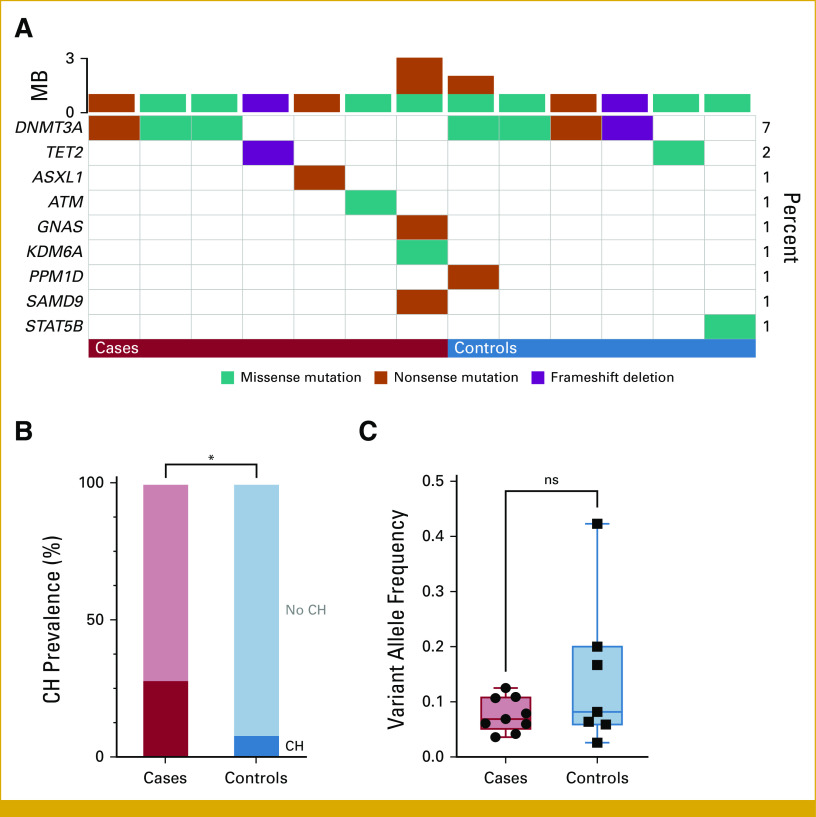
Methods: We conducted a retrospective cohort study in patients treated with doxorubicin for cancer (N = 100). Patients (n = 25) had incident symptomatic heart failure, decline in left ventricular ejection fraction, or arrhythmia. CH was identified using paired peripheral blood and tumor DNA.
Results: After adjusting for age at doxorubicin initiation, diabetes, dyslipidemia, and chest radiation, high cumulative dose of doxorubicin (>240 mg/m2; odds ratio [OR], 7.00; 95% CI, 1.77 to 27.74; P = .0056), CH (OR, 8.58; 95% CI, 2.05 to 35.99; P = .0033), and history of smoking (OR, 3.15; 95% CI, 1.00 to 9.93; P = .0495) were associated with DIC.
Conclusion: This study provides preliminary evidence for CH as a predictive risk factor for DIC, which, with further investigation, could serve as an important precision medicine biomarker for the large number of patients with cancer who have CH.
Conflict of interest statement
The following represents disclosure information provided by authors of this manuscript. All relationships are considered compensated unless otherwise noted. Relationships are self-held unless noted. I = Immediate Family Member, Inst = My Institution. Relationships may not relate to the subject matter of this manuscript. For more information about ASCO's conflict of interest policy, please refer to
Open Payments is a public database containing information reported by companies about payments made to US-licensed physicians (
Figures


References
-
- Curigliano G, Cardinale D, Dent S, et al. Cardiotoxicity of anticancer treatments: Epidemiology, detection, and management. CA Cancer J Clin. 2016;66:309–325. - PubMed
-
- Pascual-Figal DA, Bayes-Genis A, Díez-Díez M, et al. Clonal hematopoiesis and risk of progression of heart failure with reduced left ventricular ejection fraction. J Am Coll Cardiol. 2021;77:1747–1759. - PubMed
Publication types
MeSH terms
Substances
Grants and funding
LinkOut - more resources
Full Text Sources
