


Group Model Building on causes and interventions for falls in Singapore: insights from a systems thinking approach
- PMID: 37740182
- PMCID: PMC10517526
- DOI: 10.1186/s12877-023-04294-2
Group Model Building on causes and interventions for falls in Singapore: insights from a systems thinking approach
Abstract
Background: Falls in older adults are the result of a complex web of interacting causes, that further results in other physical, emotional, and psychological sequelae. A conceptual framework that represents the reciprocal dynamics of these causal factors can enable clinicians, researchers, and policymakers to clarify goals in falls intervention in older adults.
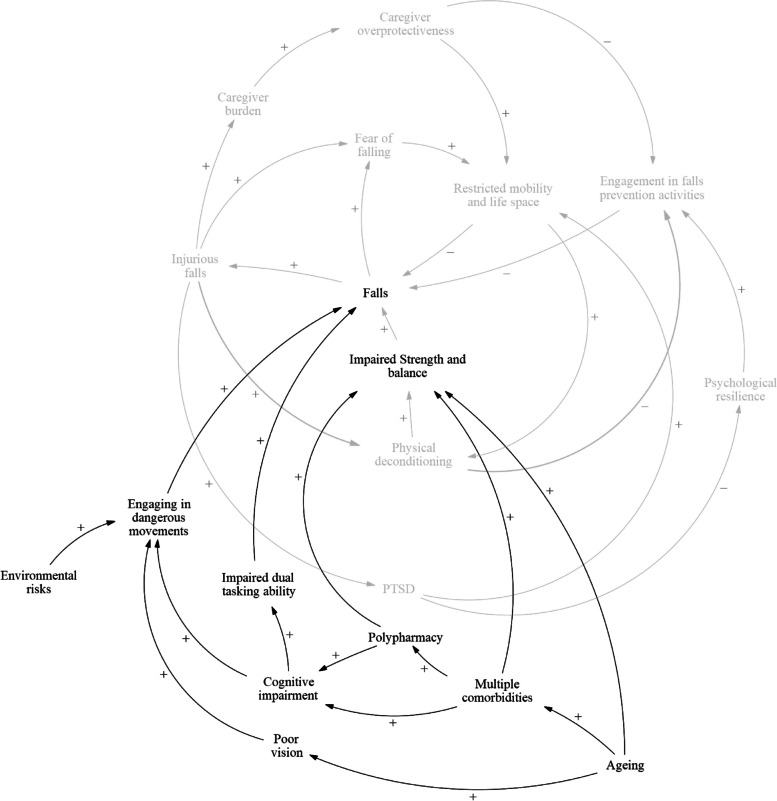
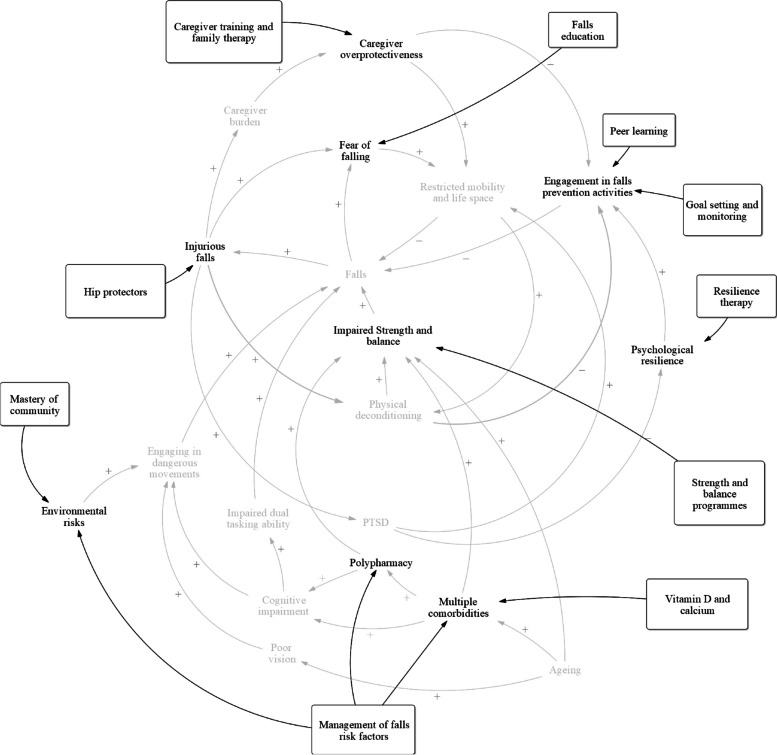
Methods: A Group Model Building (GMB) exercise was conducted with researchers and clinicians from academic units and public healthcare institutes in Singapore. The aim of the exercise was to produce a shared visual representation of the causal structure for falls and engage in discussions on how current and future falls intervention programmes can address falls in the older adults, especially in the Asian context. It was conducted in four steps: 1) Outlining and prioritising desirable patient outcomes, 2) Conceptual model building, 3) Identifying key intervention elements of effective falls intervention programmes, 4) Mapping of interventions to outcomes. This causal loop diagram (CLD) was then used to generate insights into the current understanding of falls causal relationships, current efforts in falls intervention in Singapore, and used to identify gaps in falls research that could be further advanced in future intervention studies.
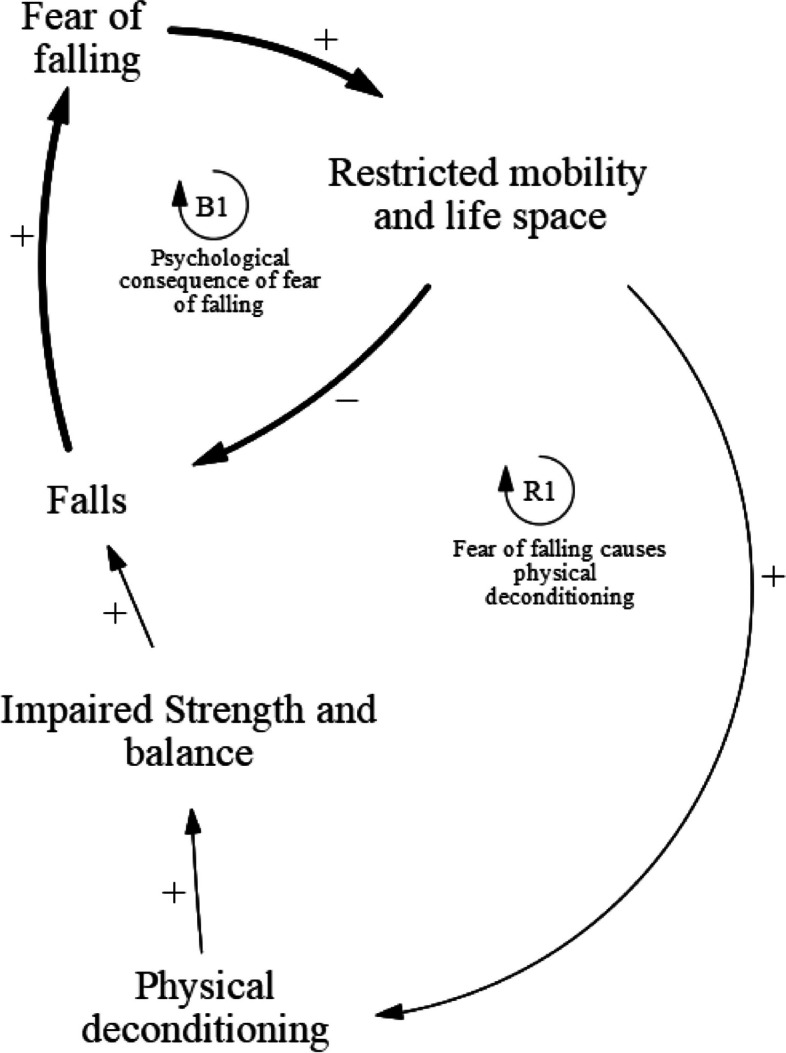
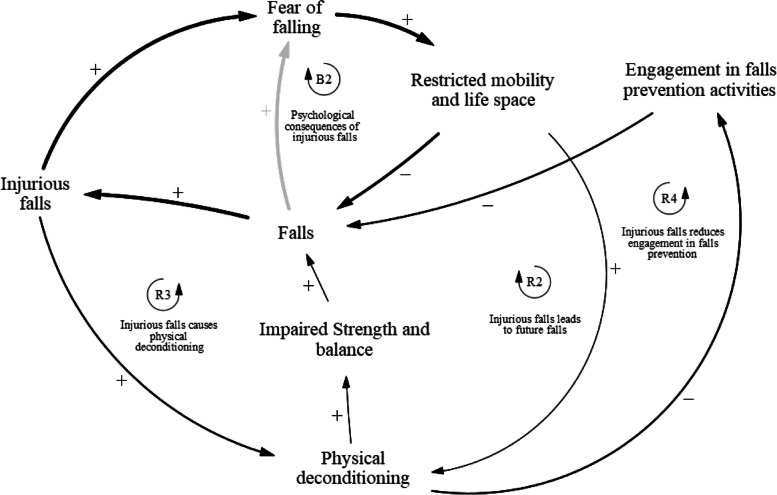
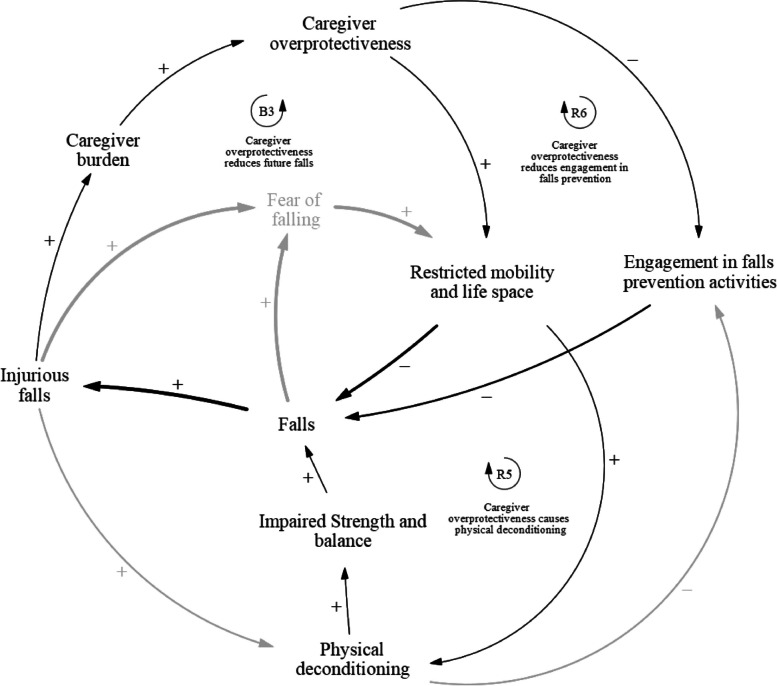
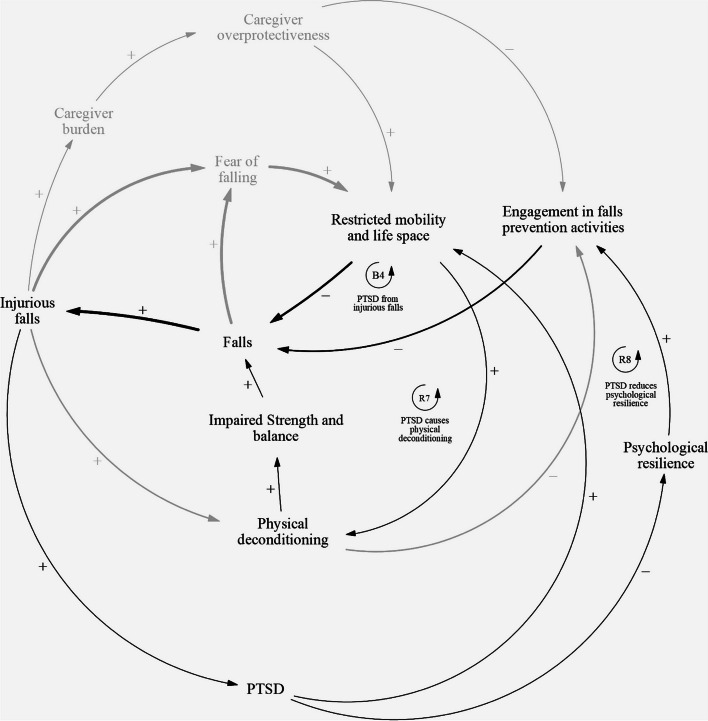
Results: Four patient outcomes were identified by the group as key in falls intervention: 1) Falls, 2) Injurious falls, 3) Fear of falling, and 4) Restricted mobility and life space. A CLD of the reciprocal relationships between risk factors and these outcomes are represented in four sub-models: 1) Fear of falling, 2) Injuries associated with falls, 3) Caregiver overprotectiveness, 4) Post-traumatic stress disorder and psychological resilience. Through this GMB exercise, the group gained the following insights: (1) Psychological sequelae of falls is an important falls intervention outcome. (2) The effects of family overprotectiveness, psychological resilience, and PTSD in exacerbating the consequences of falls are not well understood. (3) There is a need to develop multi-component falls interventions to address the multitude of falls and falls related sequelae.
Conclusion: This work illustrates the potential of GMB to promote shared understanding of complex healthcare problems and to provide a roadmap for the development of more effective preventive actions.
Keywords: Falls prevention; Group model building; Older adults; Systems thinking.
© 2023. BioMed Central Ltd., part of Springer Nature.
Conflict of interest statement
The authors declare that they have no competing interests.
Figures

References
-
- C M, D W, N B, F M, Gv DG, undefined. [Epidemiology of falls among the elderly]. Ig E Sanita Pubblica. 2005;61:117–32. - PubMed
-
- Yoshida S. A global report on falls prevention epidemiology of falls. Geneva WHO. 2007.
-
- Chu L, Chi I, Chiu A. Incidence and Predictors of Falls in the Chinese Elderly. 2005;34:13. - PubMed
Publication types
MeSH terms
LinkOut - more resources
Full Text Sources
Medical
