


The epidemiological and genetic characteristics of human parvovirus B19 in patients with febrile rash illnesses in China
- PMID: 37741897
- PMCID: PMC10517975
- DOI: 10.1038/s41598-023-43158-y
The epidemiological and genetic characteristics of human parvovirus B19 in patients with febrile rash illnesses in China
Abstract
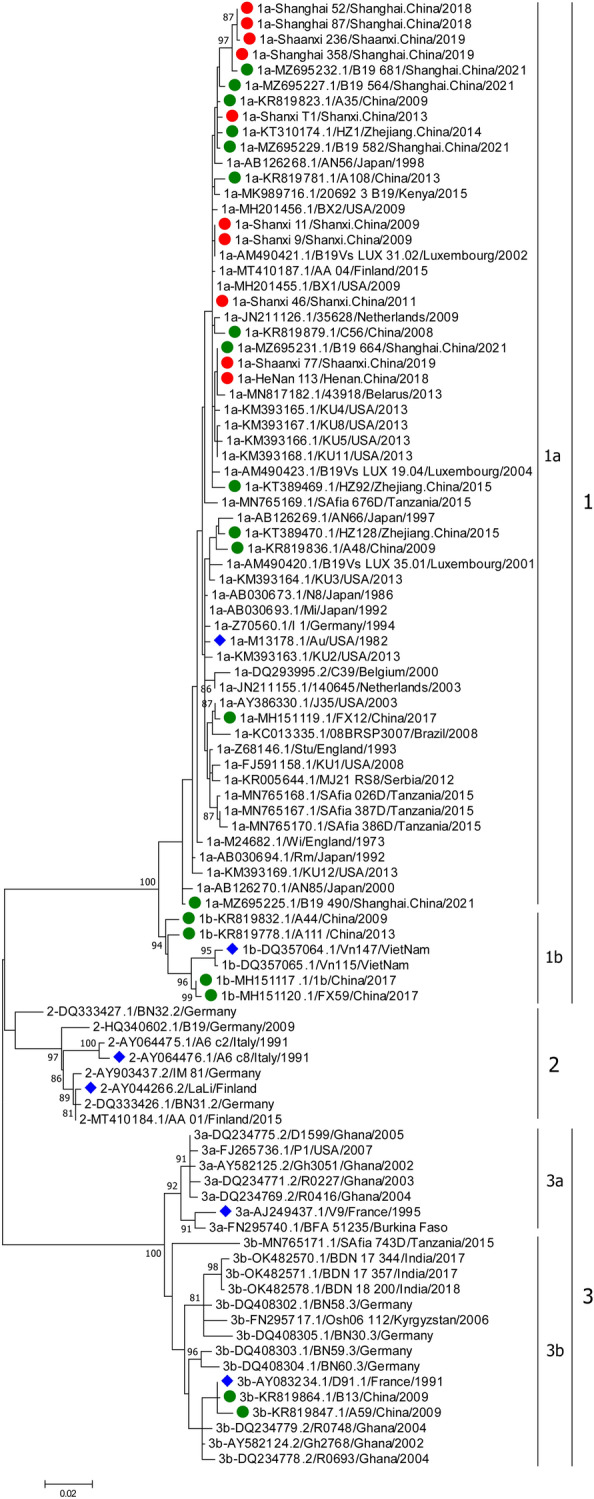
To understand the epidemiological and genetic characteristics of B19V, a multiple-province surveillance of patients with febrile rash illnesses (FRIs) were conducted in China during 2009 ~ 2021. The clinical specimens of 3,820 FRI patients were collected and tested for B19V DNA. A total of 99 (2.59%) patients were positive for B19V, and 49 (49.49%) were children under 5 years old. B19V infections occurred throughout the year without obvious seasonal pattern. Ten NS1-VP1u sequences and seven genome sequences were obtained in this study, identified as subgenotype 1a. Combined with the globally representative genome sequences, no temporal and geographic clustering trends of B19V were observed, and there was no significant correlation between B19V sequences and clinical manifestations. The evolutionary rate of the B19V genome was 2.30 × 10⁻⁴ substitutions/site/year. The number of negative selection sites was higher than that of positive selection sites. It was the first to comprehensively describe the prevalence patterns and evolutionary characteristics of B19V in FRI patients in China. B19V played the role in FRI patients. Children under 5 years old were the main population of B19V infection. Subgenotype 1a was prevalent in FRI patients in China. B19V showed a high mutation rate, while negative selection acted on the genome.
© 2023. Springer Nature Limited.
Conflict of interest statement
The authors declare no competing interests.
Figures
References
Publication types
MeSH terms
LinkOut - more resources
Full Text Sources
Medical
