


Chronotype delay and sleep disturbances shaped by the Antarctic polar night
- PMID: 37743400
- PMCID: PMC10518309
- DOI: 10.1038/s41598-023-43102-0
Chronotype delay and sleep disturbances shaped by the Antarctic polar night
Abstract
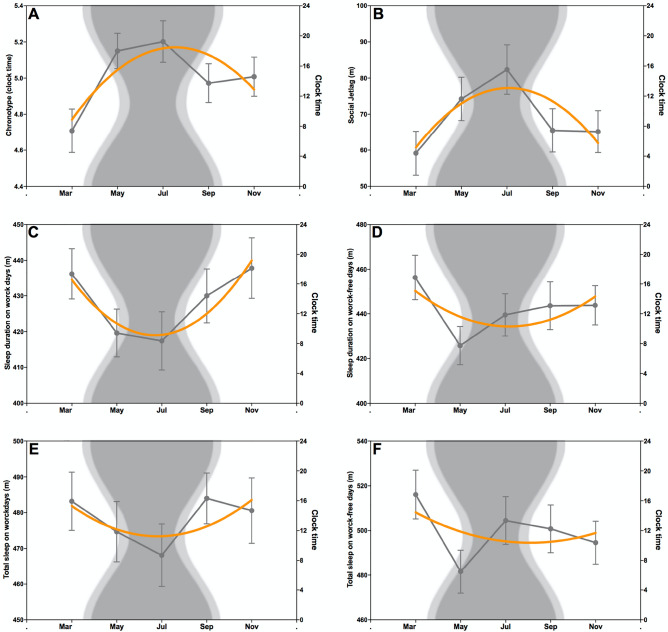
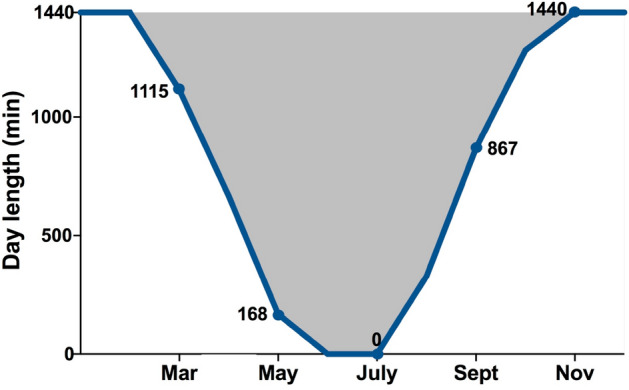
Chronotype is a reliable biomarker for studying the influence of external zeitgebers on circadian entrainment. Assessment of chronotype variation in participants exposed to extreme photoperiods may be useful to investigate how changes in light-dark cycle modulate the circadian system. This study aimed to examine chronotype and sleep changes during a winter campaign at the Argentine Antarctic station Belgrano II. A sample of 82 men who overwintered in Antarctica completed the Munich Chronotype Questionnaire during March (daylight length: 18.6 h), May (daylight length: 2.8 h), July (daylight length: 0 h), September (daylight length: 14.5 h), November (daylight length: 24 h). The main results showed a decrease in sleep duration and a delay in chronotype and social jetlag during the polar night, highlighting the influence of social cues and the impact of the lack of natural light on circadian rhythms.
© 2023. Springer Nature Limited.
Conflict of interest statement
The authors declare no competing interests.
Figures
References
-
- Horne JA, Ostberg O. A self-assessment questionnaire to determine morningness-eveningness in human circadian rhythms. Int. J. Chronobiol. 1976;4:97–110. - PubMed
Publication types
MeSH terms
LinkOut - more resources
Full Text Sources
Medical
