


Impact of modifiable lifestyle risk factors for prostate cancer prevention: a review of the literature
- PMID: 37746271
- PMCID: PMC10515617
- DOI: 10.3389/fonc.2023.1203791
Impact of modifiable lifestyle risk factors for prostate cancer prevention: a review of the literature
Abstract
Introduction: Although prostate cancer (PCa) is one of the most common cancers among men, the impact of modifiable risk and protective factors is still being debated. This review aims to qualitatively summarize the most recent studies related to potential healthy lifestyle factors affecting the development of PCa.
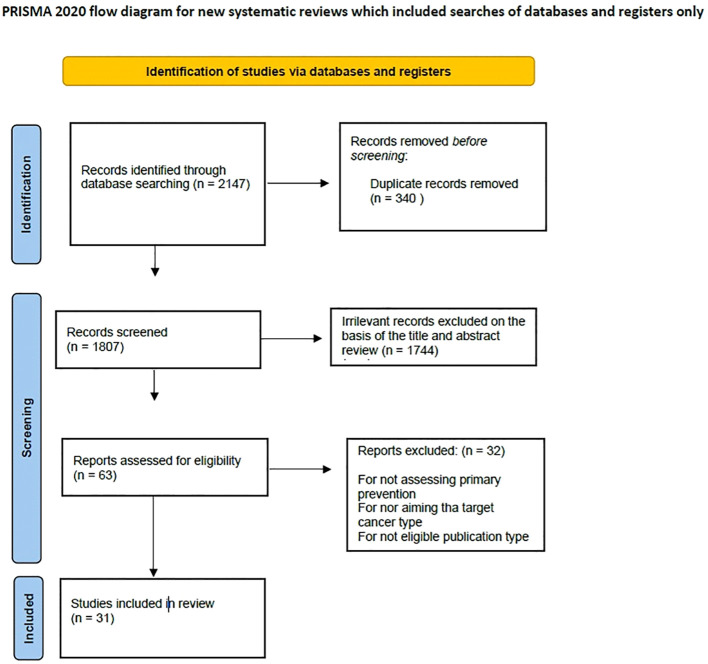
Methods for data acquisition: The literature focusing on modifiable risk factors for prostate cancer was reviewed. Medline and Embase via the Ovid database were searched, and all relevant and inherent articles were analyzed. Non-eligible publications, such as review articles, editorials, comments, guidelines, or case reports, were excluded.
Synthesis of the evidence obtained from data analysis: This review confirms that there is strong evidence that being overweight or obese increases the risk of advanced prostate cancer (assessed by body mass index (BMI), waist circumference, and waist-hip ratio), particularly considering central adiposity and ethnicity as contributing factors. The possible contribution of smoking still seems not entirely clear, while alcohol seems to affect PCa prevention in patients taking 5α-reductase inhibitors (5-ARIs). Dietary fibers may have anti-inflammatory properties and improve insulin sensitivity by reducing IGF bioactivity. In particular, dietary fiber intake like insoluble and legume fibers may be inversely associated with prostate cancer risk. Also, hyperglycemia and hyperinsulinemia, with untreated diabetic fasting blood glucose levels, could be modifiable prostate cancer risk factors. In two studies, aspirin was associated with a lower risk of lethal PCa and overall mortality. Concerning the role of vitamins, despite conflicting and divergent results, serum retinol concentration seems to be associated with an increased risk of prostate cancer and high-grade prostate cancer. Some studies resulted in disagreement about the role of selenium and vitamin E. We found inconsistent and controversial findings about the association between vitamin D and prostate cancer risk.
Conclusion: Far from being conclusive evidence, our findings confirm some strong evidence already found in the previous literature and highlight the need to clarify the role of some risk factors whose role is not yet completely known. This effort would facilitate the cultural and social change that may allow the shift from the treatment of prostate cancer when diagnosed to the real efforts needed for systematic prevention.
Keywords: lifestyle; prevention; prevention policy; prostate cancer; risk factors.
Copyright © 2023 Ziglioli, Patera, Isgrò, Campobasso, Guarino and Maestroni.
Conflict of interest statement
The authors declare that the research was conducted in the absence of any commercial or financial relationships that could be construed as a potential conflict of interest.
References
Publication types
LinkOut - more resources
Full Text Sources
Research Materials
