


Peritoneal dialysis discontinuation: to the root of the problem
- PMID: 37747660
- PMCID: PMC10543152
- DOI: 10.1007/s40620-023-01759-w
Peritoneal dialysis discontinuation: to the root of the problem
Abstract
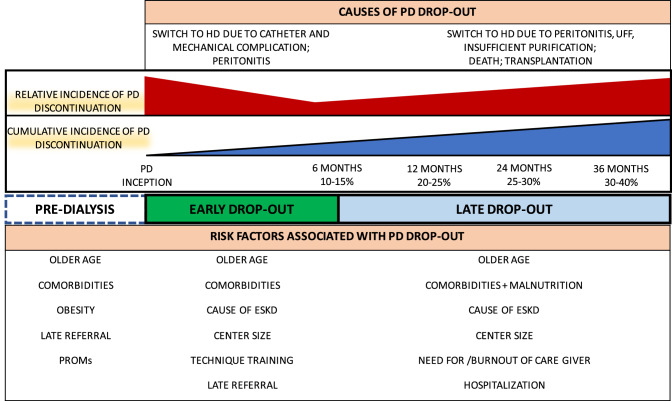
As the global burden of chronic kidney disease continues to increase, the use of peritoneal dialysis is often advocated as the preferred initial dialysis modality. Observational studies suggest a survival advantage for peritoneal dialysis over hemodialysis for the initial 2-3 years of dialysis. Peritoneal dialysis has been associated with better graft survival after kidney transplantation and has a reduced cost burden compared to hemodialysis. However, several medical and non-medical reasons may limit access to peritoneal dialysis, and less than 20% of patients with end-stage kidney disease are treated with peritoneal dialysis worldwide. In this narrative review, we sought to summarize the recent medical literature on risk factors for peritoneal dialysis discontinuation, distinguishing the early and the late phase after peritoneal dialysis initiation. Although the definition of clinically relevant outcomes varies among studies, we observed that center size, older age, and the presence of many comorbidities are risk factors associated with peritoneal dialysis discontinuation, regardless of the phase after peritoneal dialysis initiation. On the contrary, poor technique training and late referral to nephrology care, as opposed to the need for a caregiver, patient burnout and frequent hospitalizations, are related to early and late peritoneal dialysis drop-out, respectively. The aim of the review is to provide an overview of the most relevant parameters to be considered when advising patients in the selection of the most appropriate dialysis modality and in the clinical management of peritoneal dialysis patients. In addition, we wish to provide the readers with a critical appraisal of current literature and a call for a consensus on the definition of clinically relevant outcomes in peritoneal dialysis to better address patients' needs.
Keywords: Discontinuation; Hemodialysis; Outcome; Peritoneal dialysis; Survival.
© 2023. The Author(s).
Conflict of interest statement
Auhtors have not financial or non-financial interests directly or indirectly related to the work submitted for publication to disclose.
Figures
References
-
- Ngamvichchukorn T, Ruengorn C, Noppakun K, Thavorn K, Hutton B, Sood MM, Knoll GA, Nochaiwong S. Association between pretransplant dialysis modality and kidney transplant outcomes: a systematic review and meta-analysis. JAMA Netw Open. 2022;5(10):e2237580. doi: 10.1001/jamanetworkopen.2022.37580. - DOI - PMC - PubMed
-
- Couceiro C, Rama I, Comas J, Montero N, Manonelles A, Codina S, Fava A, Melilli E, Coloma A, Quero M, et al. Effect of kidney replacement therapy modality after first kidney graft failure on second kidney transplantation outcomes. Clin Kidney J. 2022;15(11):2046–2055. doi: 10.1093/ckj/sfac155. - DOI - PMC - PubMed
Publication types
MeSH terms
LinkOut - more resources
Full Text Sources
Medical
Research Materials
Miscellaneous
