


Expanding the Paradigm for Cardiovascular Palliative Care
- PMID: 37747951
- PMCID: PMC10539017
- DOI: 10.1161/CIRCULATIONAHA.123.063193
Expanding the Paradigm for Cardiovascular Palliative Care
Abstract
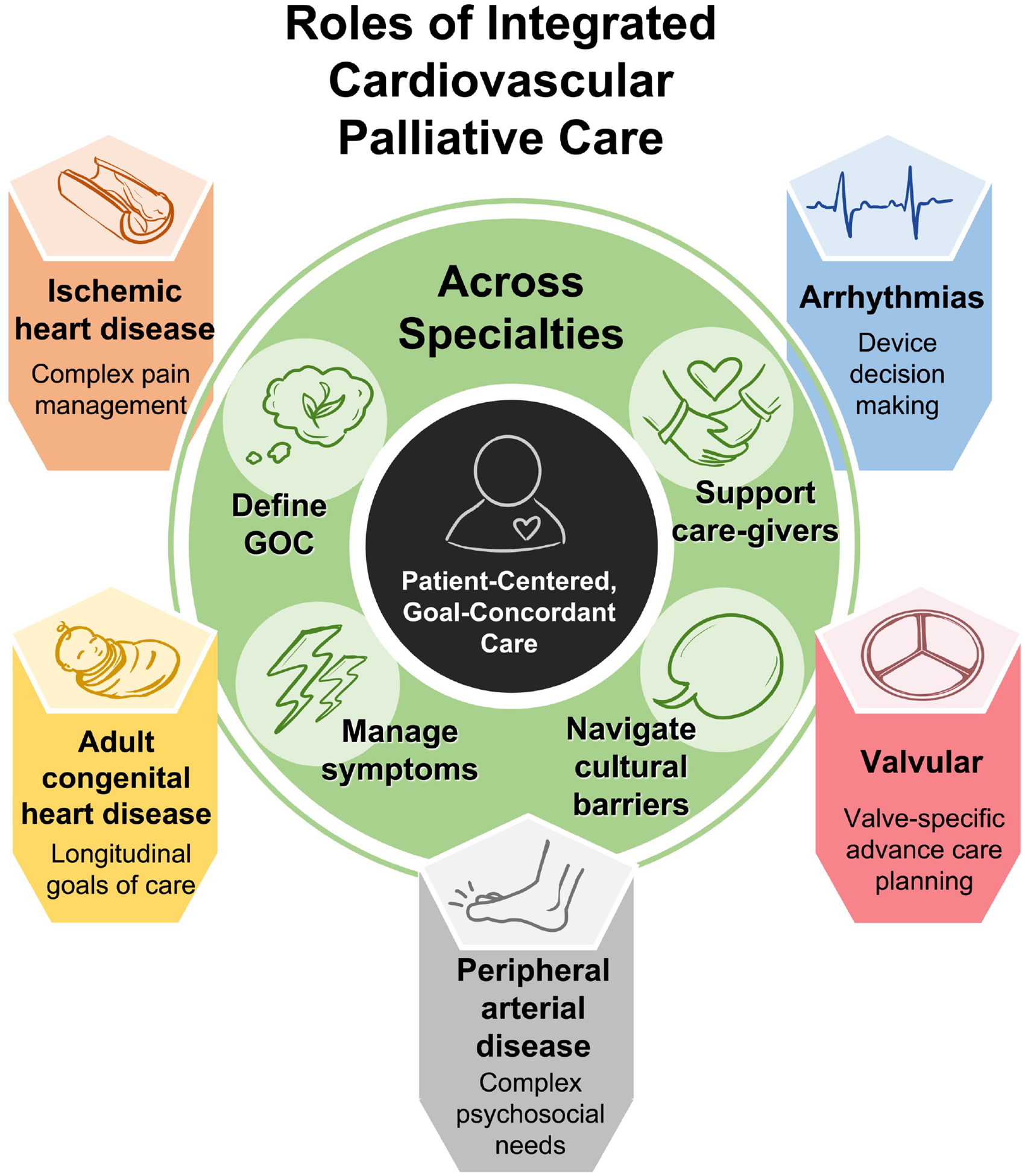
Cardiovascular disease (CVD) is the leading cause of death worldwide. Despite medical advances, patients with CVD experience high morbidity and mortality rates, affecting their quality of life and death. Among CVD conditions, palliative care has been studied mostly in patients with heart failure, where palliative care interventions have been associated with improvements in patient-centered outcomes, including quality of life, end-of-life care, and health care use. Although palliative care is now incorporated into the American Heart Association/American College of Cardiology/Heart Failure Society of America guidelines for heart failure, the role of palliative care for non-heart failure CVD remains uncertain. Across all causes of CVD, palliative care can play an important role in all domains of CVD care from initial diagnosis to terminal care. In addition to general cardiovascular palliative care practices applicable to all areas, disease-specific palliative care needs may warrant individualized palliative care models. In this review, we discuss the role of cardiovascular palliative care for ischemic heart disease, valvular disease, arrhythmias, peripheral artery disease, and adult congenital heart disease. Although there are multiple barriers to cardiovascular palliative care, we recommend a framework for studying and developing cardiovascular palliative care models to improve patient-centered goal-concordant care for this underserved patient population.
Keywords: decision making, shared; palliative care; patient care planning.
Conflict of interest statement
Figures
References
-
- Centers for Disease Control and Prevention, National Center for Health Statistics. About Multiple Cause of Death, 1999–2020. CDC WONDER Online Database website. 2022;
-
- Sidebottom AC, Jorgenson A, Richards H, Kirven J, Sillah A. Inpatient palliative care for patients with acute heart failure: outcomes from a randomized trial. J Palliat Med. 2015;18:134–142. - PubMed
Publication types
MeSH terms
Grants and funding
LinkOut - more resources
Full Text Sources
Medical
