


The giant flexoelectric effect in a luffa plant-based sponge for green devices and energy harvesters
- PMID: 37748078
- PMCID: PMC10556619
- DOI: 10.1073/pnas.2311755120
The giant flexoelectric effect in a luffa plant-based sponge for green devices and energy harvesters
Abstract
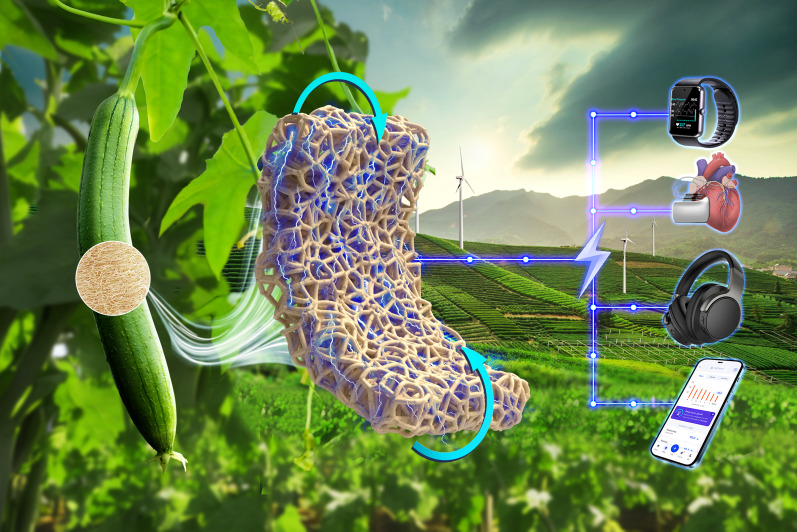
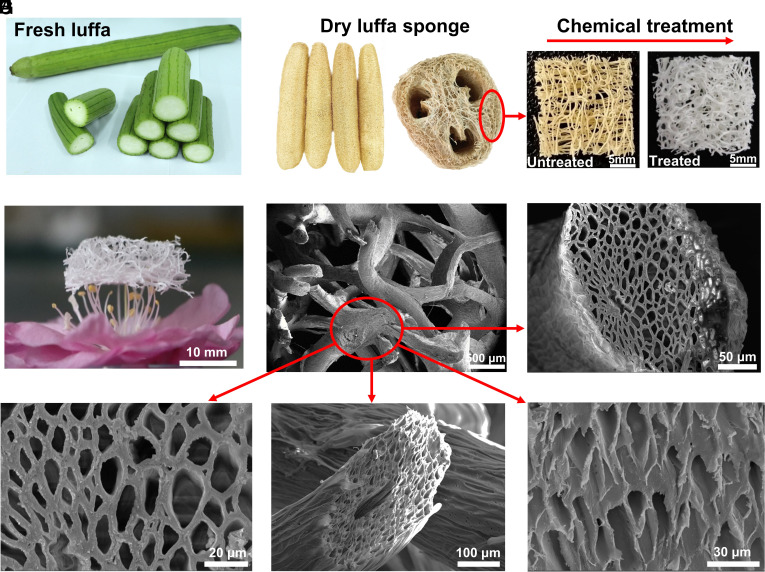
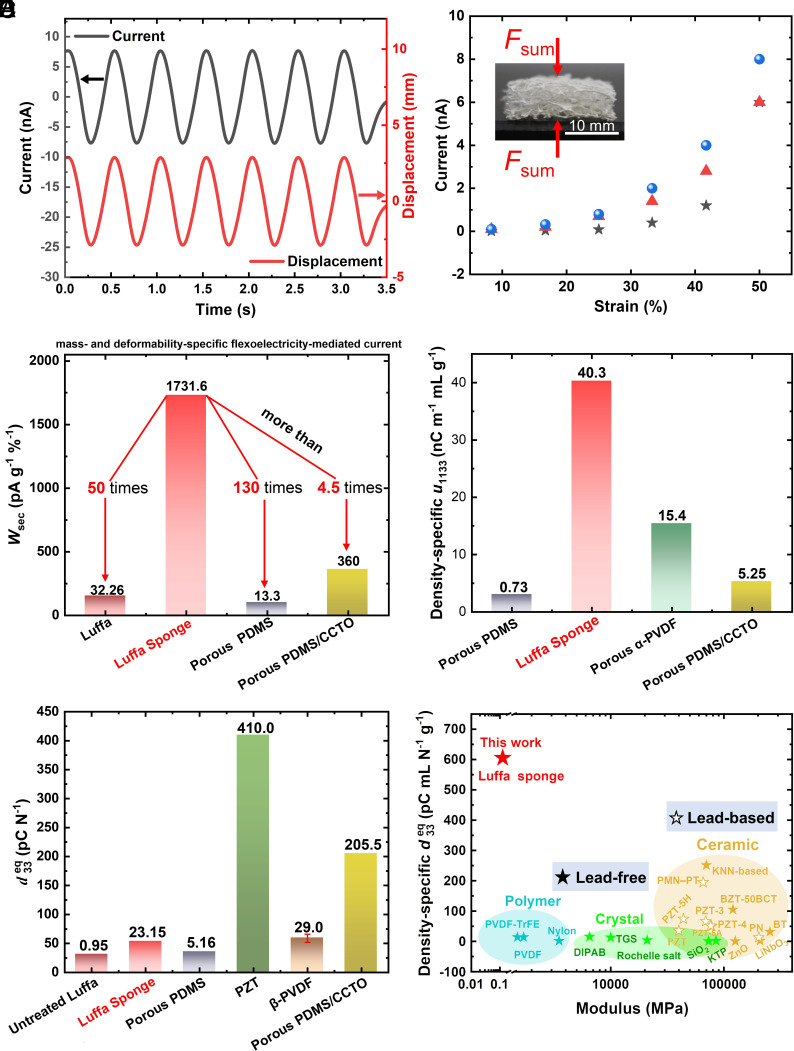
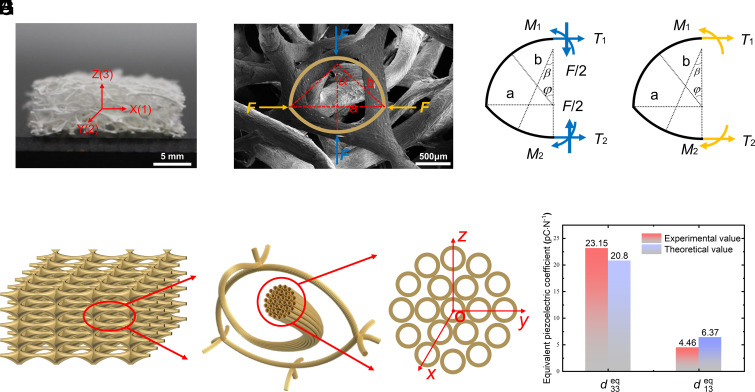
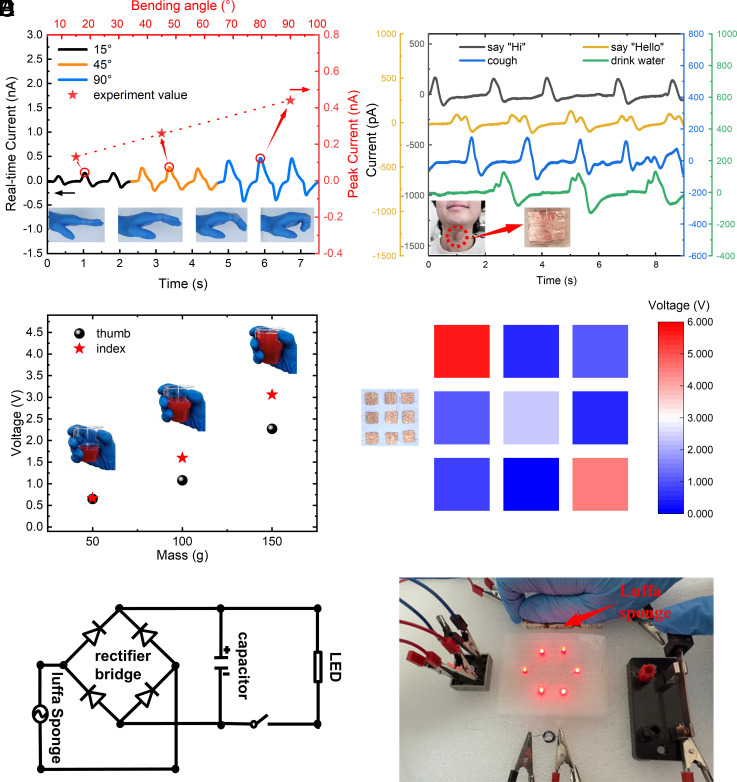
Soft materials that can produce electrical energy under mechanical stimulus or deform significantly via moderate electrical fields are important for applications ranging from soft robotics to biomedical science. Piezoelectricity, the property that would ostensibly promise such a realization, is notably absent from typical soft matter. Flexoelectricity is an alternative form of electromechanical coupling that universally exists in all dielectrics and can generate electricity under nonuniform deformation such as flexure and conversely, a deformation under inhomogeneous electrical fields. The flexoelectric coupling effect is, however, rather modest for most materials and thus remains a critical bottleneck. In this work, we argue that a significant emergent flexoelectric response can be obtained by leveraging a hierarchical porous structure found in biological materials. We experimentally illustrate our thesis for a natural dry luffa vegetable-based sponge and demonstrate an extraordinarily large mass- and deformability-specific electromechanical response with the highest-density-specific equivalent piezoelectric coefficient known for any material (50 times that of polyvinylidene fluoride and more than 10 times that of lead zirconate titanate). Finally, we demonstrate the application of the fabricated natural sponge as green, biodegradable flexible smart devices in the context of sensing (e.g., for speech, touch pressure) and electrical energy harvesting.
Keywords: energy harvester; flexible sensor; flexoelectricity; green device; luffa plant-based sponge.
Conflict of interest statement
The authors declare no competing interest.
Figures
References
-
- Xie L., et al. , Intelligent wearable devices based on nanomaterials and nanostructures for healthcare. Nanoscale 15, 405–433 (2023). - PubMed
-
- Romasanta L. J., Verdejo R., Increasing the performance of dielectric elastomer actuators: A review from the materials perspective. Prog. Polym. Sci. 51, 188–211 (2015).
-
- Radousky H. B., Liang H., Energy harvesting: An integrated view of materials, devices and applications. Nanotechnology 23, 502001 (2012). - PubMed
-
- Bowen C. R., Kim H. A., Weaver P. M., Dunn S., Piezoelectric and ferroelectric materials and structures for energy harvesting applications. Energy Environ. Sci. 7, 25–44 (2014).
Grants and funding
LinkOut - more resources
Full Text Sources
Medical
