


Effects of adolescent methylphenidate administration on methamphetamine conditioned place preference in an animal model of attention-deficit/hyperactivity disorder: Examination of potential sex differences
- PMID: 37748422
- PMCID: PMC10615784
- DOI: 10.1016/j.drugalcdep.2023.110970
Effects of adolescent methylphenidate administration on methamphetamine conditioned place preference in an animal model of attention-deficit/hyperactivity disorder: Examination of potential sex differences
Abstract
Background: Individuals with attention-deficit/hyperactivity disorder (ADHD) are more likely to be diagnosed with a substance use disorder; however, the effects of long-term psychostimulant treatment on addiction are mixed. Preclinical studies are useful for further elucidating the relationship between ADHD and addiction-like behaviors, but these studies have focused on male subjects only. The goal of the current study was to determine if early-life administration of methylphenidate (MPH) augments methamphetamine (METH) conditioned place preference (CPP) and/or potentiates reinstatement of CPP in both male and female rats.
Methods: Male and female spontaneously hypertensive rats (SHRs) and Wistar-Kyoto rats (WKYs) received either MPH (1.5mg/kg; p.o.) or vehicle (1.0ml/kg) during adolescence (postnatal day [PND] ~29-57). Two weeks after cessation of MPH treatment, rats were tested for METH CPP (1.0mg/kg or 2.0mg/kg; s.c.). Rats were then given extinction sessions. Once rats met extinction criteria, they were tested for reinstatement of CPP following a priming injection of METH (0.25mg/kg; s.c.).
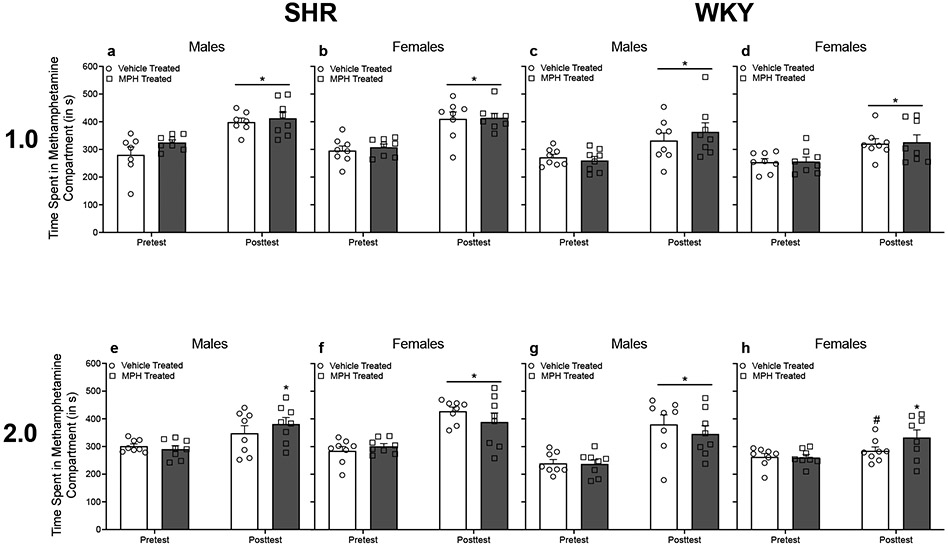
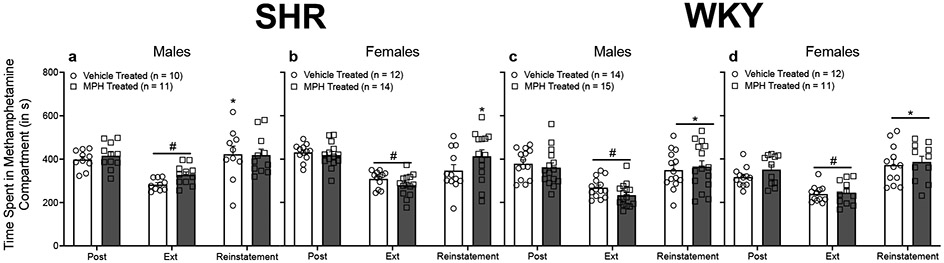
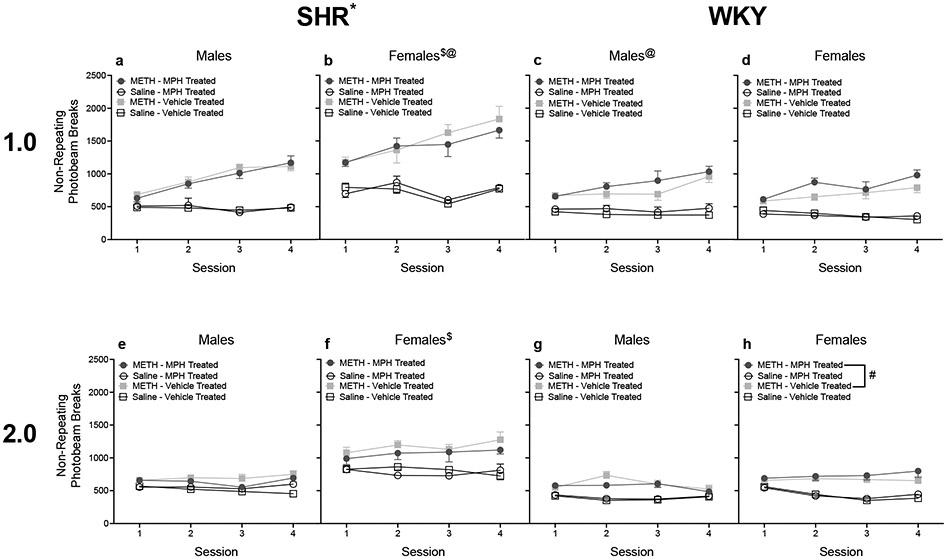
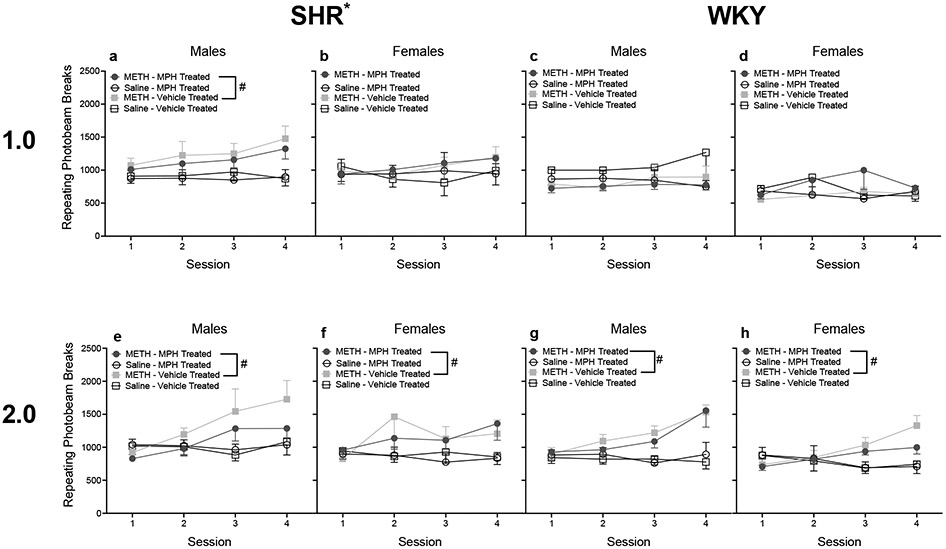
Results: All groups developed METH CPP, except vehicle-treated SHR males and vehicle-treated WKY females conditioned with the higher dose of METH (2.0mg/kg). Female SHRs treated with MPH showed greater reinstatement of METH CPP compared to female SHRs treated with vehicle. Adolescent MPH treatment did not augment the locomotor-stimulant effects of METH in adulthood.
Conclusions: These results demonstrate the importance of considering biological sex when prescribing psychostimulant medications for ADHD as long-term MPH administration may increase the risk of continued drug use in females with ADHD following a period of abstinence.
Keywords: Attention-deficit/hyperactivity disorder; Conditioned place preference; Reinstatement; Sex differences; Spontaneously hypertensive rat; Wistar Kyoto rat.
Copyright © 2023 Elsevier B.V. All rights reserved.
Conflict of interest statement
Declaration of Competing Interest None of the authors have any conflicts of interest.
Figures
References
-
- American Psychiatric Association, 2013. Diagnostic and statistical manual of mental disorders, 5th.
-
- Augustyniak PN, Kourrich S, Rezazadeh SM, Stewart J, Arvanitogiannis A, 2006. Differential behavioral and neurochemical effects of cocaine after early exposure to methylphenidate in an animal model of attention deficit hyperactivity disorder. Behav. Brain Res 167(2), 379–382. 10.1016/j.bbr.2005.09.014 - DOI - PubMed
-
- Baskin BM, Dwoskin LP, Kantak KM, 2015. Methylphenidate treatment beyond adolescence maintains increased cocaine self-administration in the spontaneously hypertensive rat model of attention deficit/hyperactivity disorder. Pharmacol. Biochem. Behav 131, 51–56. 10.1016/j.pbb.2015.01.019 - DOI - PMC - PubMed
Publication types
MeSH terms
Substances
Grants and funding
LinkOut - more resources
Full Text Sources
Medical
Miscellaneous
