


Simultaneous bioreduction of tellurite and selenite by Yarrowia lipolytica, Trichosporon cutaneum, and their co-culture along with characterization of biosynthesized Te-Se nanoparticles
- PMID: 37749532
- PMCID: PMC10519092
- DOI: 10.1186/s12934-023-02204-0
Simultaneous bioreduction of tellurite and selenite by Yarrowia lipolytica, Trichosporon cutaneum, and their co-culture along with characterization of biosynthesized Te-Se nanoparticles
Abstract
Background: Natural and anthropogenic activities, such as weathering of rocks and industrial processes, result in the release of toxic oxyanions such as selenium (Se) and tellurium (Te) into the environment. Due to the high toxicity of these compounds, their removal from the environment is vital.
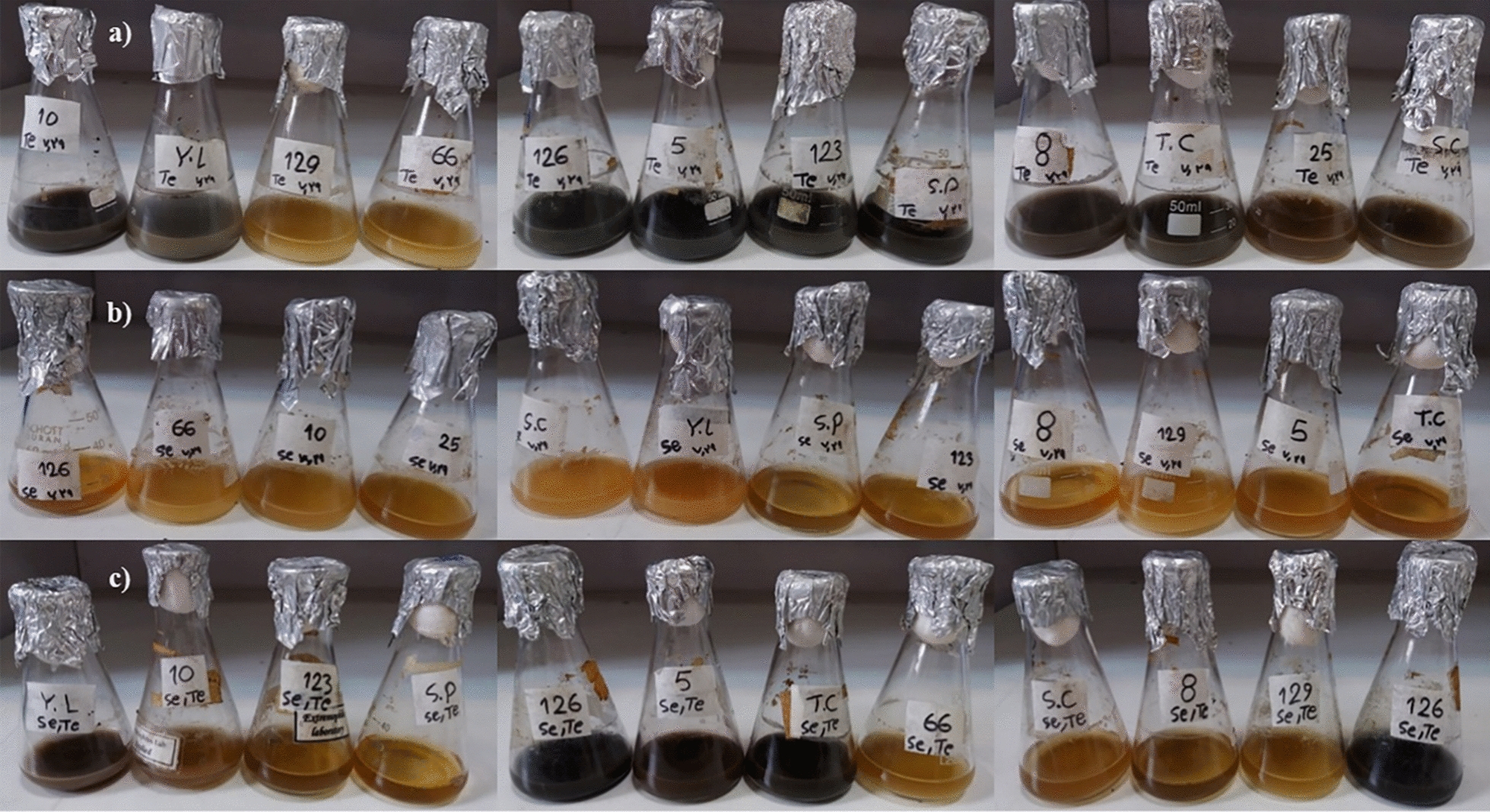
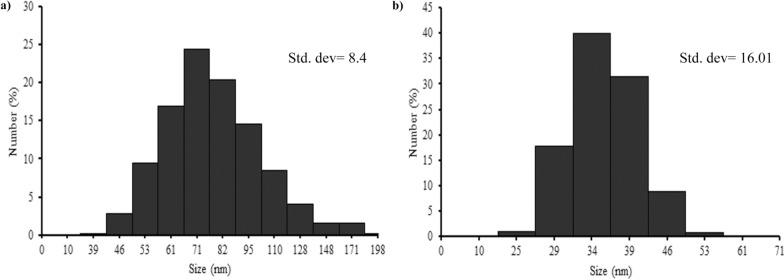
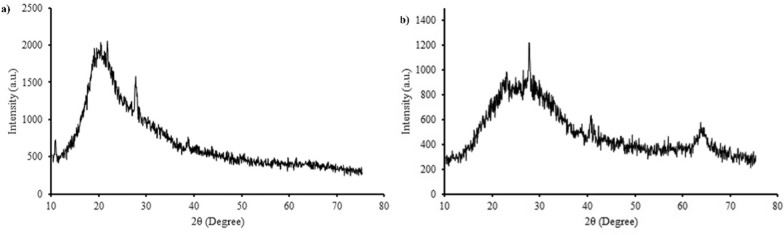
Results: In this study, two yeast strains, Yarrowia lipolytica and Trichosporon cutaneum, were selected as the superior strains for the bioremediation of tellurium and selenium. The reduction analyses showed that exposure to selenite induced more detrimental effects on the strains compared to tellurite. In addition, co-reduction of pollutants displayed almost the same results in selenite reduction and more than ~ 20% higher tellurite reduction in 50 h, which shows that selenite triggered higher tellurite reduction in both strains. The selenite and tellurite kinetics of removal were consistent with the first-order model because of their inhibitory behavior. The result of several characterization experiments, such as FE-SEM (Field emission scanning electron microscopy), dynamic light scattering (DLS), Fourier-transform infrared spectroscopy (FTIR), X-ray diffractometer (XRD), and dispersive X-ray (EDX) on Te-Se nanoparticles (NPs) revealed that the separated Te-Se NPs were needle-like, spherical, and amorphous, consisted of Te-Se NPs ranging from 25 to 171 nm in size, and their surface was covered with different biomolecules.
Conclusions: Remarkably, this work shows, for the first time, the simultaneous bioreduction of tellurite and selenite and the production of Te-Se NPs using yeast strains, indicating their potential in this area, which may be applied to the nanotechnology industry and environmental remediation.
Keywords: Bioremediation; Co-contamination; Kinetics; Metalloid oxyanions; Te–Se nanoparticles; Yeast.
© 2023. BioMed Central Ltd., part of Springer Nature.
Conflict of interest statement
The authors declare no competing interests.
Figures



References
-
- George MW. Selenium and tellurium. Metals and Minerals: US Geological Survey Minerals Yearbook. United States Geological Survey, 2003.
-
- Spinks SC, Parnell J, Bellis D, Still J. Remobilization and mineralization of selenium–tellurium in metamorphosed red beds: evidence from the Munster Basin, Ireland. Ore Geol Rev. 2016;72:114–127.
-
- Soda S, Kashiwa M, Kagami T, Kuroda M, Yamashita M, Ike M. Laboratory-scale bioreactors for soluble selenium removal from selenium refinery wastewater using anaerobic sludge. Desalination. 2011;279(1–3):433–438.
-
- Vendruscolo F, da Rocha Ferreira GL, Antoniosi Filho NR. Biosorption of hexavalent chromium by microorganisms. Int Biodeterior Biodegr. 2017;119:87–95.
-
- Perkins WT. Extreme selenium and tellurium contamination in soils—an eighty year-old industrial legacy surrounding a Ni refinery in the Swansea Valley. Sci Total Environ. 2011;412:162–169. - PubMed
MeSH terms
Substances
Supplementary concepts
LinkOut - more resources
Full Text Sources
