Review
. 2023 Sep 25;21(1):259.
doi: 10.1186/s12964-023-01263-5.

Functional diversity of c-di-GMP receptors in prokaryotic and eukaryotic systems

Affiliations
Review

Functional diversity of c-di-GMP receptors in prokaryotic and eukaryotic systems

Fazlurrahman Khan et al. Cell Commun Signal. .

Abstract

Cyclic bis-(3', 5')-dimeric guanosine monophosphate (c-di-GMP) is ubiquitous in many bacterial species, where it functions as a nucleotide-based secondary messenger and is a vital regulator of numerous biological processes. Due to its ubiquity, most bacterial species possess a wide range of downstream receptors that has a binding affinity to c-di-GMP and elicit output responses. In eukaryotes, several enzymes and riboswitches operate as receptors that interact with c-di-GMP and transduce cellular or environmental signals. This review examines the functional variety of receptors in prokaryotic and eukaryotic systems that exhibit distinct biological responses after interacting with c-di-GMP. Evolutionary relationships and similarities in distance among the c-di-GMP receptors in various bacterial species were evaluated to understand their specificities. Furthermore, residues of receptors involved in c-di-GMP binding are summarized. This review facilitates the understanding of how distinct receptors from different origins bind c-di-GMP equally well, yet fulfill diverse biological roles at the interspecies, intraspecies, and interkingdom levels. Furthermore, it also highlights c-di-GMP receptors as potential therapeutic targets, particularly those found in pathogenic microorganisms. Video Abstract.

Keywords: Bacteria; Binding affinity; Eukaryotes; Evolutionary relatedness; Interspecies; Receptor; c-di-GMP.


Conflict of interest statement

The authors declare no competing interests.

Figures
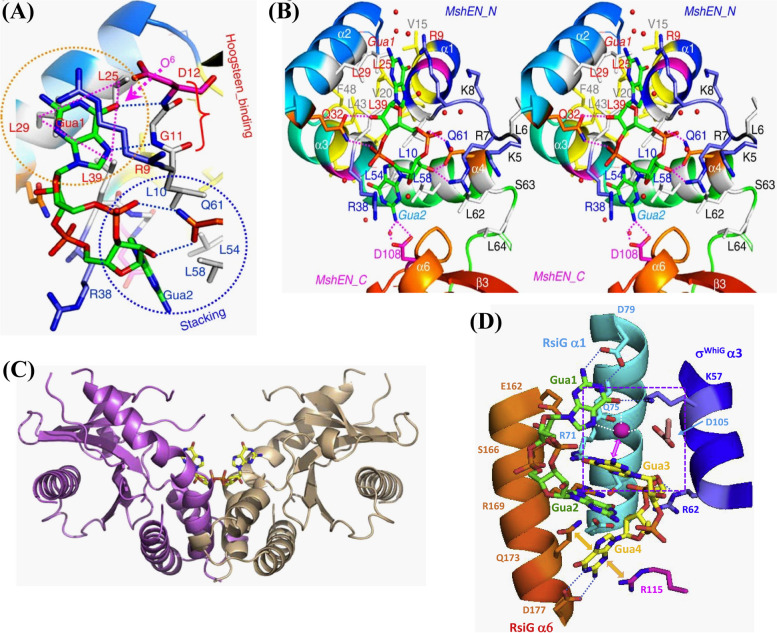
Fig. 1
Fig. 1
Hydrophobic interaction between c-di-GMP and MshEN receptor (A and B). Reproduced with permission from reference [21]. Copyright, 2016, Springer Nature, (C) Interaction of c-di-GMP with the dimer of STING in the symmetry. Reproduced with permission from reference [23]. Copyright, 2012, Elsevier Inc. and Copyright, and (D) The multiple non-covalent interactions of c-di-GMP dimer with the σWhiG and two α helices of RsiG in Streptomyces venezuelae. Reproduced with permission from reference [20]. Copyright, 2020, Elsevier Inc
Fig. 2
Fig. 2
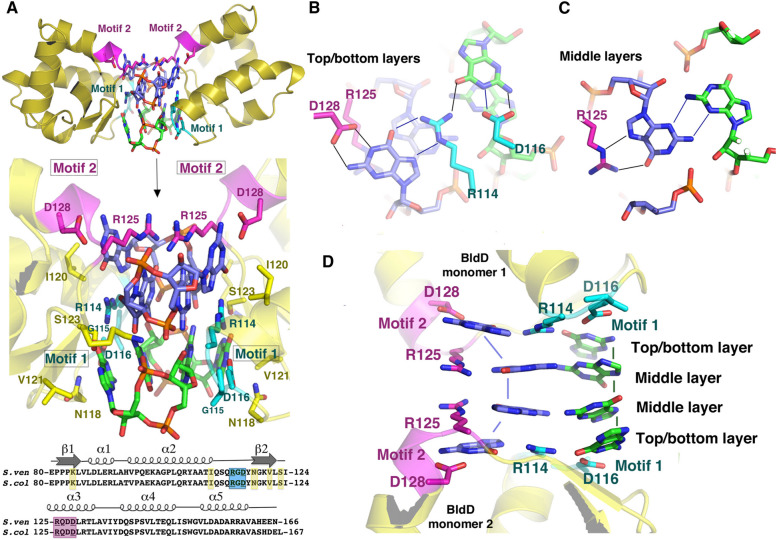
Interaction of tetrameric c-di-GMP with the two subunits of BldD via C-terminal domain with the involvement of bipartite RXD-X8-RXXD signature. (A) Structural details of BldD dimer-(c-di-GMP) complex, (B) Top and bottom layer of BldD C-terminal domain-(c-di-GMP) contact, (C) Middle layers of two c-di-GMP dimers that are intercalated, and (D) c-di-GMP layers in side view. Reprinted with permission from reference [25]. Copyright, 2014, Elsevier Inc
Fig. 3
Fig. 3
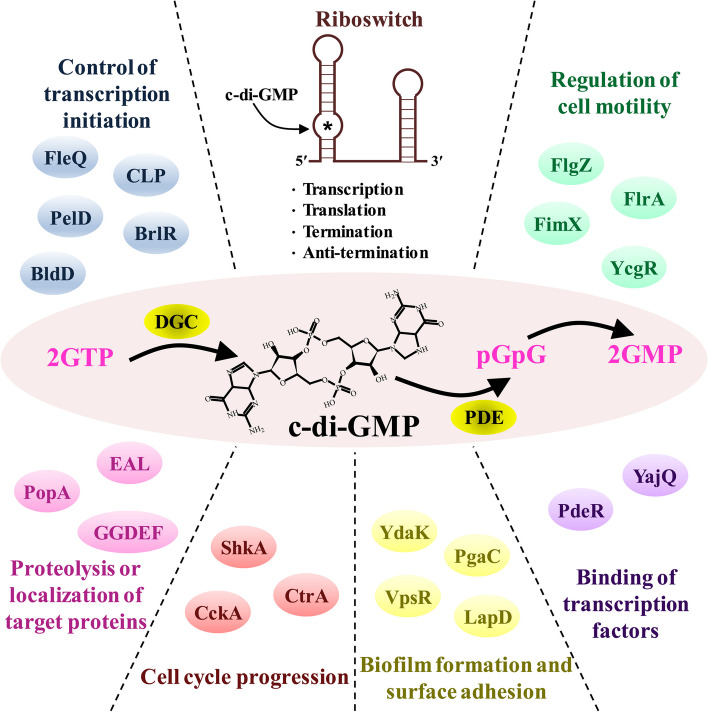
Interaction of c-di-GMP with different receptor proteins for controlling diverse biological roles in the bacterial system. The information obtained from the literature [–30]
Fig. 4
Fig. 4
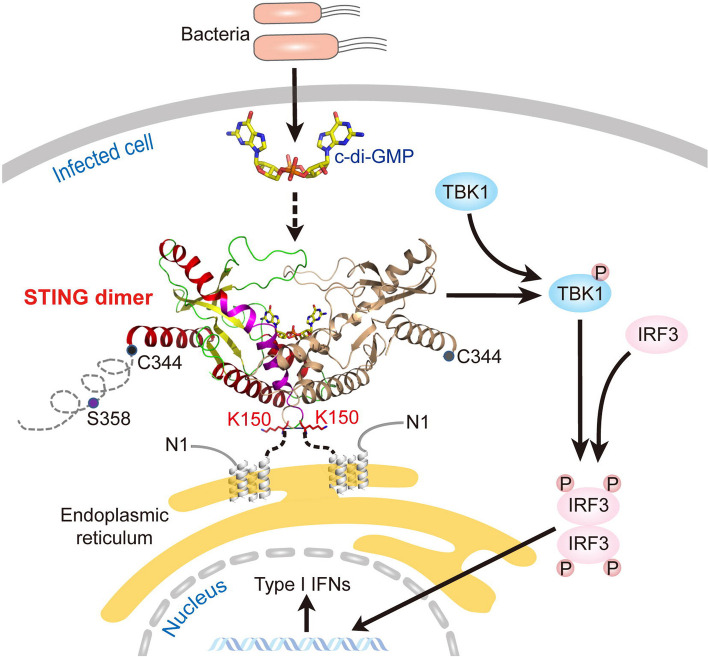
Downstream signaling induced by bacterial c-di-GMP binding to STING cognate receptors leads to the generation of type I IFNs through the IFN regulatory factor 3 and TANK-binding kinase 1 pathway. Reprinted with permission from the reference [129]. Copyright, 2012 Elsevier Inc
Fig. 5
Fig. 5
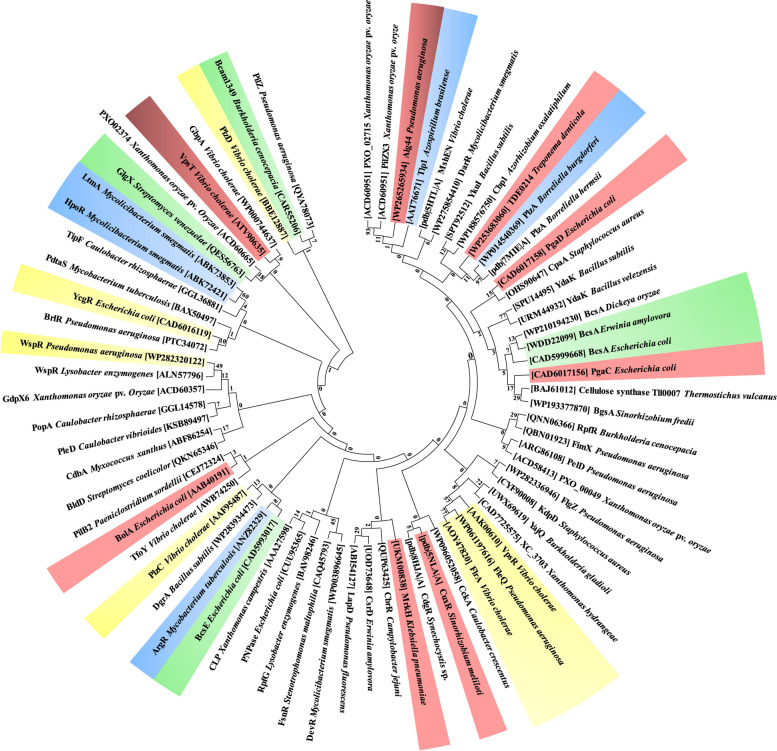
Phylogenetic tree of the c-di-GMP receptors from different species of bacteria. The red-colored proteins promote biofilm formation, the blue-colored proteins promote bacterial survival and adaptability, the yellow-colored proteins promote bacterial pathogenicity, and the green-colored proteins promote enzyme activity
Fig. 6
Fig. 6
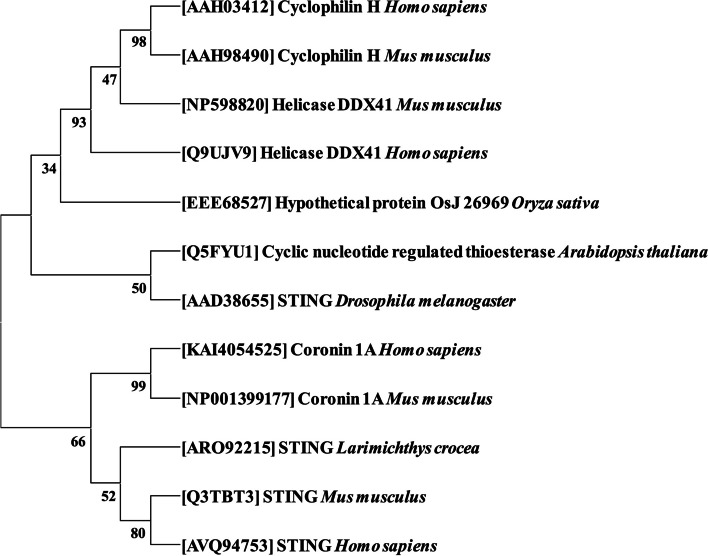
Phylogenetic tree of the c-di-GMP receptors from different eukaryotic organisms including humans

References

    1. Schirmer T, Jenal U. Structural and mechanistic determinants of c-di-GMP signalling. Nat Rev Microbiol. 2009;7:724–735. - PubMed
    1. Liu Y, Lee C, Li F, Trček J, Bähre H, Guo R-T, et al. A cyclic di-GMP network is present in gram-positive Streptococcus and gram-negative Proteus species. ACS Infect Dis. 2020;6:2672–87. - PMC - PubMed
    1. Römling U, Galperin MY, Gomelsky M. Cyclic di-GMP: The first 25 years of a universal bacterial second messenger. Microbiol Mol Biol Rev. 2013;77:1–52. - PMC - PubMed
    1. Jenal U, Reinders A, Lori C. Cyclic di-GMP: Second messenger extraordinaire. Nat Rev Microbiol. 2017;15:271–284. - PubMed
    1. Bordeleau E, Fortier LC, Malouin F, Burrus V. c-di-GMP turn-over in clostridium difficile is controlled by a plethora of diguanylate cyclases and phosphodiesterases. PLoS Genet. 2011;7:e1002039. - PMC - PubMed

LinkOut - more resources