Review
. 2023 Sep 26;14(1):6004.
doi: 10.1038/s41467-023-41679-8.

Mechanical metamaterials and beyond

Affiliations
Review

Mechanical metamaterials and beyond

Pengcheng Jiao et al. Nat Commun. .

Abstract

Mechanical metamaterials enable the creation of structural materials with unprecedented mechanical properties. However, thus far, research on mechanical metamaterials has focused on passive mechanical metamaterials and the tunability of their mechanical properties. Deep integration of multifunctionality, sensing, electrical actuation, information processing, and advancing data-driven designs are grand challenges in the mechanical metamaterials community that could lead to truly intelligent mechanical metamaterials. In this perspective, we provide an overview of mechanical metamaterials within and beyond their classical mechanical functionalities. We discuss various aspects of data-driven approaches for inverse design and optimization of multifunctional mechanical metamaterials. Our aim is to provide new roadmaps for design and discovery of next-generation active and responsive mechanical metamaterials that can interact with the surrounding environment and adapt to various conditions while inheriting all outstanding mechanical features of classical mechanical metamaterials. Next, we deliberate the emerging mechanical metamaterials with specific functionalities to design informative and scientific intelligent devices. We highlight open challenges ahead of mechanical metamaterial systems at the component and integration levels and their transition into the domain of application beyond their mechanical capabilities.


Conflict of interest statement

The authors declare no competing interests.

Figures
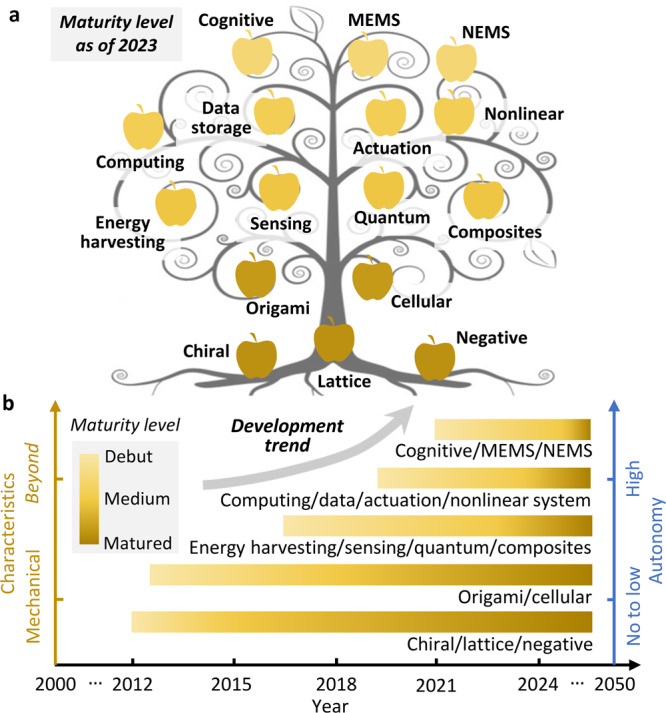
Fig. 1
Fig. 1. Mechanical metamaterial tree of knowledge.
a Progression and future of mechanical metamaterials within and beyond the mechanical functionalities and toward achieving a level of cognition and autonomy. b Maturity level of mechanical metamaterials with the development trend leading to cognitive integrated mechanical metamaterial systems.
Fig. 2
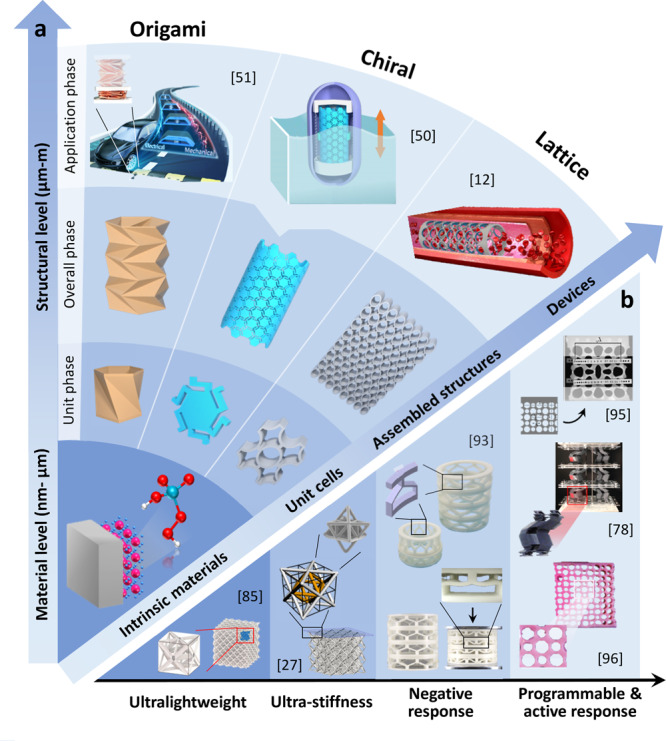
Fig. 2. Principles, main categories, and properties of mechanical metamaterials.
a Formation of mechanical metamaterials at the material to structural levels. Categories of mechanical metamaterials, such as origami, chiral, and lattice metamaterials, based on the microstructures and their typical applications, , . b Extraordinary mechanical characteristics of mechanical metamaterials as ultra-lightweight, ultra-stiffness, negative response, and programmable response, , , , , .
Fig. 3
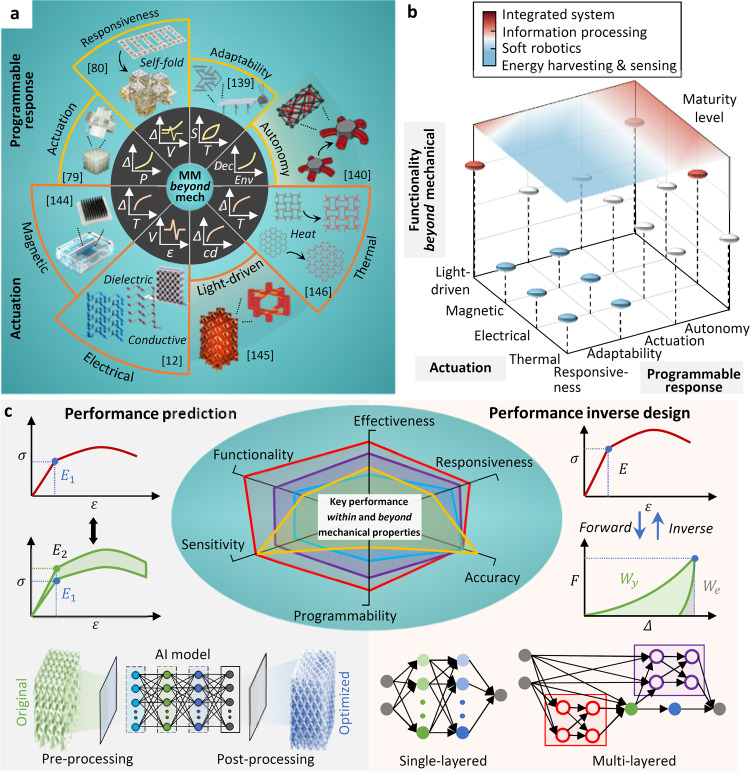
Fig. 3. Mechanical metamaterials beyond mechanical properties.
a Programmable response of mechanical metamaterials in responsiveness, adaptability, actuation and autonomy, , , , and actuation of mechanical metamaterials subjected to electrical, thermal, magnetic and light-driven excitations, –. b Maturity levels of the functionalities beyond mechanical in energy harvesting, soft robotics, information processing, and integrated system with respect to programmable response and actuation. c AI-enhanced mechanical metamaterials in performance prediction that collects and processes response data to train and validate algorithms to develop AI models to predict key response such as stress-strain relationship, and performance inverse design that inverses the procedures to determine the variables based on predefined response.
Fig. 4
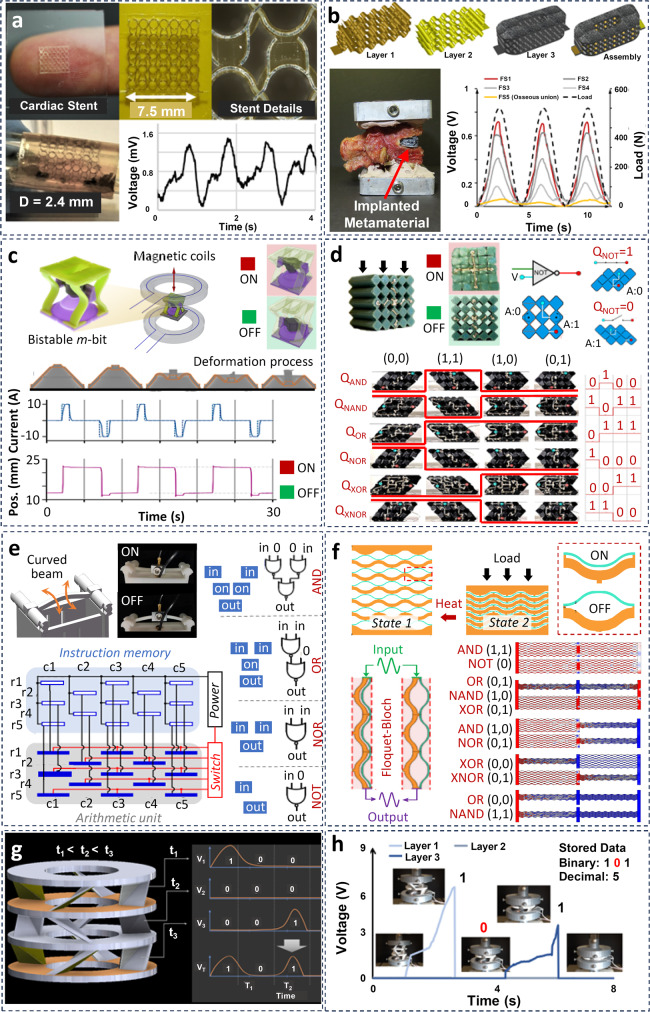
Fig. 4. Emerging mechanical metamaterial devices.
Examples of multifunctional metamaterial implantable devices with tunable mechanical properties. These implants are capable of self-powering, automatically responding to their environments, and monitoring their condition: (a) A metamaterial cardiovascular stent for continuous measurement of the artery radial pressure changes due to tissue overgrowth. b A self-powered metamaterial spinal fusion interbody device for monitoring bone healing progress. c Tileable mechanical metamaterial with stable memory at the unit-cell level. d Cellular mechanical metamaterials composed of conductive polymers to realize all digital logic gates and gate assemblies. e Mechanological metamaterials to obtain logical computing by imposing sequential excitations. f Elastic mechanical metamaterials with multistable states during the active regulation to adjust the starting and ending frequencies and broaden the frequency ranges of bandgaps and control the elastic wave propagation. g Working mechanism of the mechano-responsive data storage metamaterials. h An example that shows processing a string of codes “101” and decimal “5” incorporated into the structure of the mechano-responsive metamaterials.
Fig. 5
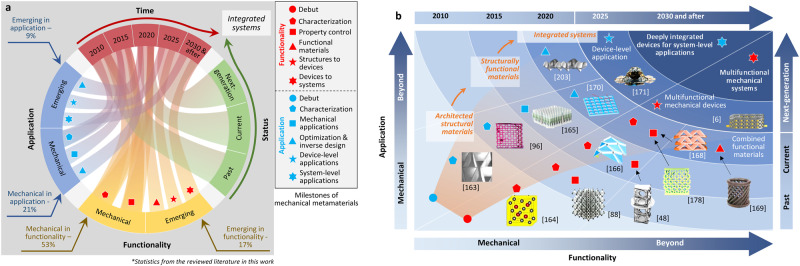
Fig. 5. Roadmap toward next-generation intelligent mechanical metamaterial devices and systems.
a Development context of mechanical metamaterials within and beyond the mechanical domain in terms of the key milestones since 2010. b Functionality and application of mechanical metamaterials within and beyond mechanical properties at different stages, , , , , –, –, .

References

    1. Bauer J, et al. Nanolattices: An emerging class of mechanical metamaterials. Adv. Mater. 2017;29:1701850. doi: 10.1002/adma.201701850. - DOI - PubMed
    1. Yu X, Zhou J, Liang H, Jiang Z, Wu L. Mechanical metamaterials associated with stiffness, rigidity and compressibility: A brief review. Prog. Mater. Sci. 2018;94:114–173. doi: 10.1016/j.pmatsci.2017.12.003. - DOI
    1. Wu L, et al. A brief review of dynamic mechanical metamaterials for mechanical energy manipulation. Mater. Today. 2021;44:168–193. doi: 10.1016/j.mattod.2020.10.006. - DOI
    1. Yasuda H, Korpas LM, Raney JR. Transition waves and formation of domain walls in multistable mechanical metamaterials. Phys. Rev. Appl. 2020;13:054067. doi: 10.1103/PhysRevApplied.13.054067. - DOI
    1. Mohammadi A, Tan Y, Choong P, Oetomo D. Flexible mechanical metamaterials enabling soft tactile sensors with multiple sensitivities at multiple force sensing ranges. Sci. Rep. 2021;11:24125. doi: 10.1038/s41598-021-03588-y. - DOI - PMC - PubMed