


A scoping literature review of the associations between highly visual social media use and eating disorders and disordered eating: a changing landscape
- PMID: 37752611
- PMCID: PMC10521472
- DOI: 10.1186/s40337-023-00898-6
A scoping literature review of the associations between highly visual social media use and eating disorders and disordered eating: a changing landscape
Abstract
Background: Although the etiology of eating disorders (ED) and disorder eating (DE) is multifactorial, exposure to highly visual social media (HVSM) may be an important contributor to the onset or worsening of DE and ED symptoms. We aim to understand HVSM use, ED, and DE with a particular focus on gender differences, as well as details of engagement on "selfies" in adolescents and young adults (AYA) through a scoping review of the literature.
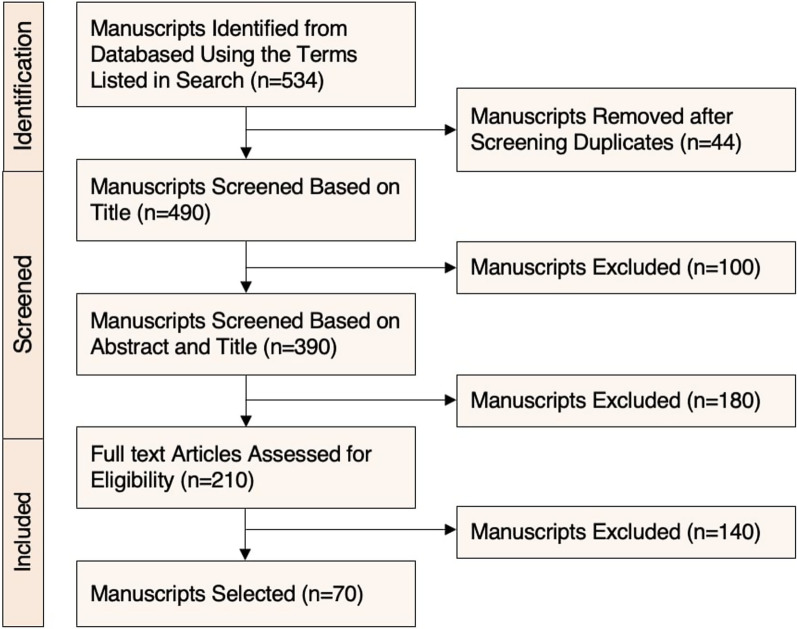
Methods: We conducted a literature search in Psycho ED, PubMed, MEDLINE of articles, including participants with DE/ED and users of HVSM, focused on AYA. Studies in which the study population did not include AYA, the SM platforms used did not include HVSM platforms, and the methodology to assess ED/HVSM use was not robust were excluded.
Results: We found a strong relationship between HVSM and ED and DE with existing gender differences related to the nature of engagement and preference of content. The literature also shows effects of the specific mechanisms of use of these platforms involving "selfie" preparation and posting. Existing research is limited and consists of mostly cross-sectional studies with no uniform methodology and with participant populations that are not well-defined.
Conclusions: The use of unregulated and profit-driven SM platforms can increase risk for ED. To use these HVSM platforms for positive influence, there is a need to have more transparency, and involvement of clinicians, researchers, and educators.
Public significance: Due to HVSM's popularity among the AYA population, it is important to identify its effects on the development of DE and ED, as well as recognize any gender differences. Clinicians, parents, and other adults working with youth should be aware of HVSM's impact on DE/ED, as described in this review.
Keywords: Body image; Disordered eating; Eating disorders; Gender; Highly visual social media.
Plain language summary
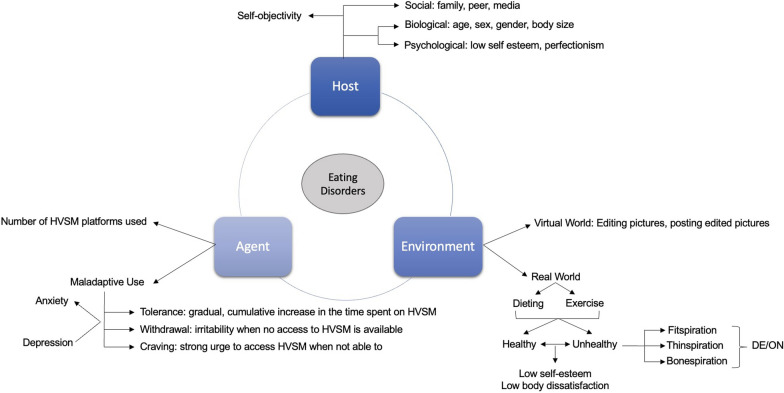
We reviewed existing literature considering the effects of highly visual social media (HVSM) on the development of eating disorders (ED) and disordered eating (DE) in the adolescent and young adult (AYA) population. There are gender differences in the use of HVSM and its associations with DE/ED through females’ and males’ distinct engagement styles. The main individual drivers for DE/ED are worsened body image, low self-esteem, and low body dissatisfaction, and these are influenced by other individual, family, and social factors. In addition, maladaptive use of HVSM leads to tolerance, withdrawal, and craving and is linked to anxiety and depression. Total time spent on HVSM, preoccupation with photo editing, and posting with blurred demarcation of real vs. virtual presentations is associated with DE/ED development. Given HVSM’s popularity among the AYA and the risk for ED/DE in this population, it is important for clinicians, parents and other adults working with youth to be aware of HVSM’s impacts.
© 2023. BioMed Central Ltd., part of Springer Nature.
Conflict of interest statement
The authors declare that they have no competing interests.
Figures
References
-
- Rodgers RF. The relationship between body image concerns, eating disorders and internet use, part II: an integrated theoretical model. Adolesc Res Rev. 2016;1(2):121–137. doi: 10.1007/s40894-015-0017-5. - DOI
-
- Rodgers RF, Slater A, Gordon CS, McLean SA, Jarman HK, Paxton SJ. A biopsychosocial model of social media use and body image concerns, disordered eating, and muscle-building behaviors among adolescent girls and boys. J Youth Adolesc. 2020;49(2):399–409. doi: 10.1007/s10964-019-01190-0. - DOI - PubMed
-
- Dell'Osso L, Abelli M, Carpita B, Pini S, Castellini G, Carmassi C, et al. Historical evolution of the concept of anorexia nervosa and relationships with orthorexia nervosa, autism, and obsessive-compulsive spectrum. Neuropsychiatr Dis Treat. 2016;12:1651–1660. doi: 10.2147/NDT.S108912. - DOI - PMC - PubMed
Publication types
Grants and funding
LinkOut - more resources
Full Text Sources
