


Comparison of brain functional response to mechanical prickling stimuli to the glabrous and hairy skin
- PMID: 37753684
- PMCID: PMC10460934
- DOI: 10.1111/srt.13446
Comparison of brain functional response to mechanical prickling stimuli to the glabrous and hairy skin
Abstract
Background: A kind of prickle sensation, which is a composite feeling of pain and itch, can be evoked by mechanical stimulation of fiber ends from fabric surface against to human hairy skin, rather than glabrous skin. Now, a functional magnetic resonance imaging (fMRI) study was conducted to investigate the cognitive differences in the brain for mechanical prickling stimuli to the two types of skin.
Materials and methods: A nylon filament with the diameter of 205 μm and the length of 8 mm was used to deliver mechanical prickling stimuli respectively to two skin sites, fingertip (glabrous skin) and volar forearm (hairy skin), of eight healthy male subjects. Simultaneously, the technology of fMRI was adopted to acquire BOLD (Blood Oxygen Level-Dependent) signals of brain functional response of the subjects.
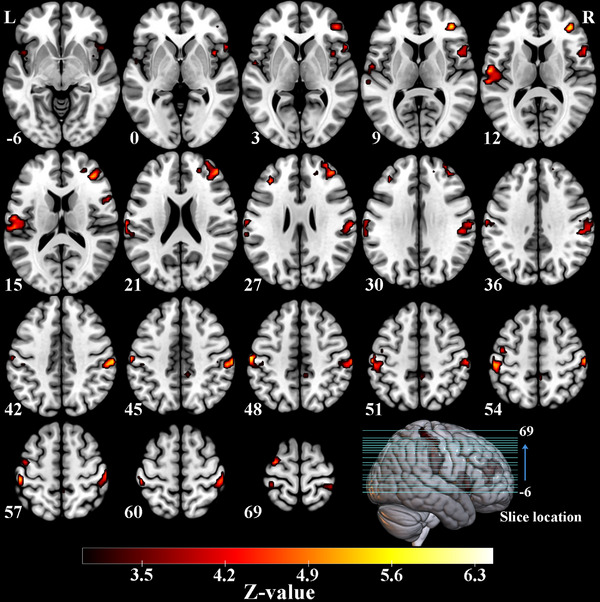
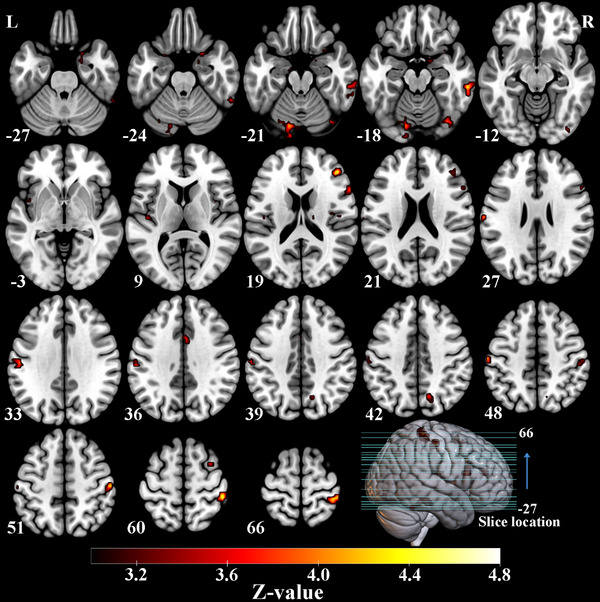
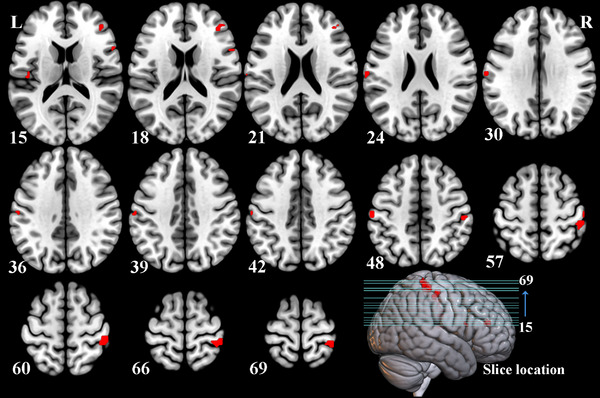
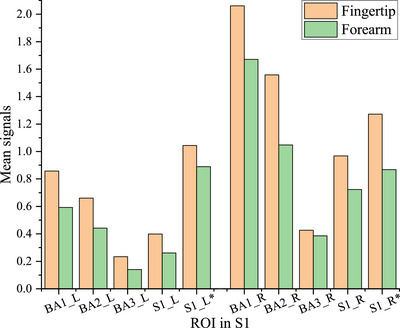
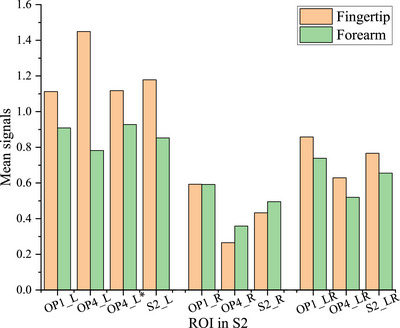
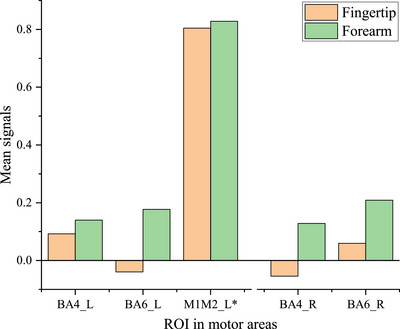
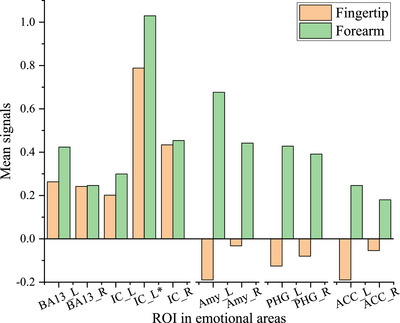
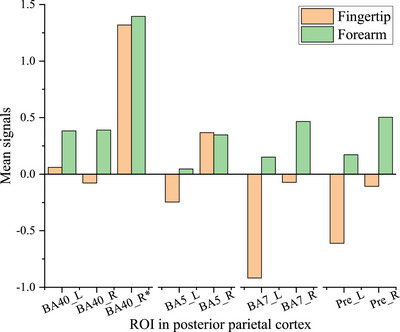
Results: Somatosensory areas, emotional areas, and the posterior parietal cortex (especially the precuneus) are important brain regions that distinguish between the two conditions. The representation of mechanical prickling stimulation to glabrous skin in the brain favors much more the tactile information of the stimulation and contains no itch, while the key brain area, precuneus, involved in itch was activated by the same mechanical prickling stimulation to hairy skin, and brain response for the condition of hairy skin contains more emotional information, which plays an important role in pain processing.
Conclusion: Therefore, it can be inferred that a kind of stronger prickle sensation, which contains both pain and itch, was evoked by mechanical stimulation to hairy skin than glabrous skin.
Keywords: brain response; functional magnetic resonance imaging; glabrous skin; hairy skin; itch; mechanical prickle; pain.
© 2023 The Authors. Skin Research and Technology published by John Wiley & Sons Ltd.
Figures
References
-
- Garnsworthy RK, Gully RL, Kenins P, Westerman RA. Transcutaneous electrical stimulation and the sensation of prickle. J Neurophysiol. 1988;59:1116‐1127. - PubMed
-
- Chen C‐C, Rainville P, Bushnell MC. Noxious and innocuous cold discrimination in humans: evidence for separate afferent channels. Pain. 1996;68:33‐43. - PubMed
-
- Rosenthal SR, Sonnenschein RR. Histamine as the possible chemical mediator for cutaneous pain. Am J Physiol. 1948;155:186‐190. - PubMed
-
- Naylor GRS, Stanton JH, Speijers J. Skin comfort of base layer wool garments. Part 2: fiber diameter effects on fabric and garment prickle. Text Res J. 2014;84:1506‐1514.
Publication types
MeSH terms
Grants and funding
- ZR2020QF115/the Shandong Provincial Natural Science Foundation
- 113129A4F21075/Scientific Research Fund of Zhejiang Provincial Education Department
- 22200112-F/Scientific Research Fund of Zhejiang Provincial Education Department
- 21202299-Y/Research Foundation of Zhejiang Sci-tech University
- JAS180331/Education and Scientific Research Foundation for Middle-aged and Young Scientist of Fujian Province
LinkOut - more resources
Full Text Sources
Medical
Research Materials
