


Wearable Biosensor with Molecularly Imprinted Conductive Polymer Structure to Detect Lentivirus in Aerosol
- PMID: 37754095
- PMCID: PMC10527467
- DOI: 10.3390/bios13090861
Wearable Biosensor with Molecularly Imprinted Conductive Polymer Structure to Detect Lentivirus in Aerosol
Abstract
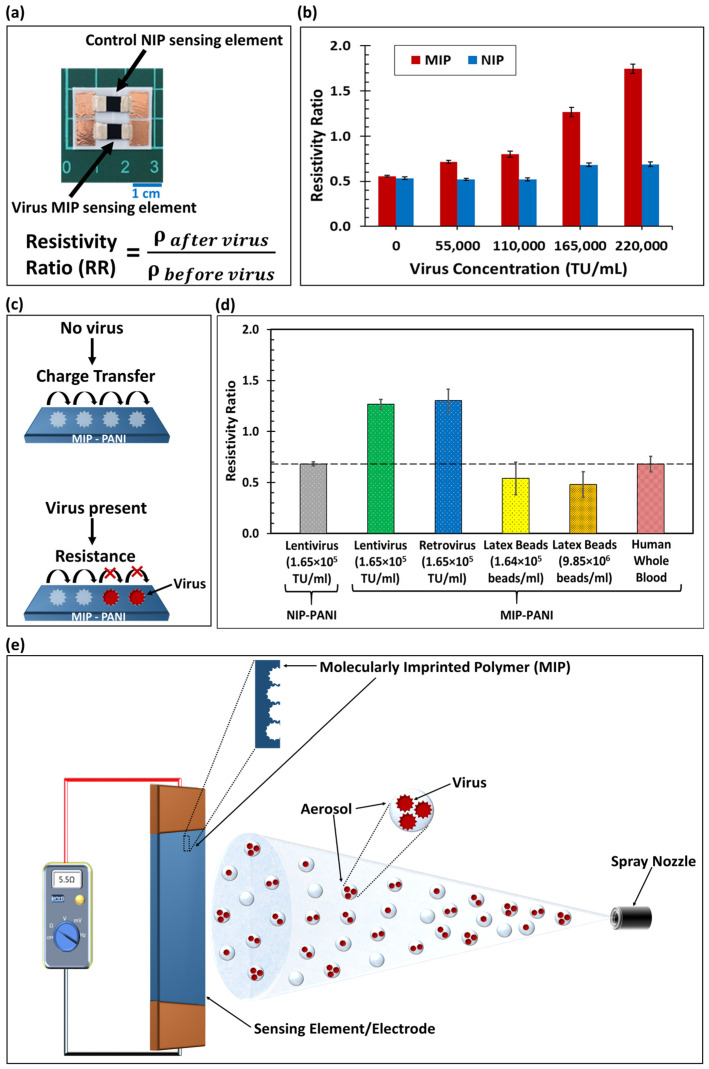
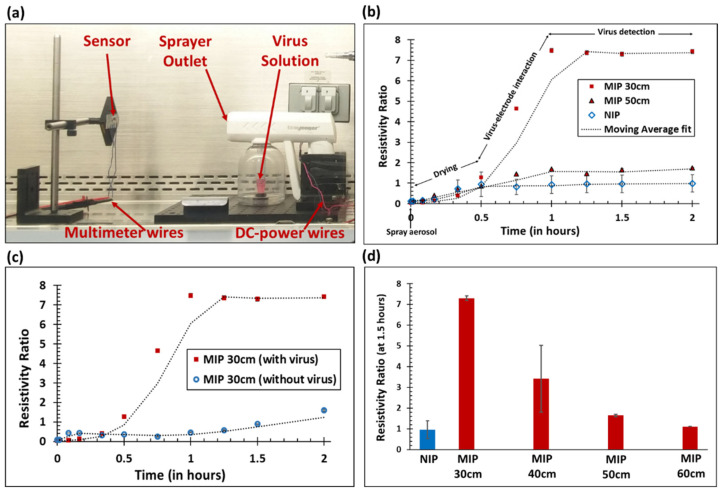
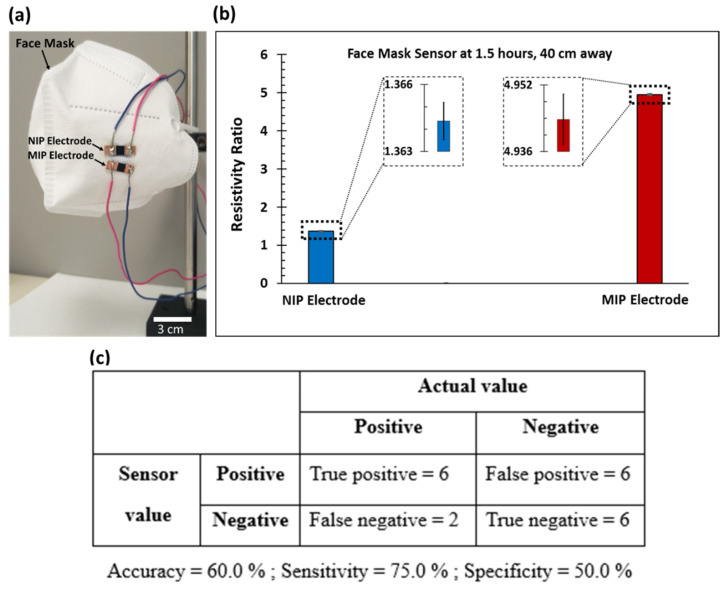
The coronavirus disease (COVID-19) pandemic has increased pressure to develop low-cost, compact, user-friendly, and ubiquitous virus sensors for monitoring infection outbreaks in communities and preventing economic damage resulting from city lockdowns. As proof of concept, we developed a wearable paper-based virus sensor based on a molecular imprinting technique, using a conductive polyaniline (PANI) polymer to detect the lentivirus as a test sample. This sensor detected the lentivirus with a 4181 TU/mL detection limit in liquid and 0.33% to 2.90% detection efficiency in aerosols at distances ranging from 30 cm to 60 cm. For fabrication, a mixture of a PANI monomer solution and virus were polymerized together to form a conductive PANI sensing element on a polyethylene terephthalate (PET) paper substrate. The sensing element exhibited formation of virus recognition sites after the removal of the virus via ultrasound sonication. A dry measurement technique was established that showed aerosol virus detection by the molecularly imprinted sensors within 1.5 h of virus spraying. This was based on the mechanism via which dispensing virus droplets on the PANI sensing element induced hybridization of the virus and molecularly imprinted virus recognition templates in PANI, influencing the conductivity of the PANI film upon drying. Interestingly, the paper-based virus sensor was easily integrated with a wearable face mask for the detection of viruses in aerosols. Since the paper sensor with molecular imprinting of virus recognition sites showed excellent stability in dry conditions for long periods of time, unlike biological reagents, this wearable biosensor will offer an alternative approach to monitoring virus infections in communities.
Keywords: conductive polymer; lentivirus; molecular imprinting; virus sensor; wearable paper sensor.
Conflict of interest statement
The authors declare no conflict of interest.
Figures
References
-
- Huang L., Xiao W., Xu T., Chen H., Jin Z., Zhang Z., Song Q., Tang Y. Miniaturized paper-based smartphone biosensor for differential diagnosis of wild-type pseudorabies virus infection versus vaccination immunization. Sens. Actuators B Chem. 2021;327:128893.
-
- Mahendra C., Kaisar M.M.M., Vasandani S.R., Surja S.S., Tjoa E., Chriestya F., Junusmin K.I., Widowati T.A., Irwanto A., Ali S. Wide Application of Minimally Processed Saliva on Multiple RT-qPCR Kits for SARS-CoV-2 Detection in Indonesia. Front. Cell. Infect. Microbiol. 2021;11:691538. doi: 10.3389/fcimb.2021.691538. - DOI - PMC - PubMed
LinkOut - more resources
Full Text Sources
Research Materials
