


Effects of Concentrate Feeding Sequence on Growth Performance, Nutrient Digestibility, VFA Production, and Fecal Microbiota of Weaned Donkeys
- PMID: 37760293
- PMCID: PMC10525841
- DOI: 10.3390/ani13182893
Effects of Concentrate Feeding Sequence on Growth Performance, Nutrient Digestibility, VFA Production, and Fecal Microbiota of Weaned Donkeys
Abstract
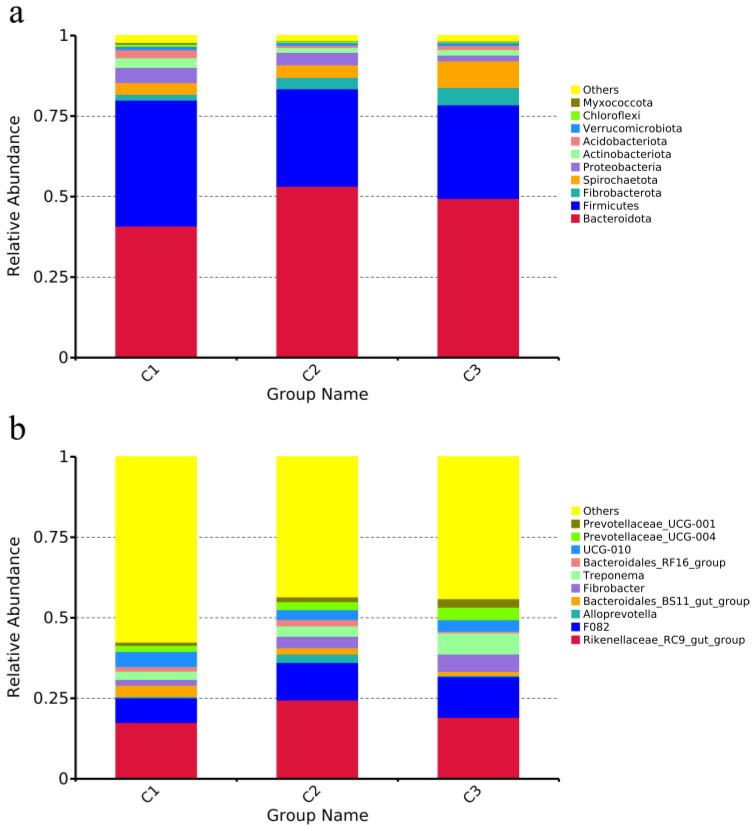
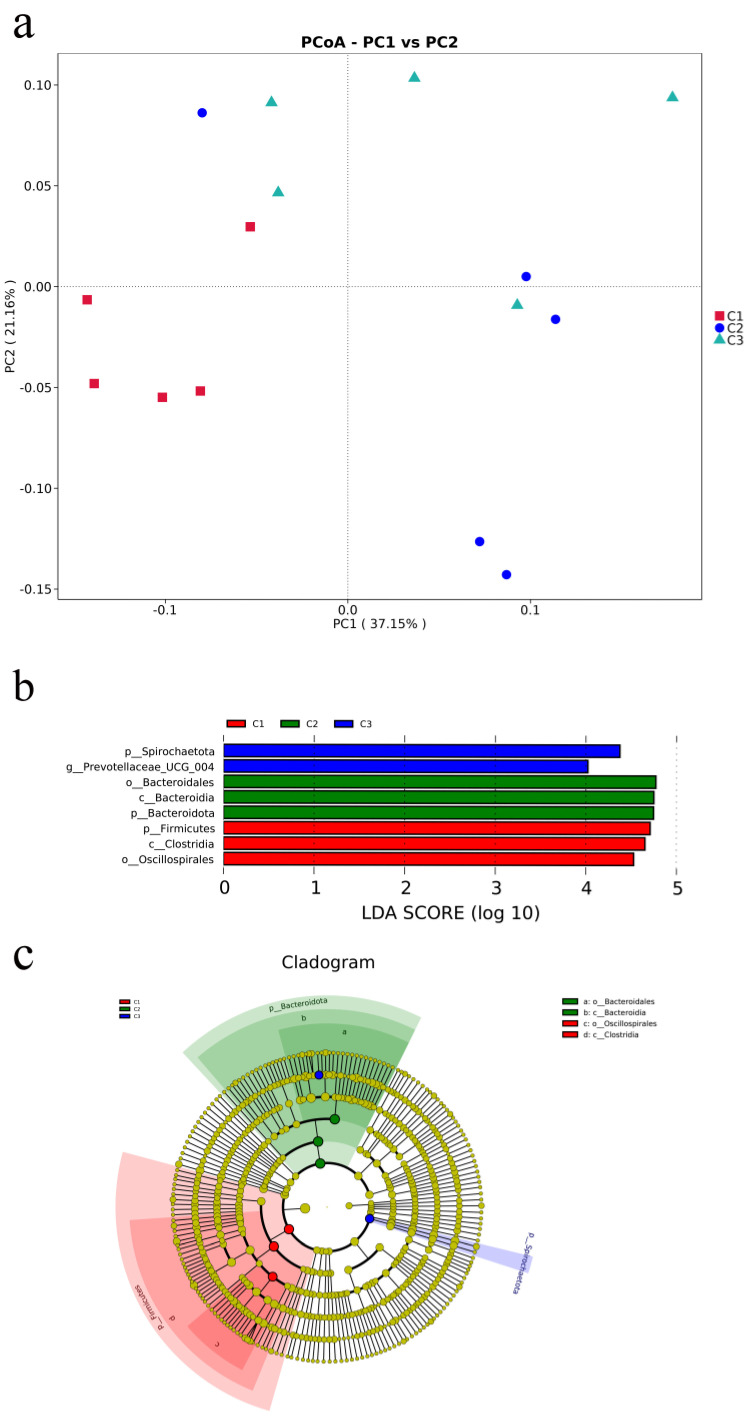
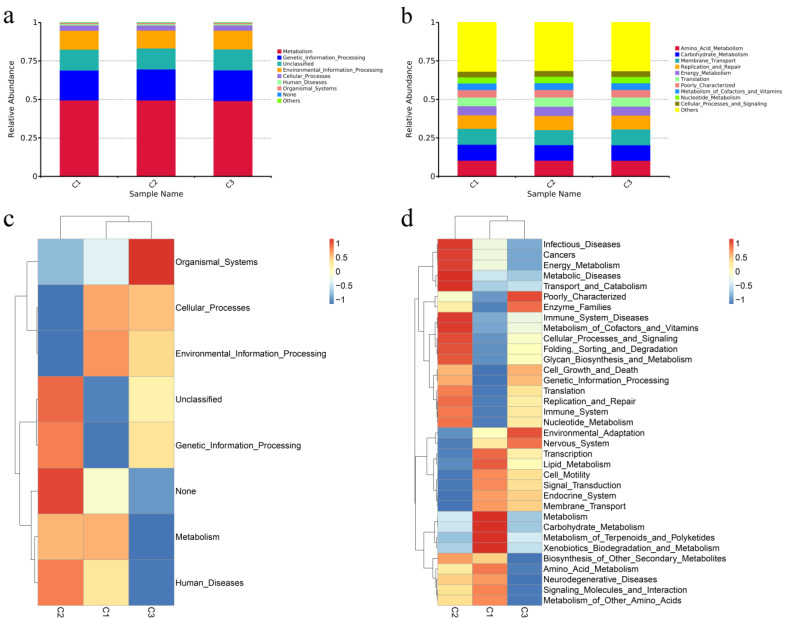
In this study, effects on the growth performance, nutrient digestibility, volatile fatty acids (VFA) production, and fecal microbiota of weaned donkeys were observed using different concentrate feeding sequences. Fifteen healthy 6-month-old weaned male donkeys with a body weight of 117.13 ± 10.60 kg were randomly divided into three treatment groups, including group C1 (roughage-then-concentrate), group C2 (concentrate-then-roughage), and group C3 (total mixed ration, TMR). The experiment lasted 35 d. We measured nutrient digestion by the acid-insoluble ash method and analyzed the fecal microbiota of the weaned donkeys by high-throughput sequencing of 16s rRNA genes in the V3-V4 region. The results show that group C3 obtained the best growth performance, and the digestibility of crude protein (CP) and crude extract (EE) was significantly higher than that of group C1 (p < 0.05). Acetic acid, isobutyric acid, valeric acid, isovaleric acid, and caproic acid were notably different among all groups (p < 0.05). In addition, we observed that Firmicutes and Bacteroidetes were dominant in the fecal microbes of each group, and Firmicutes was significantly higher in group C3 (p < 0.05). At the genus level, the different genera were Treponema, Rikenellaceae-RC9-gut-group, Unidentified-F082, and Bacteroidales-RF16-group (p < 0.05). The prediction of fecal microbiota function by PICRUSt indicated that different feeding sequences had minimal impact on the function of the fecal microbiota, particularly on the high-abundance pathway. In summary, the concentrate feeding sequence changed the composition of the fecal microbe of weaned donkeys.
Keywords: VFA; acid-insoluble ash; microbial composition; nutrient digestibility; weaned donkeys.
Conflict of interest statement
The authors declare no conflict of interest.
Figures
References
-
- Liu Y.F., Sun F.F., Wan F.C., Zhao H.B., Liu X.M., You W., Cheng H.J., Liu G.F., Tan X.W., Song E.L. Effects of Three Feeding Systems on Production Performance, Rumen Fermentation and Rumen Digesta Particle Structure of Beef Cattle. Asian-Australas. J. Anim. Sci. 2016;29:659–665. doi: 10.5713/ajas.15.0445. - DOI - PMC - PubMed
Grants and funding
- SDAIT-27/Donkey innovation team of Shandong modern agricultural industry technology system
- 2021TZXD012/Shandong Rural Revitali zation Science and Technology Innovation Action Plan (Key technology innovation and demonstration of Integrated development of Dong-E Black Donkey industry)
- 319312101-03/Open Project of Animal Science of Liaocheng University
LinkOut - more resources
Full Text Sources
Research Materials
Miscellaneous
