


Optimization of Nutrition after Brain Injury: Mechanistic and Therapeutic Considerations
- PMID: 37760993
- PMCID: PMC10526443
- DOI: 10.3390/biomedicines11092551
Optimization of Nutrition after Brain Injury: Mechanistic and Therapeutic Considerations
Abstract
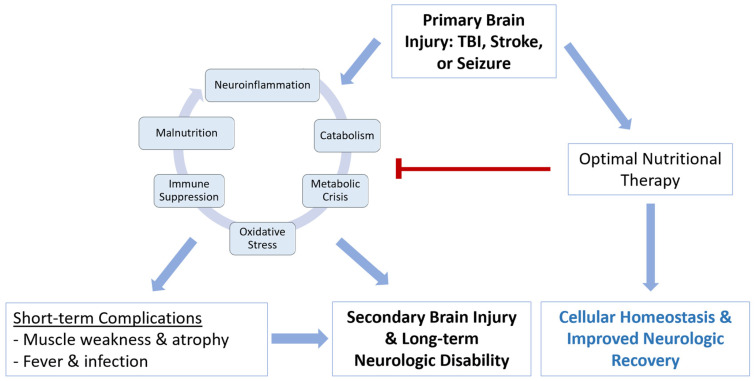
Emerging science continues to establish the detrimental effects of malnutrition in acute neurological diseases such as traumatic brain injury, stroke, status epilepticus and anoxic brain injury. The primary pathological pathways responsible for secondary brain injury include neuroinflammation, catabolism, immune suppression and metabolic failure, and these are exacerbated by malnutrition. Given this, there is growing interest in novel nutritional interventions to promote neurological recovery after acute brain injury. In this review, we will describe how malnutrition impacts the biomolecular mechanisms of secondary brain injury in acute neurological disorders, and how nutritional status can be optimized in both pediatric and adult populations. We will further highlight emerging therapeutic approaches, including specialized diets that aim to resolve neuroinflammation, immunodeficiency and metabolic crisis, by providing pre-clinical and clinical evidence that their use promotes neurologic recovery. Using nutrition as a targeted treatment is appealing for several reasons that will be discussed. Given the high mortality and both short- and long-term morbidity associated with acute brain injuries, novel translational and clinical approaches are needed.
Keywords: anoxic brain injury; malnutrition; neuroinflammation; nutrition; status epilepticus; stroke; traumatic brain injury.
Conflict of interest statement
R.A.P. is a consultant to various law firms as an expert in medical malpractice litigation. P.D.L. is a consultant for various law firms as an expert in medical malpractice litigation. S.G.L. reports non-financial support and other from Eyemedix, LLC, outside the submitted work; S.G.L. has a patent for lipid-based compounds licensed to Eyemedix, LLC. A.P. is a consultant to various law firms as an expert in medical malpractice litigation. A.P. also receives honorarium from Nutricia and funding from Vitaflo, Inc. (Bridgewater, NJ, USA) outside of the work submitted.
Figures
References
-
- Fuentes Padilla P., Martinez G., Vernooij R.W., Urrutia G., Roque I.F.M., Bonfill Cosp X. Early enteral nutrition (within 48 hours) versus delayed enteral nutrition (after 48 hours) with or without supplemental parenteral nutrition in critically ill adults. Cochrane Database Syst. Rev. 2019;2019:CD012340. doi: 10.1002/14651858.CD012340.pub2. - DOI - PMC - PubMed
Publication types
Grants and funding
LinkOut - more resources
Full Text Sources
