


Clinical Approaches to Nestorone Subdermal Implant Therapy in Women's Health
- PMID: 37761027
- PMCID: PMC10526950
- DOI: 10.3390/biomedicines11092586
Clinical Approaches to Nestorone Subdermal Implant Therapy in Women's Health
Abstract
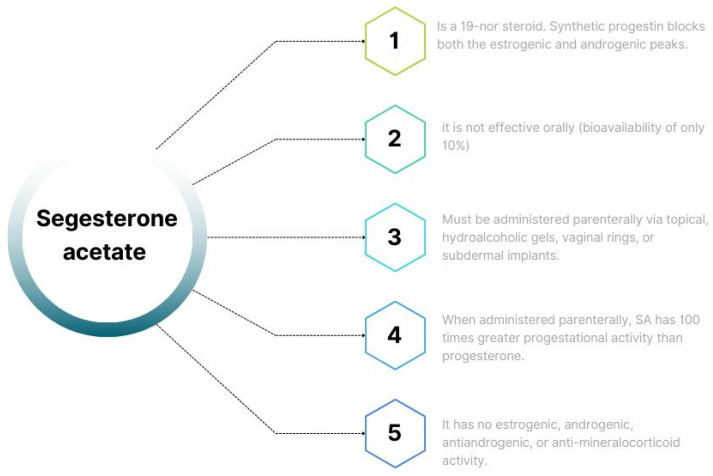
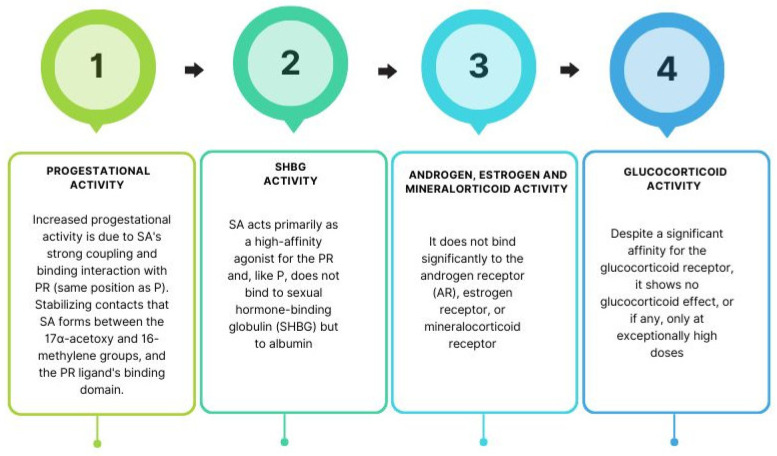
Segesterone acetate (SA) or Nestorone, a fourth-generation progestogen, is a synthetic compound with high progestational activity and no androgenic, glucocorticoid, or anabolic effects. However, due to its oral inactivity, SA must be used by other routes, such as subcutaneous. Thus, considering its peculiar properties, the SA subdermal implant is successfully used in female contraception and postmenopausal hormone replacement therapy (HRT). In recent years, its potential uses in endometriosis, polycystic ovaries syndrome (PCOS), and a new therapeutic possibility for neuroprotection have made this treatment extremely interesting. However, the absence of a standardized dose and the long-term safety of SA implant therapy in women is still controversial. Here, we present the possible indications, doses, limitations, and side effects of SA implant therapy.
Keywords: Nestorone; contraception; hormone; hormone replacement therapy; implant; menopause; neuroprotection; segesterone acetate.
Conflict of interest statement
C.C. is a research physician at ELMECO Hormonal Implants. All other authors declare that they have no competing interest.
Figures
References
-
- Weisberg E., Brache V. Clinical performance and menstrual bleeding patterns with three dosage combinations of a Nestorone progestogen/ethynil estradiol contraceptive vaginal ring used on a bleeding-signaled regimen. Contraception. 2005;72:46–52. doi: 10.1016/j.contraception.2004.12.014. - DOI - PubMed
Publication types
Grants and funding
LinkOut - more resources
Full Text Sources
