


Peptidomics Analysis of Soy Protein Hydrolysates-Antioxidant Properties and Mechanism of their Inhibition of the Oxidation of Palm Olein during Frying Cycles
- PMID: 37761207
- PMCID: PMC10528889
- DOI: 10.3390/foods12183498
Peptidomics Analysis of Soy Protein Hydrolysates-Antioxidant Properties and Mechanism of their Inhibition of the Oxidation of Palm Olein during Frying Cycles
Abstract
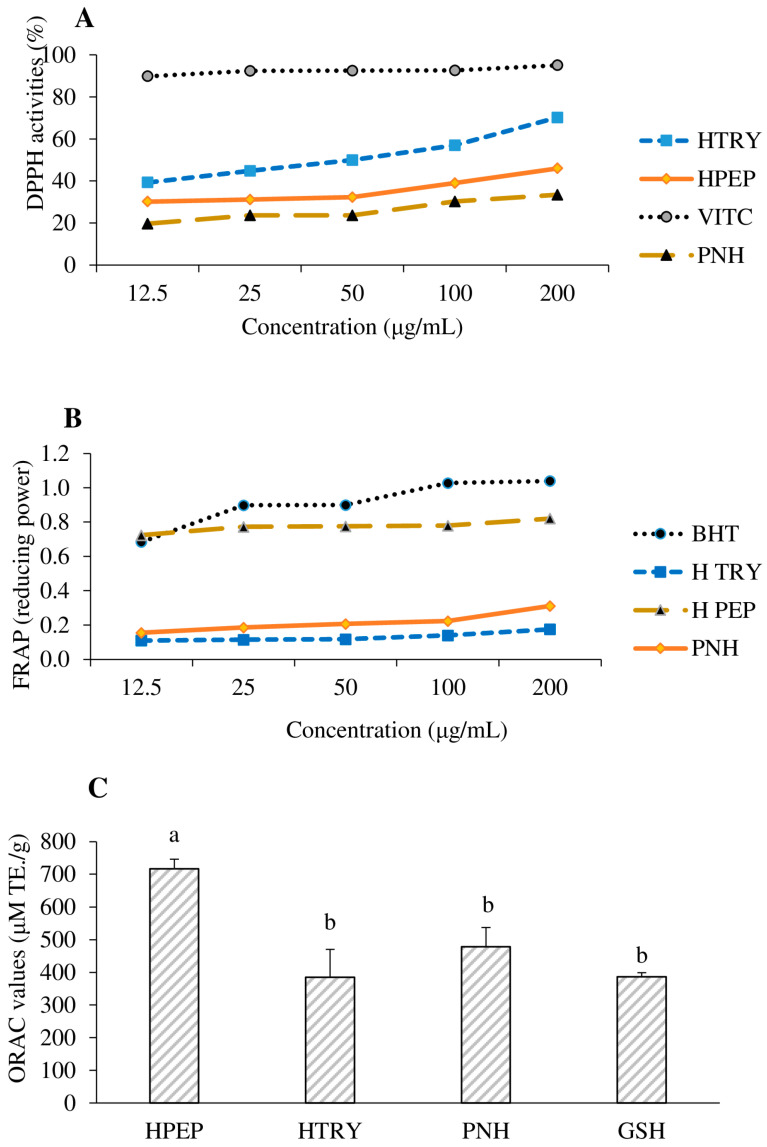
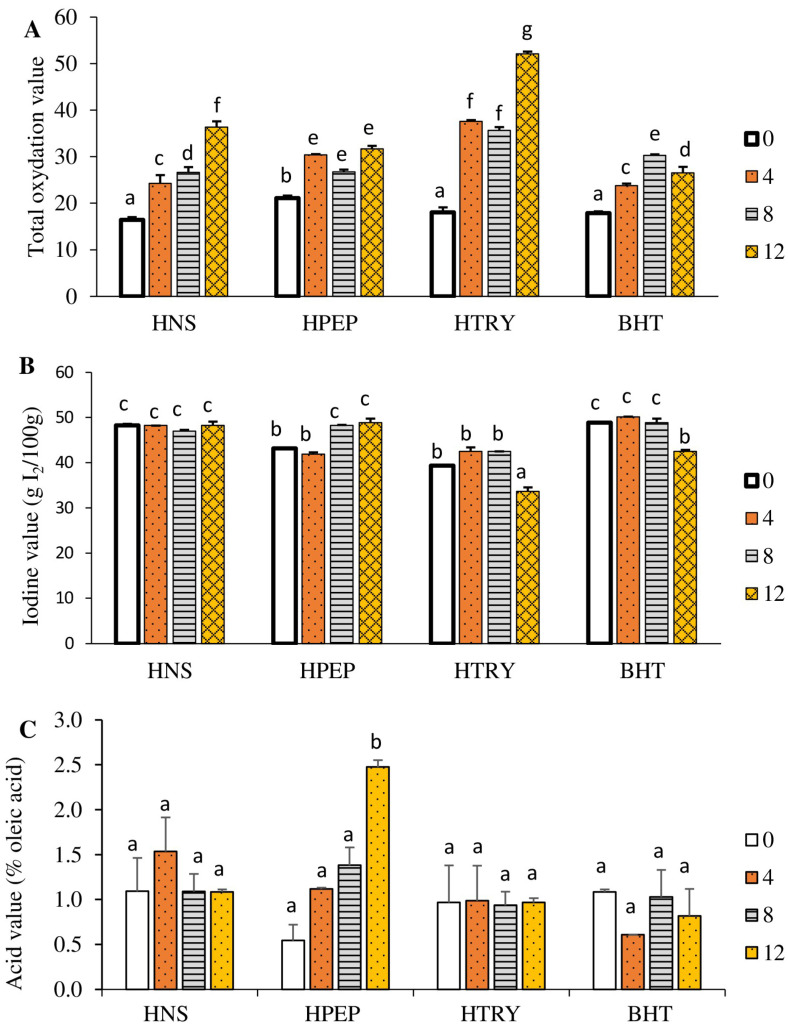
This study determined for the first time the structure of the peptides (i.e., peptidomics) in soy protein hydrolysates and elucidated their effects on an oil's oxidative stability during frying cycles. The oil investigated was palm olein during 0, 4, 8, and 12 frying cycles of plantain banana chips. Proteins were extracted and hydrolyzed with two proteases. Trypsin hydrolysate (HTRY) exhibited higher anti-radical activity (DPPH, 70.2%) than the control (unhydrolyzed proteins, 33.49%) and pepsin hydrolysate (HPEP, 46.1%) at 200 µg/mL. HPEP however showed a 4.6-fold greater reduction of ferric ions (FRAP) while also possessing a higher peroxyl radical scavenging ability (716 ± 30 µM Trolox Eq/g) than HTRY (38.5 ± 35 µM Trolox Eq/g). During oil oxidative stability tests, HPEP improved the oxidative stability of the palm olein oil after 8 and 12 frying cycles, characterized by lower concentrations of hydroperoxides, and carbonyl and volatile compounds. HTRY however exerteda pro-oxidant activity. Structural data from SDS-PAGE and tandem mass spectrometry showed that the mechanism for the greater activity of the pepsin hydrolysate occurred due to unique structural features and a higher percentage of short-chain peptides. This was justified by a 25, 31, and 48% higher contents of tryptophan, histidine, and methionine, respectively (important amino acids with hydrogen atom transfer and electron-donating capacities) in the peptides identified in the pepsin hydrolysate.
Keywords: antioxidants; carbonyls; frying cycles; malondialdehyde; oxidation; palm olein; peptidomics; protein hydrolysates.
Conflict of interest statement
The authors declare that there are no conflict of interest regarding the publication of this paper.
Figures



References
-
- OCDE. FAO . Oléagineux et Produits Oléagineux. OCDE; Paris, France: FAO; Rome, Italy: 2018. Perspectives Agricoles de l’OCDE et de la FAO 2018–2027; pp. 146–158.
-
- Riaz M.N. Soy Applications in Food. CRC Press; Boca Raton, FL, USA: 2005. Developing and Producing Protein-Enhanced Snacks and Cereals; pp. 83–92.
-
- Zaker A., Genitha T.R., Hashmi S.I. Effects of Defatted Soy Flour Incorporation on Physical, Sensorial and Nutritional Properties of Biscuits. J. Food Process. Technol. 2012;3:4. doi: 10.4172/2157-7110.1000149. - DOI
Grants and funding
LinkOut - more resources
Full Text Sources
Miscellaneous
