


Alpha-Linolenic Acid and Cardiovascular Events: A Narrative Review
- PMID: 37762621
- PMCID: PMC10531611
- DOI: 10.3390/ijms241814319
Alpha-Linolenic Acid and Cardiovascular Events: A Narrative Review
Abstract
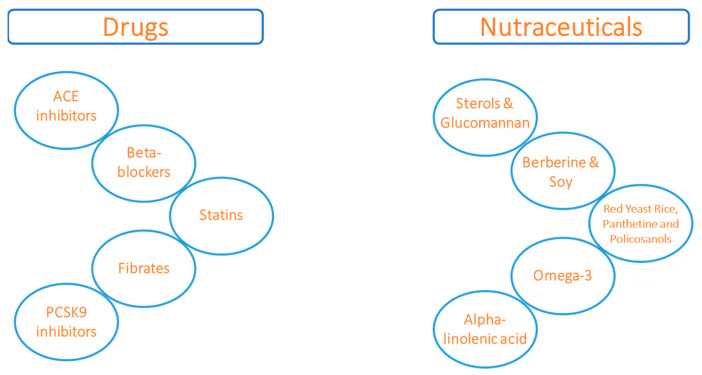
Cardiovascular diseases (CVDs) represent the leading cause of global mortality with 1.7 million deaths a year. One of the alternative systems to drug therapy to minimize the risk of CVDs is represented by alpha-linolenic acid (ALA), an essential fatty acid of the omega-3 series, known for its cholesterol-lowering effect. The main purpose of this review is to analyze the effects of ALA and investigate the relevant omega-6/omega-3 ratio in order to maintain functionally beneficial effects. Concerning the lipid-lowering preventive effects, ALA may favorably affect the values of LDL-C and triglycerides in both adult and pediatric populations. Furthermore, ALA has shown protective effects against hypertension, contributing to balancing blood pressure through customary diet. According to the 2009 EFSA statement, dietary ALA may contribute to reducing the risk of CVDs, thanks to anti-hypertensive, anti-atherosclerotic and cardioprotective effects.
Keywords: LDL-cholesterol; TC-cholesterol; alpha-linolenic acid; cardioprotective effect; cardiovascular events; heart disorders; hempseed oil; linoleic acid.
Conflict of interest statement
The authors declare no conflict of interest.
Figures
References
-
- Roth G.A., Abate D., Abate K.H., Abay S.M., Abbafati C., Abbasi N., Borschmann R. Global, regional, and national age-sex-specific mortality for 282 causes of death in 195 countries and territories, 1980–2017: A systematic analysis for the Global Burden of Disease Study 2017. Lancet. 2018;392:1736–1788. doi: 10.1016/S0140-6736(18)32203-7. - DOI - PMC - PubMed
-
- Kyu H.H., Abate D., Abate K.H., Abay S.M., Abbafati C., Abbasi N., Abbastabar H., Abd-Allah F., Abdela J., Abdelalim A., et al. Global, regional, and national disability-adjusted life-years (DALYs) for 359 diseases and injuries and healthy life expectancy (HALE) for 195 countries and territories, 1990–2017: A systematic analysis for the Global Burden of Disease Study 2017. Lancet. 2018;392:1736–1788. doi: 10.1016/S0140-6736(18)32335-3. - DOI - PMC - PubMed
-
- Tsao C.W., Aday A.W., Almarzooq Z.I., Anderson C.A., Arora P., Avery C.L., Baker-Smith C.M., Beaton A.Z., Boehme A.K., Buxton A.E., et al. Heart disease and stroke statistics—2023 Update: A report from the American Heart Association. Circulation. 2023;147:e93–e621. doi: 10.1161/CIR.0000000000001123. - DOI - PubMed
