


Allergic Proctocolitis: Literature Review and Proposal of a Diagnostic-Therapeutic Algorithm
- PMID: 37763228
- PMCID: PMC10533178
- DOI: 10.3390/life13091824
Allergic Proctocolitis: Literature Review and Proposal of a Diagnostic-Therapeutic Algorithm
Abstract
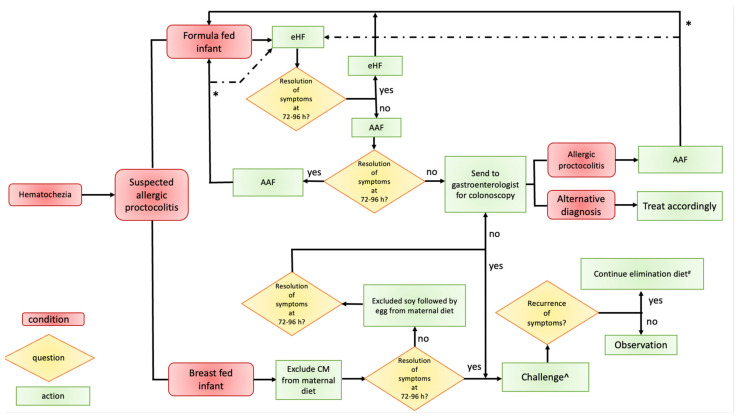
Allergic proctocolitis (AP) is a benign condition, frequent in childhood, that is classified as a non-IgE-mediated food allergy. The prevalence is unknown; however, its frequency appears to be increasing, especially in exclusively breastfed infants. Clinical manifestations typically begin in the first few months of life with the appearance of bright red blood (hematochezia), with or without mucus, in the stool of apparently healthy, thriving infants. Most cases of AP are caused by cow's milk proteins; however, other allergens, such as soy, egg, corn, and wheat, may be potential triggers. Diagnosis is based on the patient's clinical history and on the resolution of signs and symptoms with the elimination of the suspected food antigen from the diet and their reappearance when the food is reintroduced into the diet. The treatment of AP is based on an elimination diet of the trigger food, with resolution of the symptoms within 72-96 h from the beginning of the diet. The prognosis of AP is good; it is a self-limiting condition, because most children can tolerate the trigger food within one year of life, with an excellent long-term prognosis. The purpose of this review is to provide an update on the current knowledge and recommendations in epidemiological, diagnostic, and therapeutic terms to the pediatricians, allergists, and gastroenterologists who may find themselves managing a patient with AP.
Keywords: allergic proctocolitis; elimination diet; food allergy; non-lgE food allergy; rectal bleeding.
Conflict of interest statement
The authors declare no conflict of interest.
Figures
References
-
- Rubin M. Allergic intestinal bleeding in the newborn. Am. J. Med. Sci. 1940;200:385. doi: 10.1097/00000441-194009000-00014. - DOI
Publication types
LinkOut - more resources
Full Text Sources
