


Infantile Hemangioma: A Cross-Sectional Observational Study
- PMID: 37763272
- PMCID: PMC10532986
- DOI: 10.3390/life13091868
Infantile Hemangioma: A Cross-Sectional Observational Study
Abstract
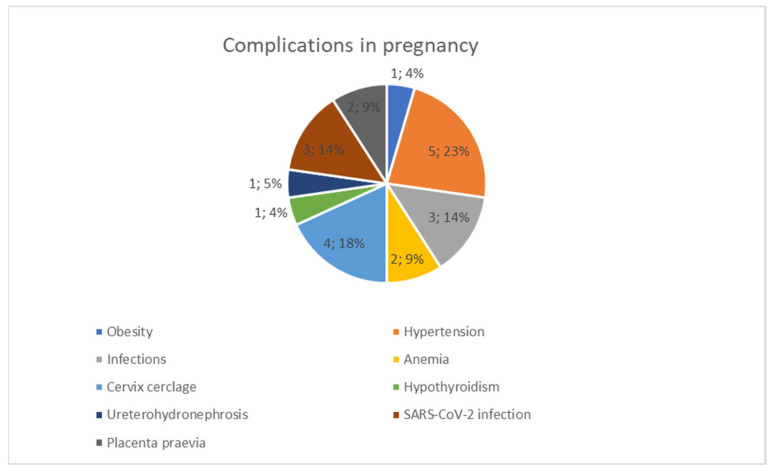
(1) Background: With an incidence of 4-10%, infantile hemangiomas (IH) are the most encountered benign tumors in infancy. Low birth weight (LBW), prematurity, female sex, multiple gestations, and family history of IH are some of the statistically proven risk factors for developing IH. The aim of our study was to evaluate the prevalence of IH in our clinic and its connection to maternal and perinatal factors. (2) Methods: We conducted a cross-sectional study, over three years (2020-2022), at the Clinical Hospital of Obstetrics and Gynecology, "Prof. Dr. P. Sârbu", in Bucharest, Romania. (3) Results: During this period, 12,206 newborns were born and we identified 14 infants with infantile hemangioma. In our study, the prevalence of infantile hemangioma was 0.11%. The prevalence of IH in pregnancies obtained through in vitro fertilization was 1%, in twin pregnancies it was 2.27%, and in those with placenta previa, it was 4.16%. (4) Conclusions: Our findings provide a solid image of the prevalence of IH in our country and underline that the development of IH is strongly connected to maternal and perinatal variables, such as: preterm newborns, in vitro fertilization, high blood pressure, anemia, hypothyroidism, placenta previa, and twin pregnancy.
Keywords: infantile hemangioma; premature infants; very low birth weight.
Conflict of interest statement
The authors declare no conflict of interest.
References
-
- Munden A., Butschek R., Tom W.L., Marshall J.S., Poeltler D.M., Krohne S.E., Aliõ A.B., Ritter M., Friedlander D.F., Catanzarite V., et al. Prospective Study of Infantile Haemangiomas: Incidence, Clinical Characteristics and Association with Placental Anomalies. Br. J. Dermatol. 2014;170:907–913. doi: 10.1111/bjd.12804. - DOI - PMC - PubMed
-
- Kanada K.N., Merin M.R., Munden A., Friedlander S.F. A Prospective Study of Cutaneous Findings in Newborns in the United States: Correlation with Race, Ethnicity, and Gestational Status Using Updated Classification and Nomenclature. J. Pediatr. 2012;161:240–245. doi: 10.1016/j.jpeds.2012.02.052. - DOI - PubMed
LinkOut - more resources
Full Text Sources
