


Coxiella burnetii Femoro-Popliteal Bypass Infection: A Case Report
- PMID: 37763990
- PMCID: PMC10538191
- DOI: 10.3390/microorganisms11092146
Coxiella burnetii Femoro-Popliteal Bypass Infection: A Case Report
Abstract
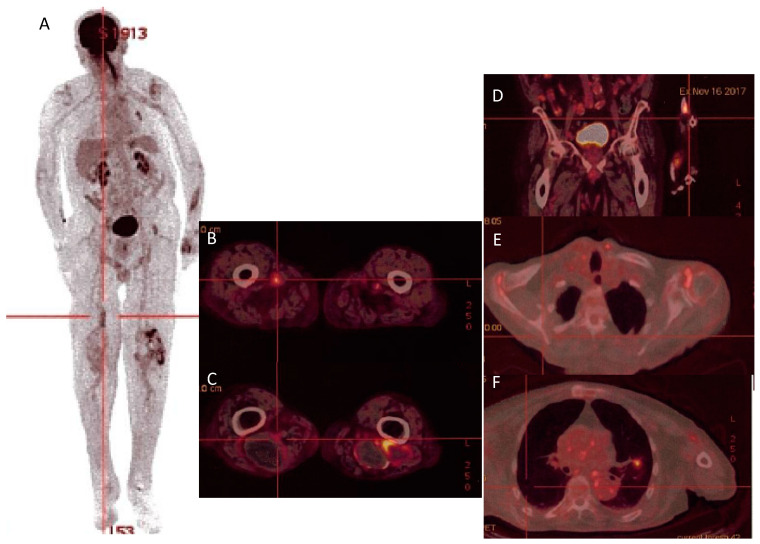
Cardiovascular infections are the most severe and potentially lethal among the persistent focalized Coxiella burnetii infections. While aortic infections on aneurysms or prostheses are well-known, with specific complications (risk of fatal rupture), new non-aortic vascular infections are increasingly being described thanks to the emerging use of 18-fluorodeoxyglucose positron emission tomography (18F-FDG PET-scan). Here, we describe an infection of a femoro-popliteal bypass that would not have been diagnosed without the use of PET-scan. It is well-known that vascular prosthetic material is a site favorable for bacterial persistence, but the description of unusual anatomical sites, outside the heart or aorta, should raise the clinicians' awareness and generalize the indications for PET-scan, with careful inclusion of the upper and lower limbs (not included in PET-scan for cancer), particularly in the presence of vascular prostheses. Future studies will be needed to precisely determine their optimal management.
Keywords: Coxiella burnetii; PET-scan; Q fever; vascular graft infection.
Conflict of interest statement
The authors declare no conflict of interest.
Figures
References
Publication types
LinkOut - more resources
Full Text Sources
