


Bioactive Properties, Bioavailability Profiles, and Clinical Evidence of the Potential Benefits of Black Pepper (Piper nigrum) and Red Pepper (Capsicum annum) against Diverse Metabolic Complications
- PMID: 37764345
- PMCID: PMC10534530
- DOI: 10.3390/molecules28186569
Bioactive Properties, Bioavailability Profiles, and Clinical Evidence of the Potential Benefits of Black Pepper (Piper nigrum) and Red Pepper (Capsicum annum) against Diverse Metabolic Complications
Abstract
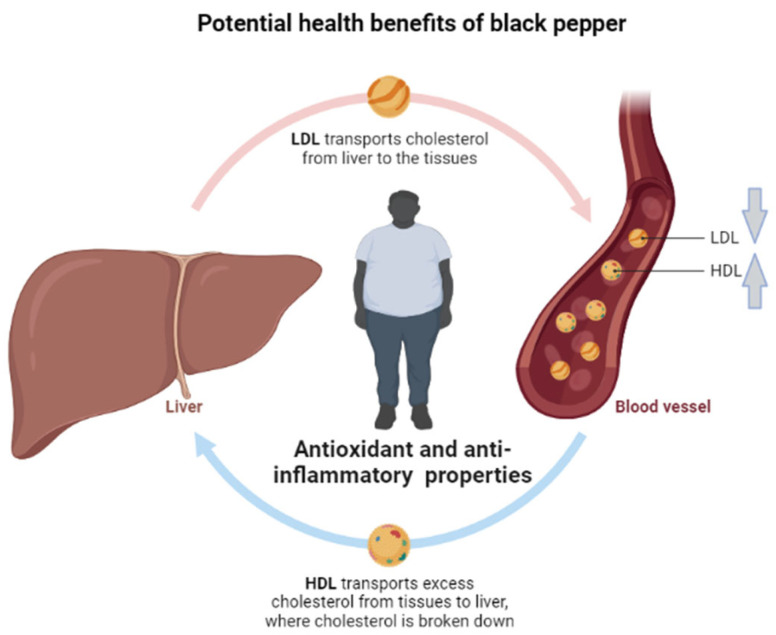
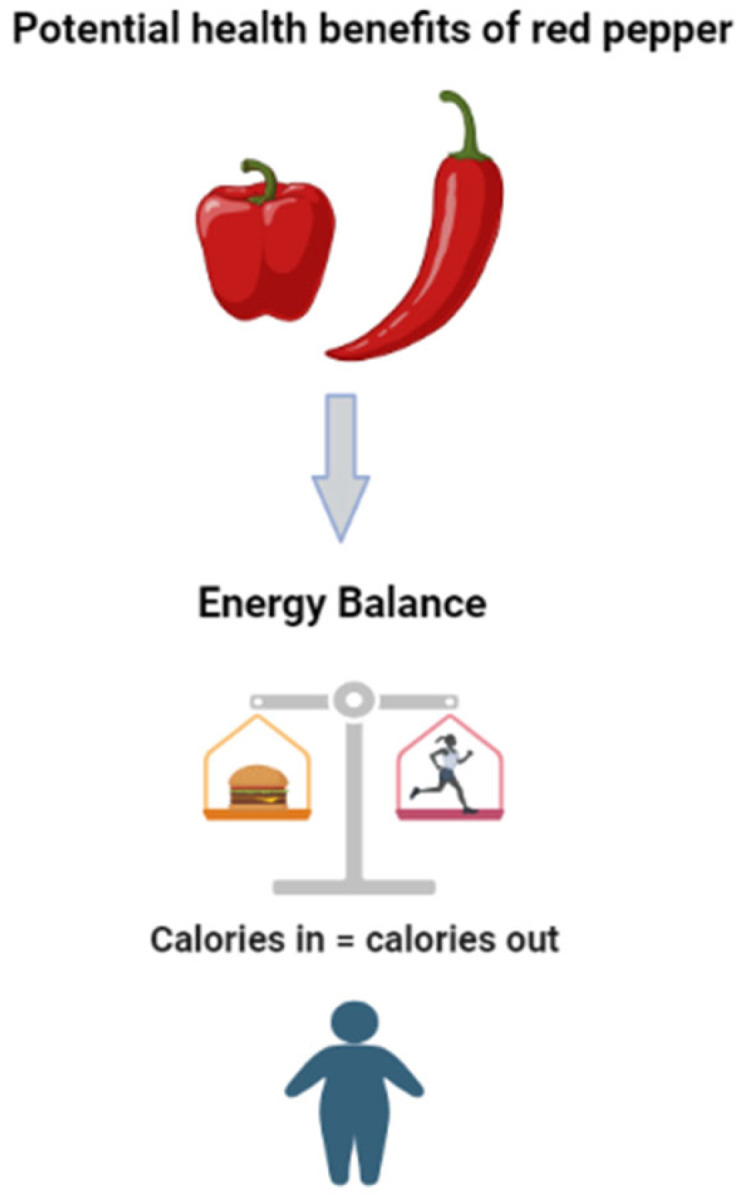
The consumption of food-derived products, including the regular intake of pepper, is increasingly evaluated for its potential benefits in protecting against diverse metabolic complications. The current study made use of prominent electronic databases including PubMed, Google Scholar, and Scopus to retrieve clinical evidence linking the intake of black and red pepper with the amelioration of metabolic complications. The findings summarize evidence supporting the beneficial effects of black pepper (Piper nigrum L.), including its active ingredient, piperine, in improving blood lipid profiles, including reducing circulating levels of total cholesterol, low-density lipoprotein cholesterol, and triglycerides in overweight and obese individuals. The intake of piperine was also linked with enhanced antioxidant and anti-inflammatory properties by increasing serum levels of superoxide dismutase while reducing those of malonaldehyde and C-reactive protein in individuals with metabolic syndrome. Evidence summarized in the current review also indicates that red pepper (Capsicum annum), together with its active ingredient, capsaicin, could promote energy expenditure, including limiting energy intake, which is likely to contribute to reduced fat mass in overweight and obese individuals. Emerging clinical evidence also indicates that pepper may be beneficial in alleviating complications linked with other chronic conditions, including osteoarthritis, oropharyngeal dysphagia, digestion, hemodialysis, and neuromuscular fatigue. Notably, the beneficial effects of pepper or its active ingredients appear to be more pronounced when used in combination with other bioactive compounds. The current review also covers essential information on the metabolism and bioavailability profiles of both pepper species and their main active ingredients, which are all necessary to understand their potential beneficial effects against metabolic diseases.
Keywords: capsaicin; capsinoid; inflammation; metabolic disease; oxidative stress; pepper; piperine.
Conflict of interest statement
The authors declare no conflict of interest. The funders had no role in the design of the study; in the collection, analyses, or interpretation of data; in the writing of the manuscript; or in the decision to publish the results.
Figures
References
-
- Malindisa E., Balandya E., Njelekela M., Kidenya B.R., Francis F., Mmbaga B.T., Dika H., Lyamuya E., Sunguya B., Bartlett J., et al. Metabolic syndrome among people living with HIV on antiretroviral therapy in Mwanza, Tanzania. BMC Endocr. Disord. 2023;23:88. doi: 10.1186/s12902-023-01340-3. - DOI - PMC - PubMed
-
- World Health Organization (WHO) The Leading Causes of Death Globally. WHO; Geneva, Switzerland: 2023.
-
- Guembe M.J., Fernandez-Lazaro C.I., Sayon-Orea C., Toledo E., Moreno-Iribas C. Risk for cardiovascular disease associated with metabolic syndrome and its components: A 13-year prospective study in the RIVANA cohort. Cardiovasc. Diabetol. 2020;19:195. doi: 10.1186/s12933-020-01166-6. - DOI - PMC - PubMed
-
- Noubiap J.J., Nansseu J.R., Lontchi-Yimagou E., Nkeck J.R., Nyaga U.F., Ngouo A.T., Tounouga D.N., Tianyi F.L., Foka A.J., Ndoadoumgue A.L., et al. Global, regional, and country estimates of metabolic syndrome burden in children and adolescents in 2020: A systematic review and modelling analysis. Lancet Child Adolesc. Health. 2022;6:158–170. doi: 10.1016/S2352-4642(21)00374-6. - DOI - PubMed
Publication types
Grants and funding
LinkOut - more resources
Full Text Sources
Research Materials
