


Cadmium Toxicity and Health Effects-A Brief Summary
- PMID: 37764397
- PMCID: PMC10537762
- DOI: 10.3390/molecules28186620
Cadmium Toxicity and Health Effects-A Brief Summary
Abstract
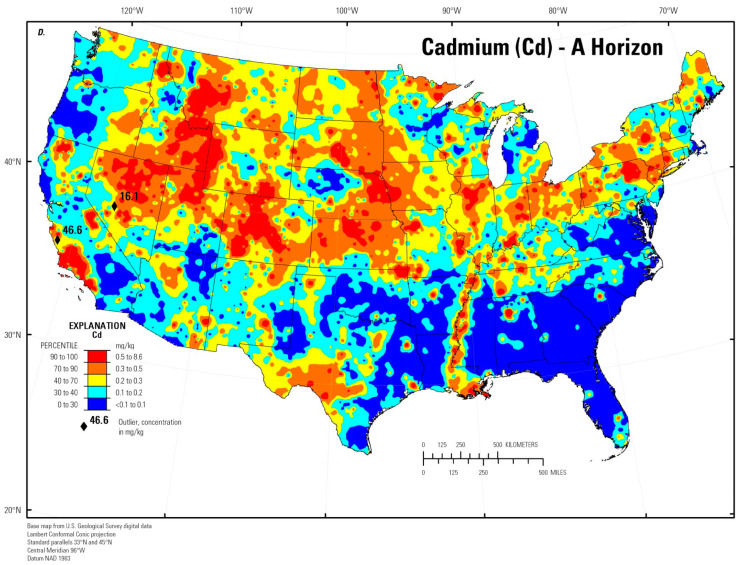
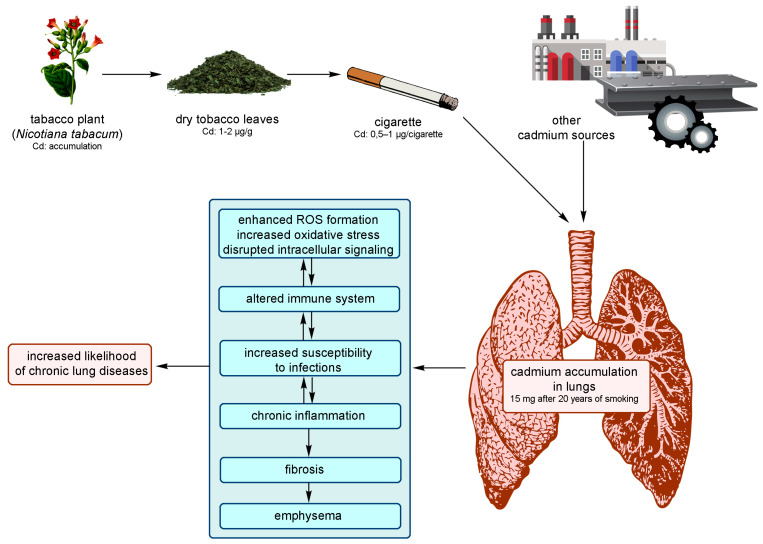
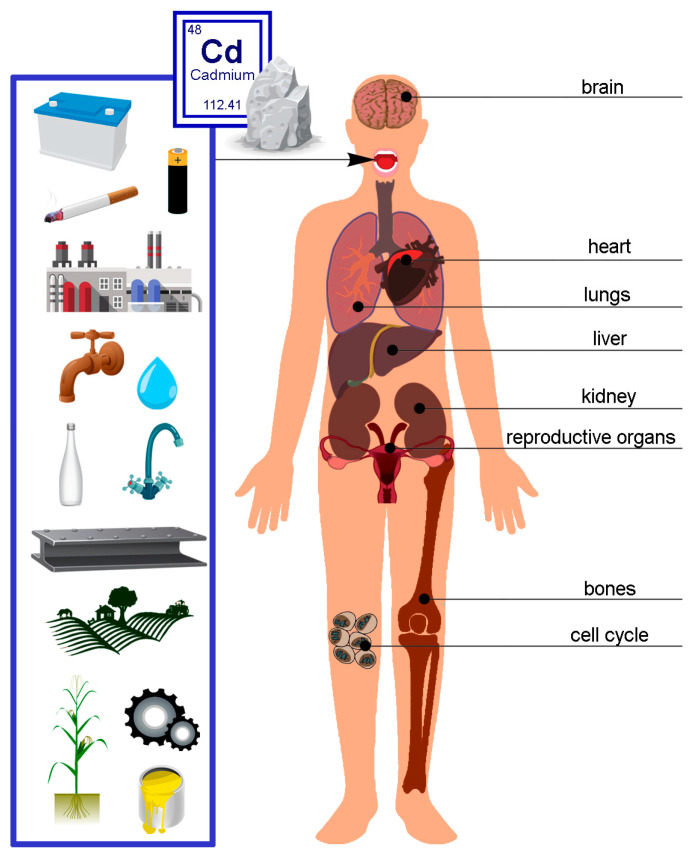
Cadmium (Cd) is a ductile metal in the form of a blueish or silvery-white powder. It is naturally found in soil (about 0.2 mg/kg), minerals, and water. Cd belongs to the group of toxic, carcinogenic, and stimulating elements. Its biological half-life in the human body ranges from 16 to even 30 years on average. Some lung diseases (such as emphysema, asthma, and bronchitis) and high blood pressure are thought to be related to slow poisoning. The symptoms of cadmium poisoning may vary depending on the time of exposure, the type of diet, and the age and health status of the exposed people. For non-smokers and non-occupational exposures, the only source of exposure is diet. The FAO/WHO recommends that the tolerable cadmium intake for an adult is approximately 0.4-0.5 mg/week (60-70 µg per day). Cadmium is primarily absorbed through the respiratory system (about 13-19% of Cd from the air), but it can also enter through the digestive system (about 10-44%), when dust is mixed and swallowed with saliva. The amount of accumulated Cd ranges from 0.14 to 3.2 ppm in muscles, 1.8 ppm in bones, and 0.0052 ppm in the blood. People who are most frequently exposed to heavy metals should be continuously monitored in order to maintain a healthy lifestyle, as well as to implement effective preventive measures and improve public health.
Keywords: cadmium; exposure and absorption; poisoning and effects; toxic element.
Conflict of interest statement
The authors declare no conflict of interest.
Figures
References
-
- John E. The Elements. 2nd ed. Clarendon Press; Oxford, UK: 1991.
-
- Zając-Nędza M., Langauer-Lewowicka H. Kadm. Mark Kazimierz (Pod Red.): Choroby Zawodowe. Wydawnictwo Lekarskie PZWL; Warszawa, Poland: 2001. pp. 195–199.
Publication types
LinkOut - more resources
Full Text Sources
