


Causal Link between Gut Microbiota, Neurophysiological States, and Bone Diseases: A Comprehensive Mendelian Randomization Study
- PMID: 37764718
- PMCID: PMC10534888
- DOI: 10.3390/nu15183934
Causal Link between Gut Microbiota, Neurophysiological States, and Bone Diseases: A Comprehensive Mendelian Randomization Study
Abstract
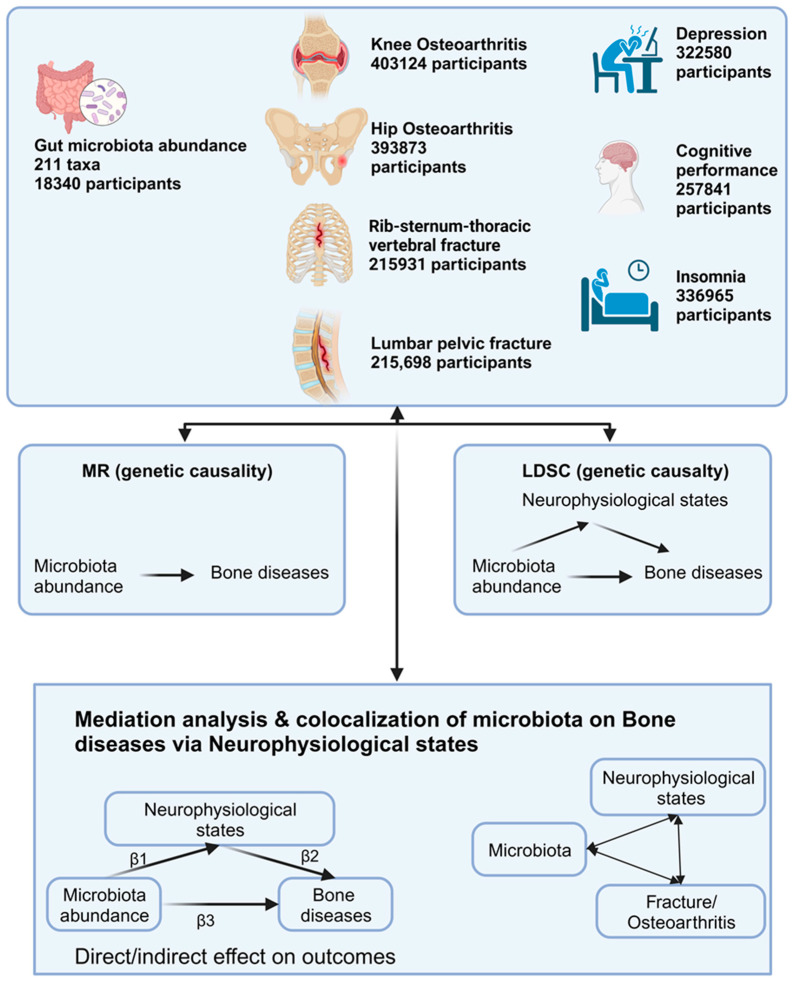
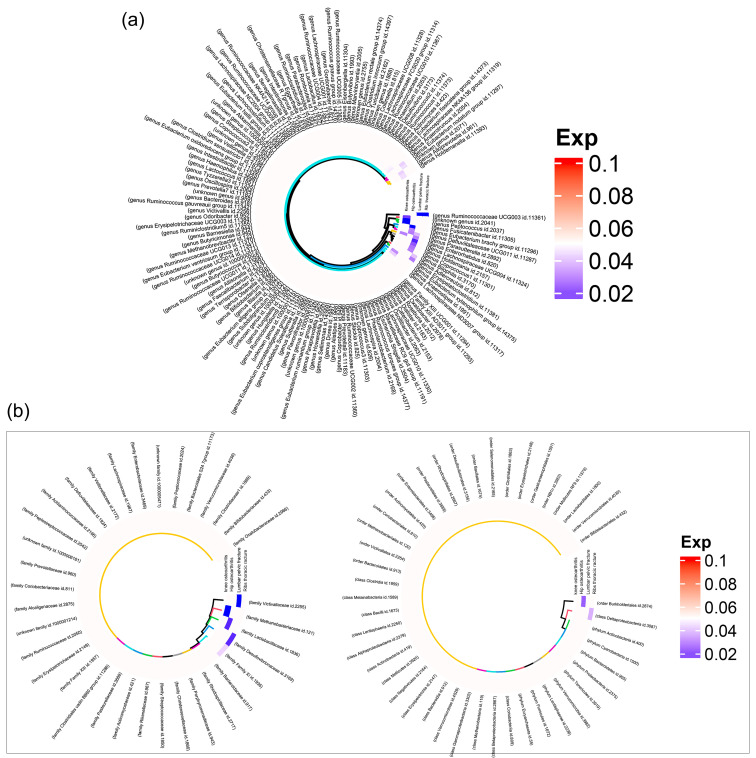
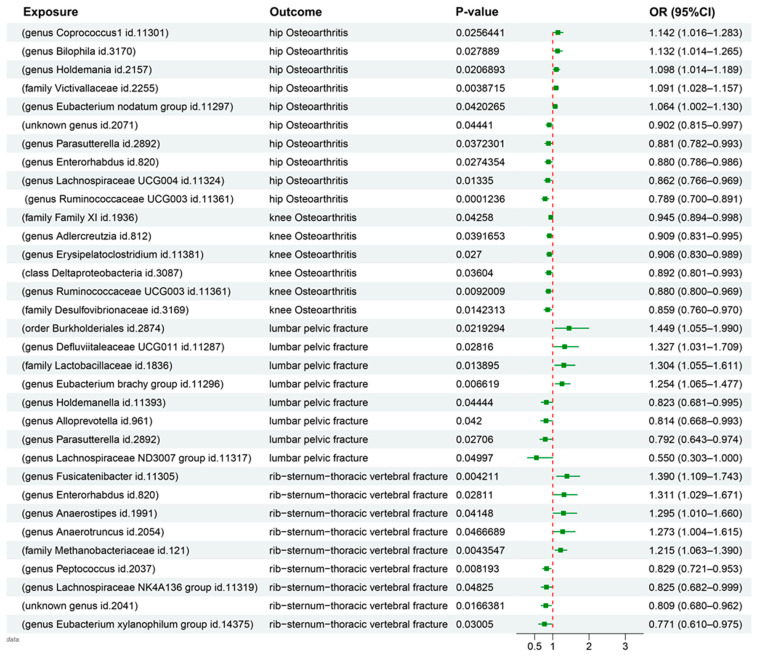
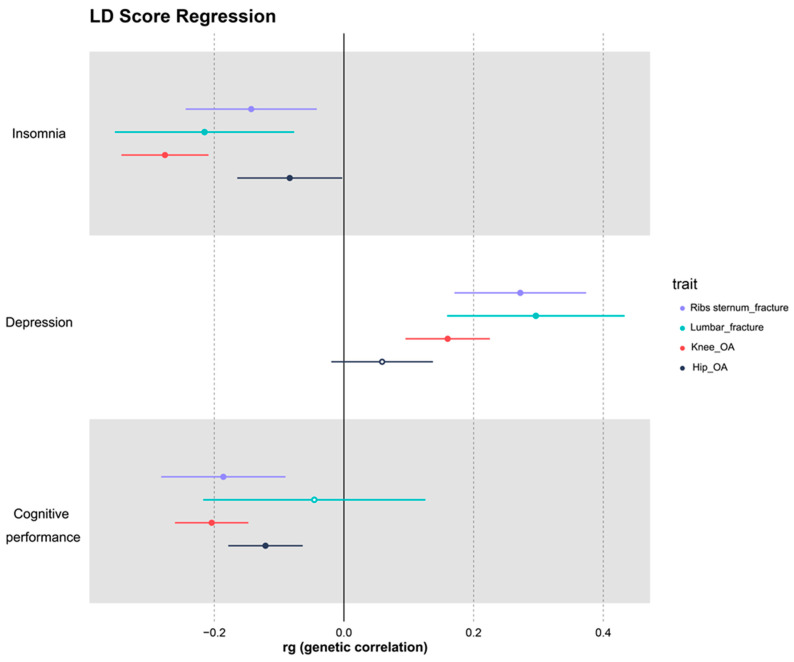
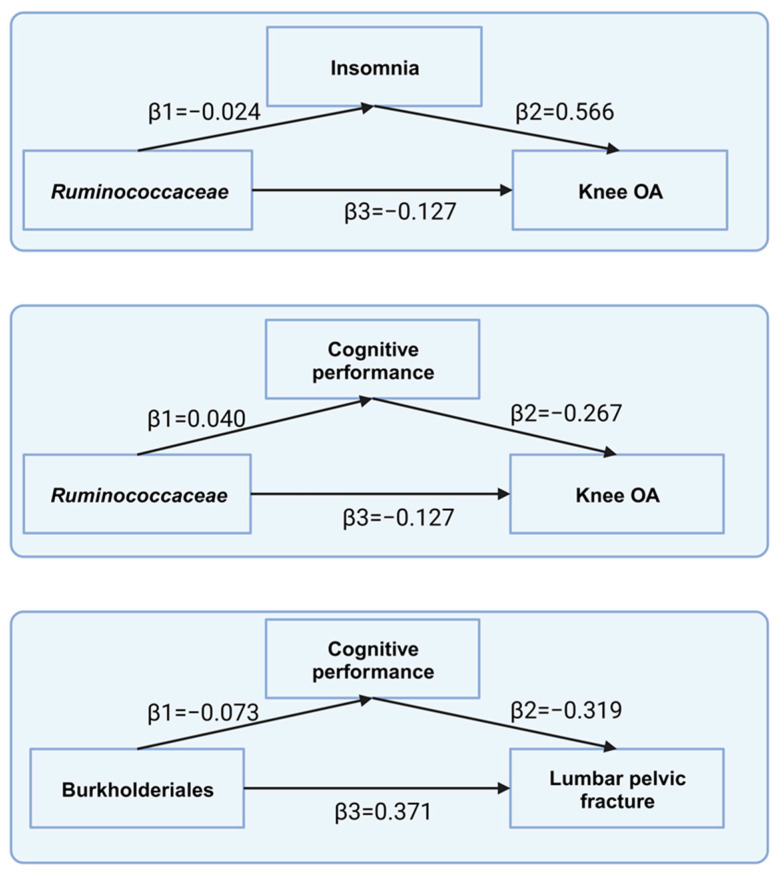
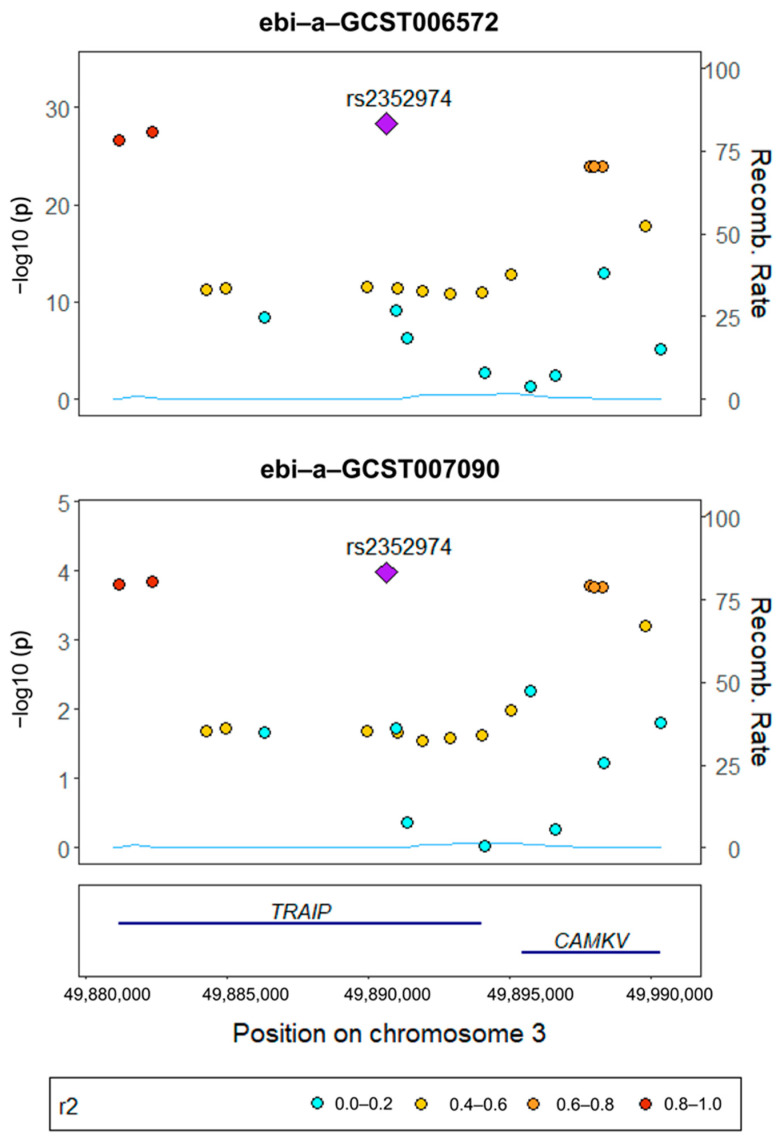
Increasing evidence highlights a robust correlation between the gut microbiota and bone diseases; however, the existence of a causal relationship between them remains unclear. In this study, we thoroughly examined the correlation between gut microbiota and skeletal diseases using genome-wide association studies. Linkage disequilibrium score regression and Mendelian randomization were used to probe genetic causality. Furthermore, the potential mediating role of neuropsychological states (i.e., cognition, depression, and insomnia) between the gut microbiota and bone diseases was evaluated using mediation analysis, with genetic colocalization analysis revealing potential targets. These findings suggest a direct causal relationship between Ruminococcaceae and knee osteoarthritis (OA), which appears to be mediated by cognitive performance and insomnia. Similarly, a causal association was observed between Burkholderiales and lumbar pelvic fractures, mediated by cognitive performance. Colocalization analysis identified a shared causal variant (rs2352974) at the TRAF-interacting protein locus for cognitive ability and knee OA. This study provides compelling evidence that alterations in the gut microbiota can enhance cognitive ability, ameliorate insomnia, and potentially reduce the risk of site-specific fractures and OA. Therefore, strategies targeting gut microbiota optimization could serve as novel and effective preventive measures against fractures and OA.
Keywords: Mendelian randomization; cognitive performance; fracture; gut microbiome; mediation; osteoarthritis.
Conflict of interest statement
The authors declare no conflict of interest.
Figures
Similar articles
-
Exploring Causal Links Between Gut Microbiota and Geriatric Syndromes: A Two-Sample Mendelian Randomization Analysis.Int J Med Sci. 2024 Jul 22;21(10):1945-1963. doi: 10.7150/ijms.94335. eCollection 2024. Int J Med Sci. 2024. PMID: 39113894 Free PMC article.
-
Causal relationship between the gut microbiota and insomnia: a two-sample Mendelian randomization study.Front Cell Infect Microbiol. 2024 Mar 4;14:1279218. doi: 10.3389/fcimb.2024.1279218. eCollection 2024. Front Cell Infect Microbiol. 2024. PMID: 38500501 Free PMC article.
-
Causal associations between human gut microbiota and cholelithiasis: a mendelian randomization study.Front Cell Infect Microbiol. 2023 May 25;13:1169119. doi: 10.3389/fcimb.2023.1169119. eCollection 2023. Front Cell Infect Microbiol. 2023. PMID: 37305422 Free PMC article.
-
Exploring the potential causal relationship between gut microbiota and heart failure: A two-sample mendelian randomization study combined with the geo database.Curr Probl Cardiol. 2024 Feb;49(2):102235. doi: 10.1016/j.cpcardiol.2023.102235. Epub 2023 Nov 30. Curr Probl Cardiol. 2024. PMID: 38040216 Review.
-
Genetic liability of gut microbiota for idiopathic pulmonary fibrosis and lung function: a two-sample Mendelian randomization study.Front Cell Infect Microbiol. 2024 May 22;14:1348685. doi: 10.3389/fcimb.2024.1348685. eCollection 2024. Front Cell Infect Microbiol. 2024. PMID: 38841114 Free PMC article.
Cited by
-
Microbiome impacts quality of life in patients with endometrial cancer and benign gynecological conditions.Qual Life Res. 2025 Jul 19. doi: 10.1007/s11136-025-04031-9. Online ahead of print. Qual Life Res. 2025. PMID: 40682738
-
Gut-bone axis research: unveiling the impact of gut microbiota on postmenopausal osteoporosis and osteoclasts through Mendelian randomization.Front Endocrinol (Lausanne). 2024 May 31;15:1419566. doi: 10.3389/fendo.2024.1419566. eCollection 2024. Front Endocrinol (Lausanne). 2024. PMID: 38883609 Free PMC article.
-
Genus_Ruminococcus and order_Burkholderiales affect osteoporosis by regulating the microbiota-gut-bone axis.Front Microbiol. 2024 May 21;15:1373013. doi: 10.3389/fmicb.2024.1373013. eCollection 2024. Front Microbiol. 2024. PMID: 38835486 Free PMC article.
-
Progress in multi-omics studies of osteoarthritis.Biomark Res. 2025 Feb 11;13(1):26. doi: 10.1186/s40364-025-00732-y. Biomark Res. 2025. PMID: 39934890 Free PMC article. Review.
-
Identifying modifiable factors and their causal effects on osteoporosis risk.Sci Rep. 2025 Jun 3;15(1):19472. doi: 10.1038/s41598-025-04455-w. Sci Rep. 2025. PMID: 40461643 Free PMC article.
References
-
- Bhanushali A., Kovoor J.G., Stretton B., Kieu J.T., Bright R.A., Hewitt J.N., Ovenden C.D., Gupta A.K., Afzal M.Z., Edwards S., et al. Outcomes of early versus delayed weight-bearing with intramedullary nailing of tibial shaft fractures: A systematic review and meta-analysis. Eur. J. Trauma. Emerg. Surg. 2022;48:3521–3527. doi: 10.1007/s00068-022-01919-w. - DOI - PMC - PubMed
MeSH terms
LinkOut - more resources
Full Text Sources
Medical
