


The Fascinating Cross-Paths of Pathogenic Bacteria, Human and Animal Faecal Sources in Water-Stressed Communities of Vhembe District, South Africa
- PMID: 37764893
- PMCID: PMC10535812
- DOI: 10.3390/pathogens12091085
The Fascinating Cross-Paths of Pathogenic Bacteria, Human and Animal Faecal Sources in Water-Stressed Communities of Vhembe District, South Africa
Abstract
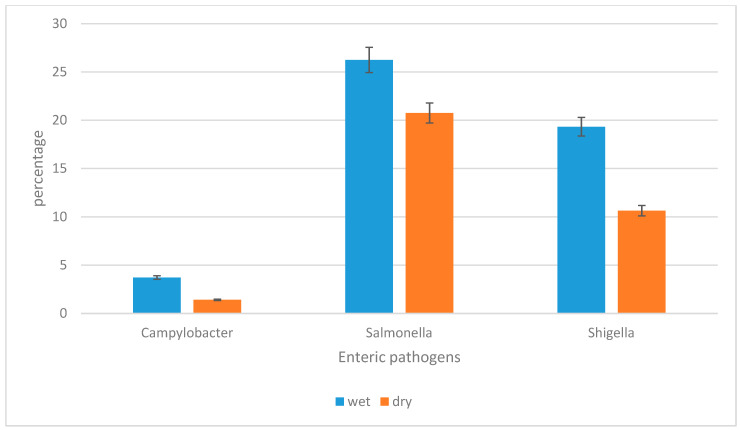
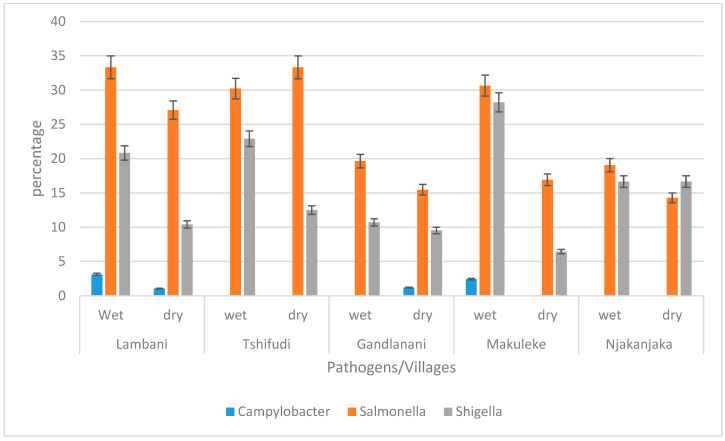
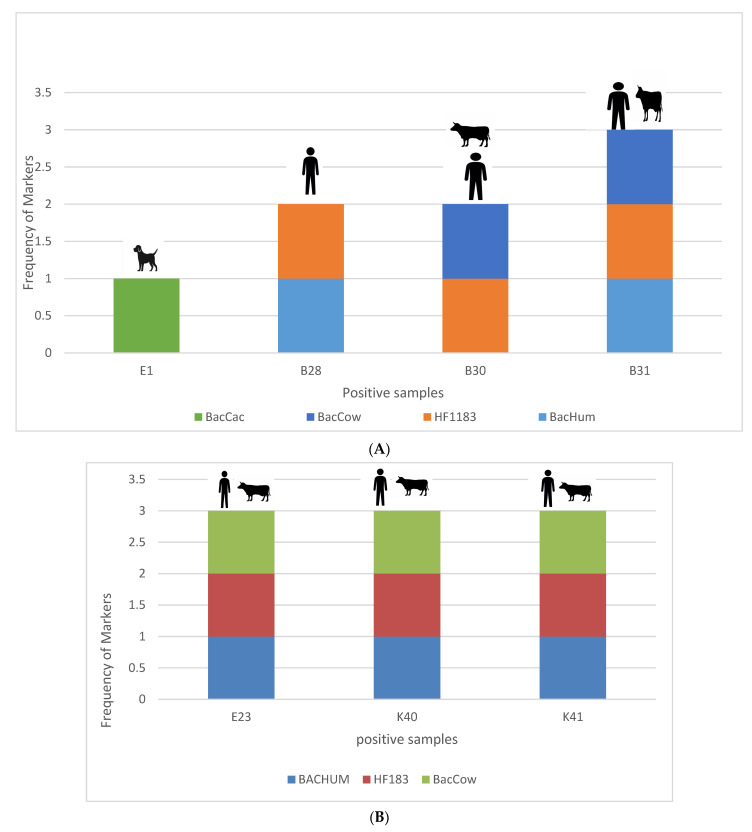
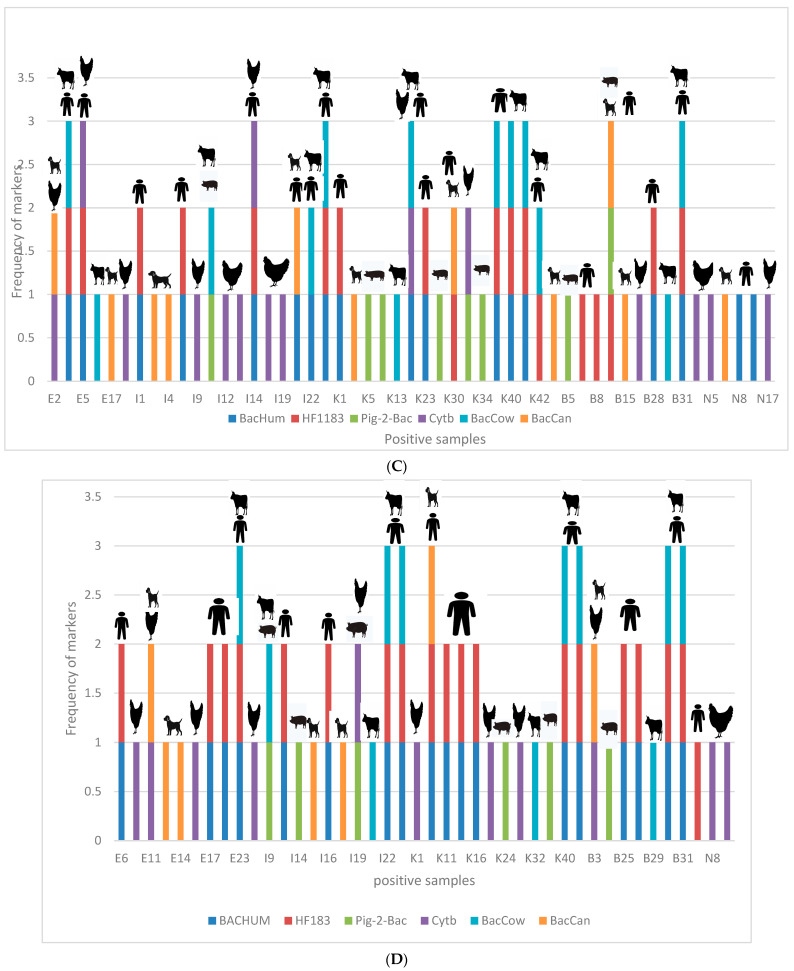
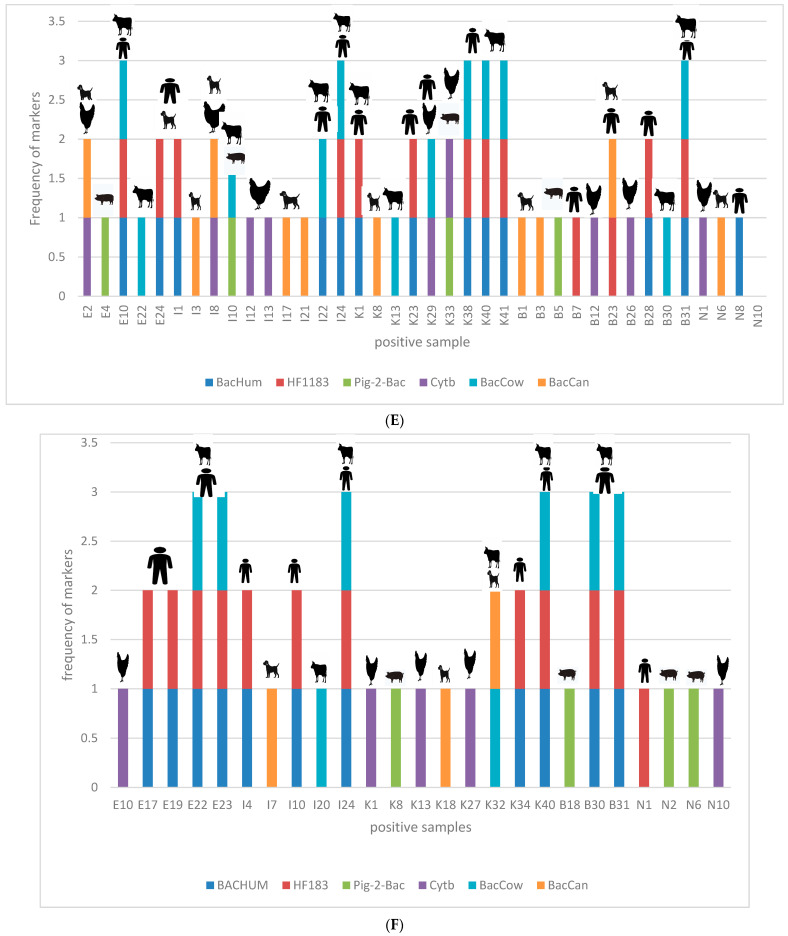
Access to clean and safe drinking water still remains a major challenge in the developing world, causing public health risks in terms of waterborne infections, especially in rural areas of sub-Saharan Africa. This study aimed to track and detect enteric pathogens (Salmonella enterica subsp. enterica serovar Typhimurium str. LT2, Shigella flexneri, and Campylobacter jejuni subsp. jejuni) in rural water sources. It also sought to establish a correlation between these pathogens and the sources of faecal pollution. Multiplex qPCR and specific primers and probes were used for detection and tracking. The study successfully correlated the occurrence of target pathogens with sources of human and animal faecal contamination using host-specific genetic markers (BacHum and HF183 for humans, BacCow for cows, Pig-2-Bac for pigs, Cytb for chickens, and BacCan for dogs). The study revealed that enteric pathogens were found in 47.69% and 32.80% of samples during the wet and dry seasons, respectively. These pathogens were associated with human or animal faecal contamination. Correlations between pathogens and contamination sources were significant (p ≤ 0.05), with varying strengths during the wet and dry seasons. The findings emphasize the importance of identifying faecal contamination sources to protect rural communities from waterborne infections.
Keywords: enteric pathogens; faecal pollution; multiplex real-time PCR; rural areas; water-stressed areas.
Conflict of interest statement
The authors declare no conflict of interest. The opinions expressed and conclusions drawn are those of the authors.
Figures
References
-
- Saylan Y., Erdem Ö., Cihangir N., Denizli A. Detecting fingerprints of waterborne bacteria on a sensor. Chemosensors. 2019;7:33. doi: 10.3390/chemosensors7030033. - DOI
-
- World Health Organization . Water, Sanitation, Hygiene and Health: A Primer for Health Professionals. World Health Organization; Geneva, Switzerland: 2019. [(accessed on 12 December 2019)]. (No. WHO/CED/PHE/WSH/19.149) Available online: https://apps.who.int/iris/bitstream/handle/10665/330100/WHO-CED-PHE-WSH-....
-
- Mahagamage M.G.Y.L., Pathirage M.V.S.C., Manage P.M. Contamination status of Salmonella spp., Shigella spp.; Campylobacter spp. in surface and groundwater of the Kelani River Basin, Sri Lanka. Water. 2020;12:2187. doi: 10.3390/w12082187. - DOI
Grants and funding
LinkOut - more resources
Full Text Sources
Molecular Biology Databases
