


eNOS Regulates Lymphatic Valve Specification by Controlling β-Catenin Signaling During Embryogenesis in Mice
- PMID: 37767708
- PMCID: PMC10655861
- DOI: 10.1161/ATVBAHA.123.319405
eNOS Regulates Lymphatic Valve Specification by Controlling β-Catenin Signaling During Embryogenesis in Mice
Abstract
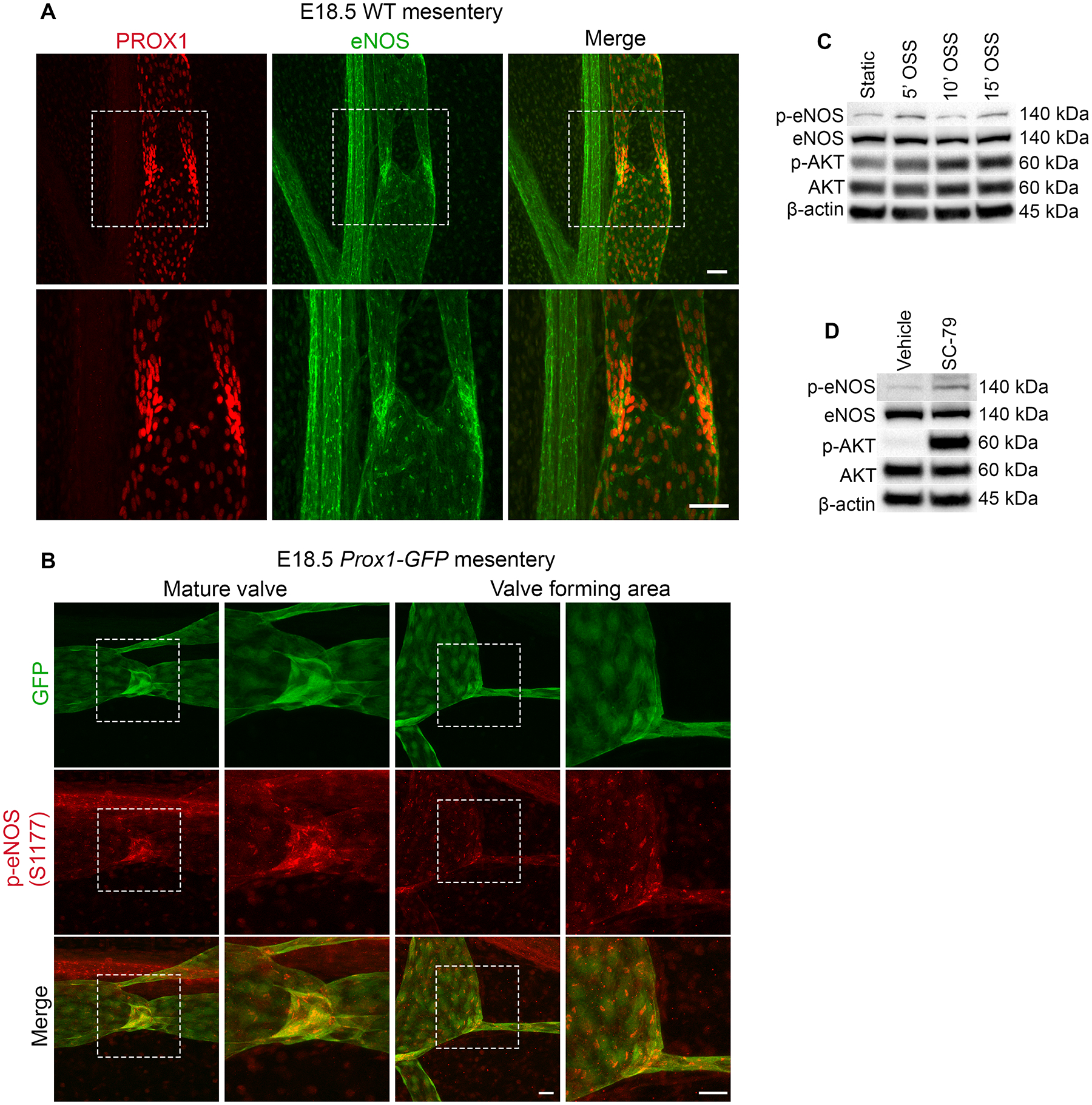
Background: Lymphatic valves play a critical role in ensuring unidirectional lymph transport. Loss of lymphatic valves or dysfunctional valves are associated with several diseases including lymphedema, lymphatic malformations, obesity, and ileitis. Lymphatic valves first develop during embryogenesis in response to mechanotransduction signaling pathways triggered by oscillatory lymph flow. In blood vessels, eNOS (endothelial NO synthase; gene name: Nos3) is a well-characterized shear stress signaling effector, but its role in lymphatic valve development remains unexplored.
Methods: We used global Nos3-/- mice and cultured human dermal lymphatic endothelial cells to investigate the role of eNOS in lymphatic valve development, which requires oscillatory shear stress signaling.
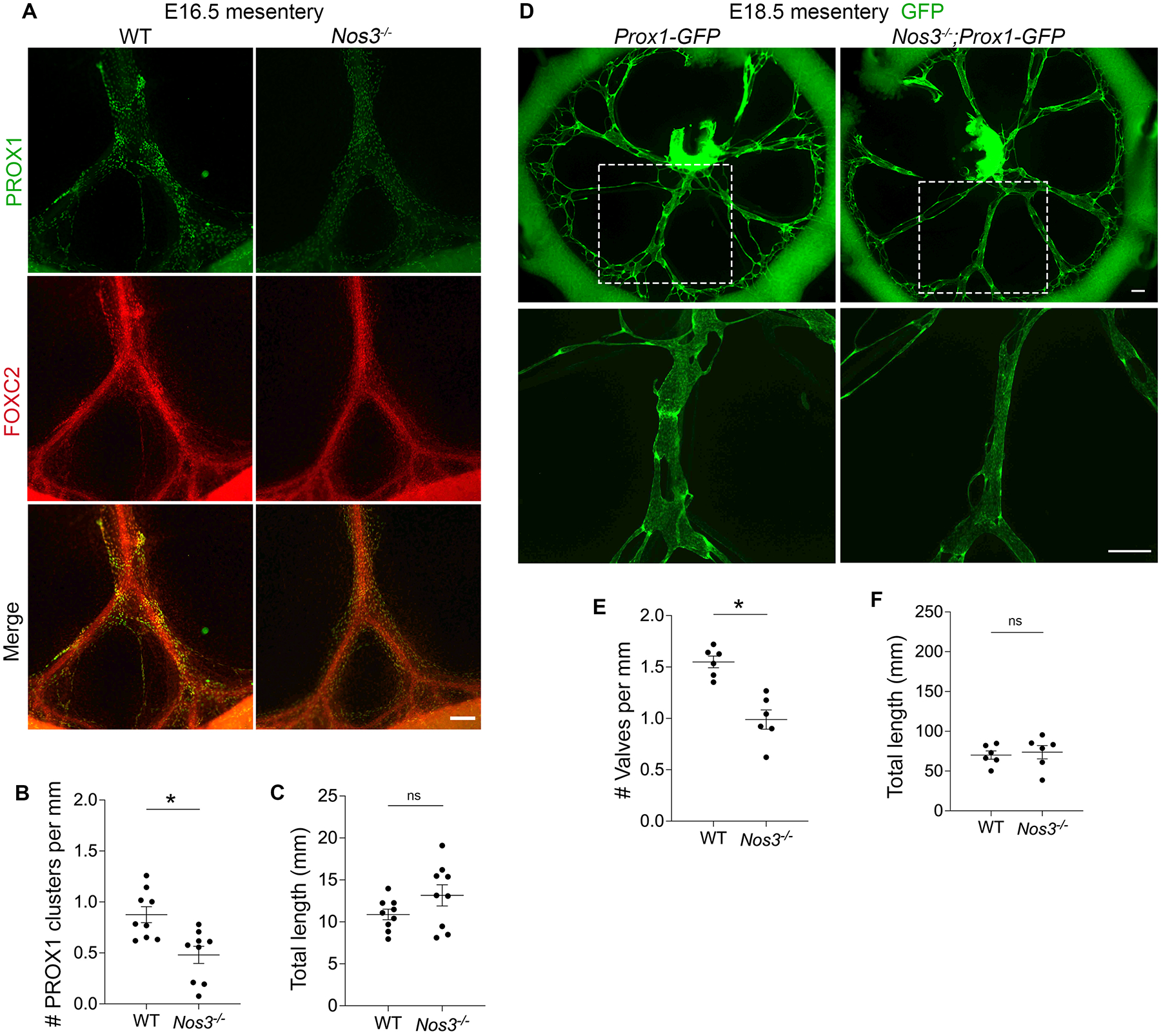
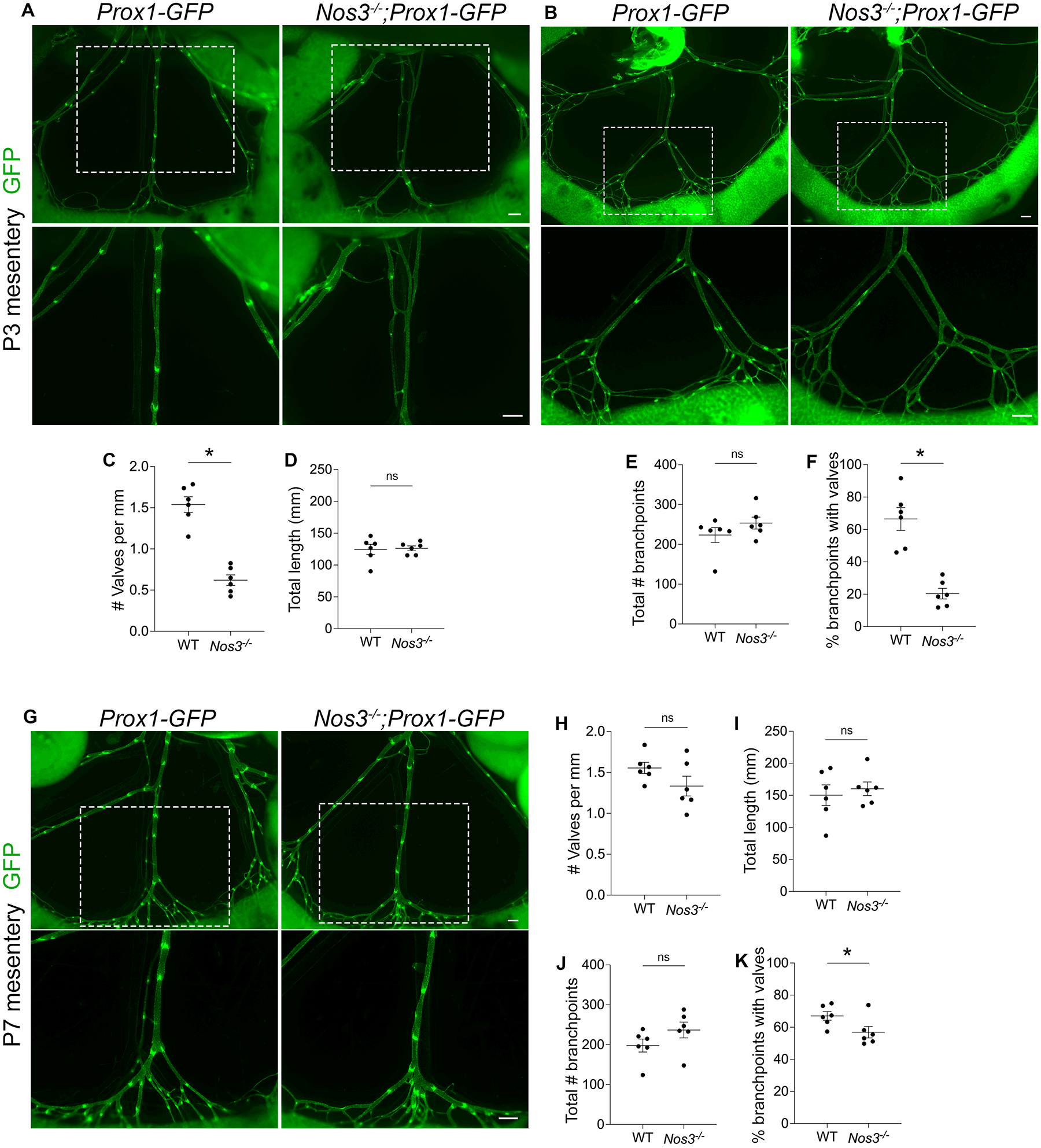
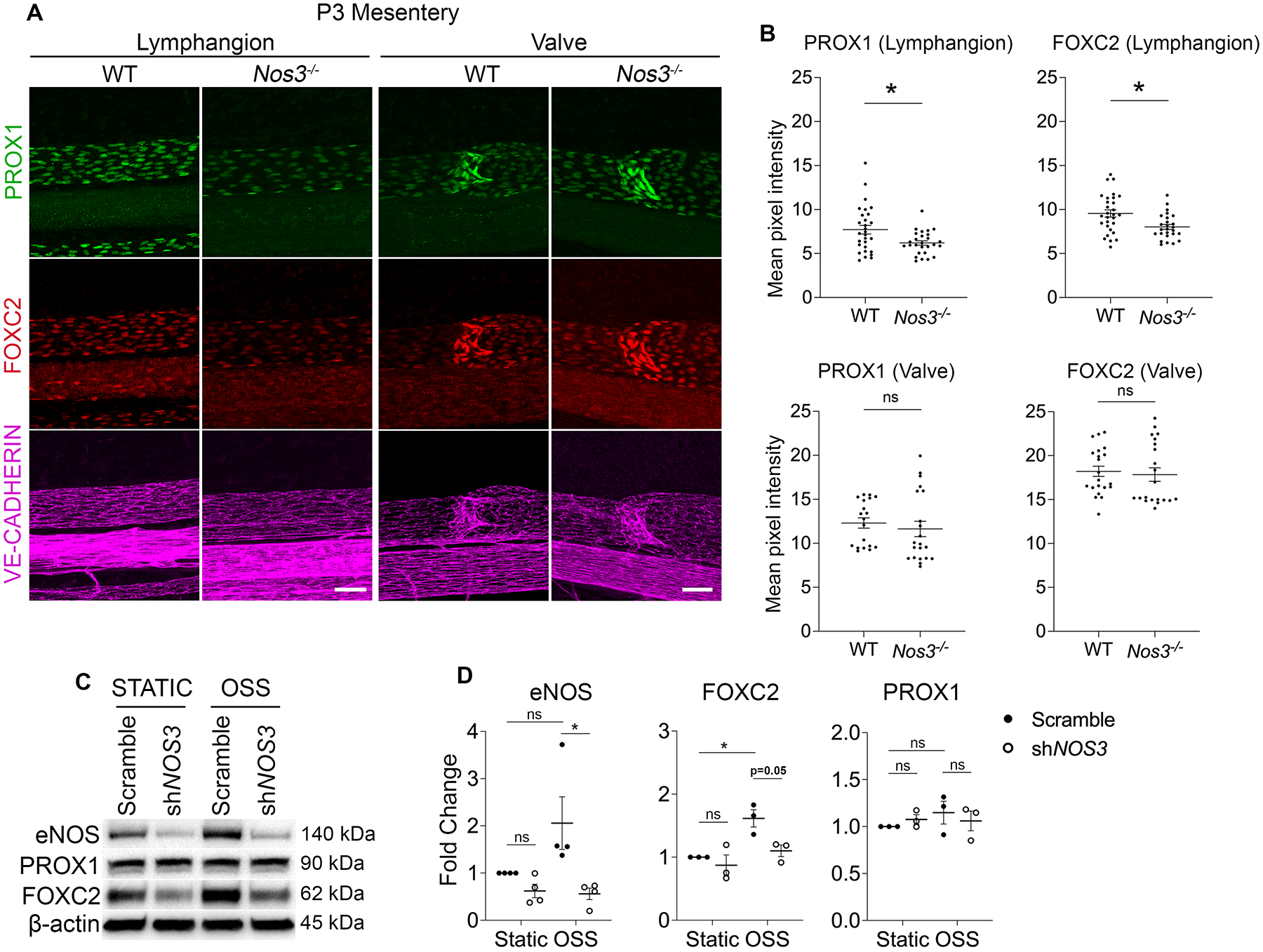
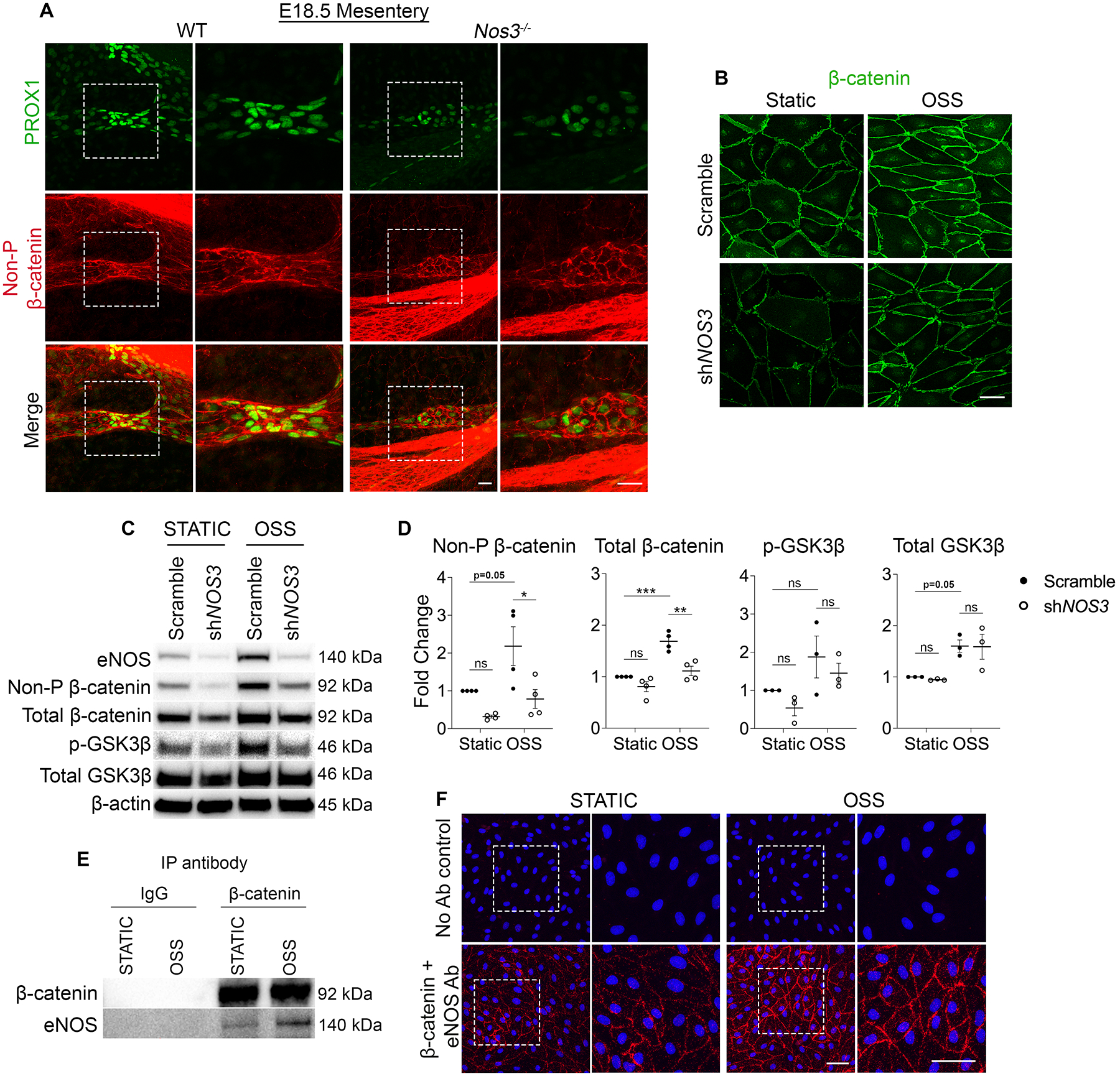
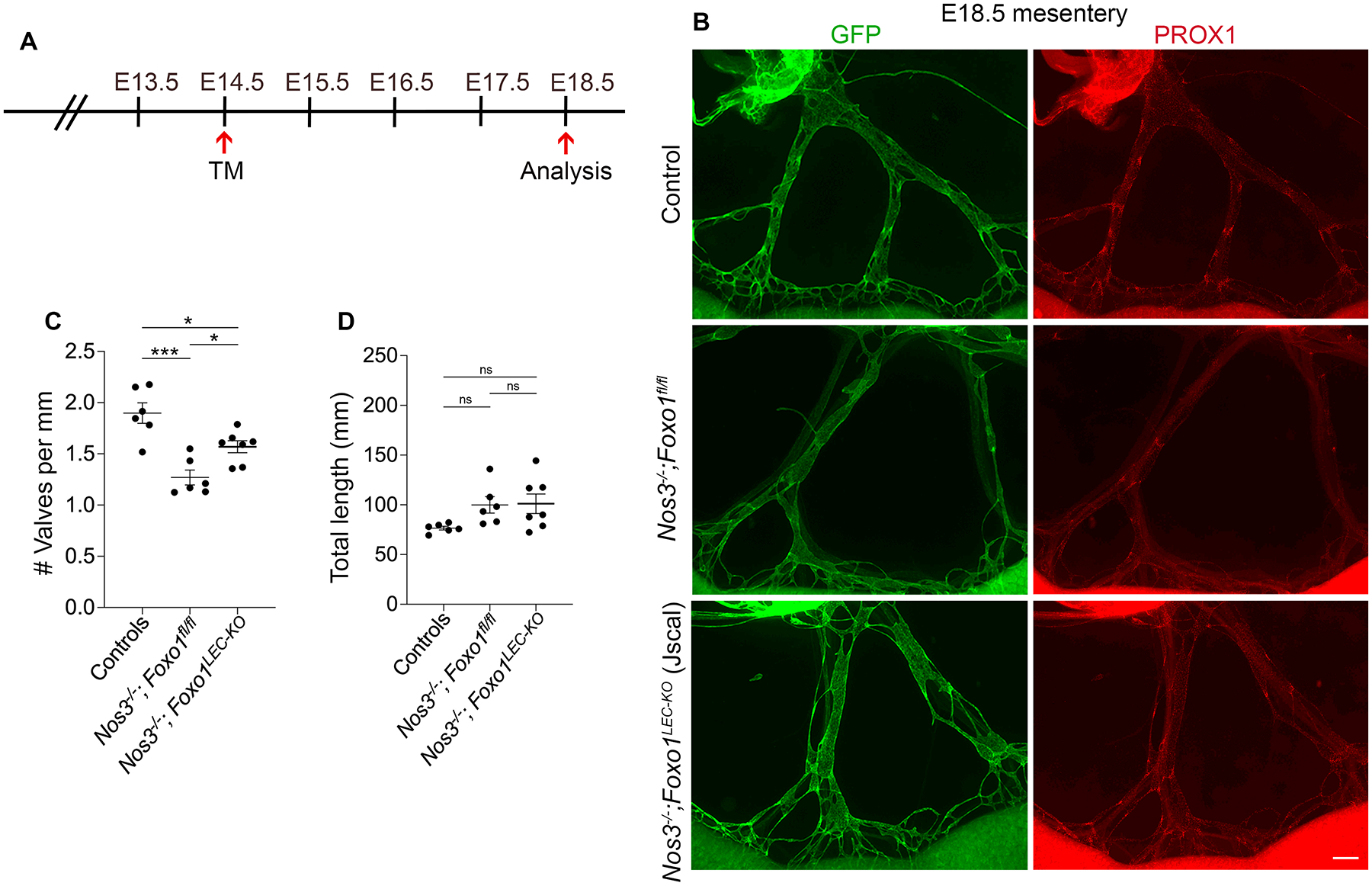
Results: Our data reveal a 45% reduction in lymphatic valve specification cell clusters and that loss of eNOS protein inhibited activation of β-catenin and its nuclear translocation. Genetic knockout or knockdown of eNOS led to downregulation of β-catenin target proteins in vivo and in vitro. However, pharmacological inhibition of NO production did not reproduce these effects. Co-immunoprecipitation and proximity ligation assays reveal that eNOS directly binds to β-catenin and their binding is enhanced by oscillatory shear stress. Finally, genetic ablation of the Foxo1 gene enhanced FOXC2 expression and partially rescued the loss of valve specification in the eNOS knockouts.
Conclusions: In conclusion, we demonstrate a novel, NO-independent role for eNOS in regulating lymphatic valve specification and propose a mechanism by which eNOS directly binds β-catenin to regulate its nuclear translocation and thereby transcriptional activity.
Keywords: cadherins; catenins; lymphedema; mechanotransduction; nitric oxide.
Conflict of interest statement
Figures
Update of
-
Endothelial Nitric Oxide Synthase Regulates Lymphatic Valve Specification By Controlling β - catenin Signaling During Embryogenesis.bioRxiv [Preprint]. 2023 Apr 11:2023.04.10.536303. doi: 10.1101/2023.04.10.536303. bioRxiv. 2023. Update in: Arterioscler Thromb Vasc Biol. 2023 Nov;43(11):2197-2212. doi: 10.1161/ATVBAHA.123.319405. PMID: 37090551 Free PMC article. Updated. Preprint.
References
-
- Czepielewski RS, Erlich EC, Onufer EJ, Young S, Saunders BT, Han YH, Wohltmann M, Wang PL, Kim KW, Kumar S, et al. Ileitis-associated tertiary lymphoid organs arise at lymphatic valves and impede mesenteric lymph flow in response to tumor necrosis factor. Immunity. 2021;54:2795–2811.e2799. doi: 10.1016/j.immuni.2021.10.003 - DOI - PMC - PubMed
Publication types
MeSH terms
Substances
Grants and funding
LinkOut - more resources
Full Text Sources
Molecular Biology Databases
Research Materials
Miscellaneous
