


Recombinant Erythropoietin Induces Oligodendrocyte Progenitor Cell Proliferation After Traumatic Brain Injury and Delayed Hypoxemia
- PMID: 37768487
- PMCID: PMC10684442
- DOI: 10.1007/s13311-023-01443-8
Recombinant Erythropoietin Induces Oligodendrocyte Progenitor Cell Proliferation After Traumatic Brain Injury and Delayed Hypoxemia
Abstract
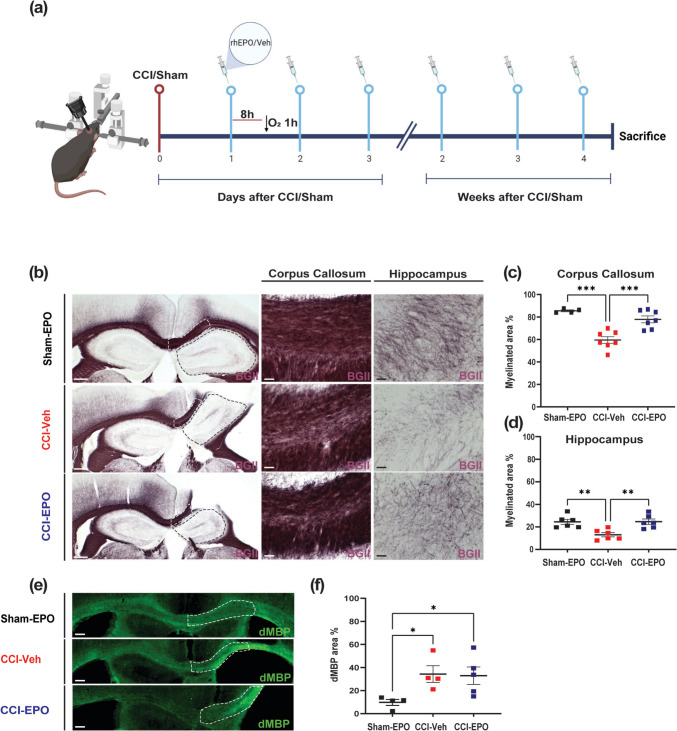
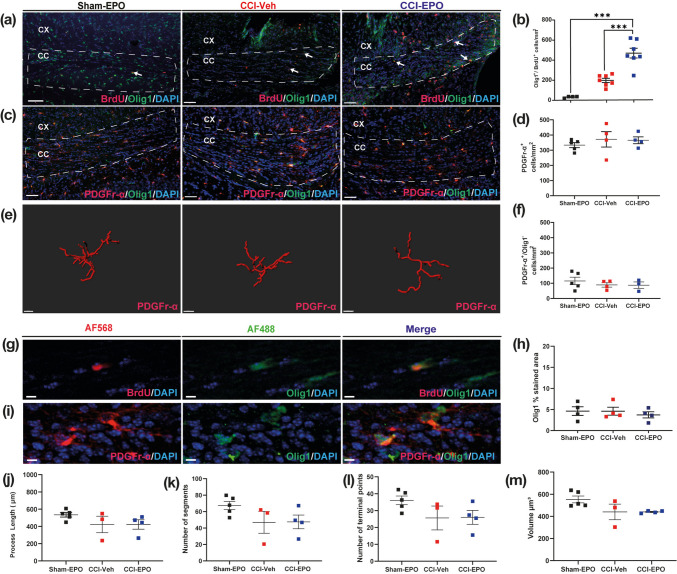
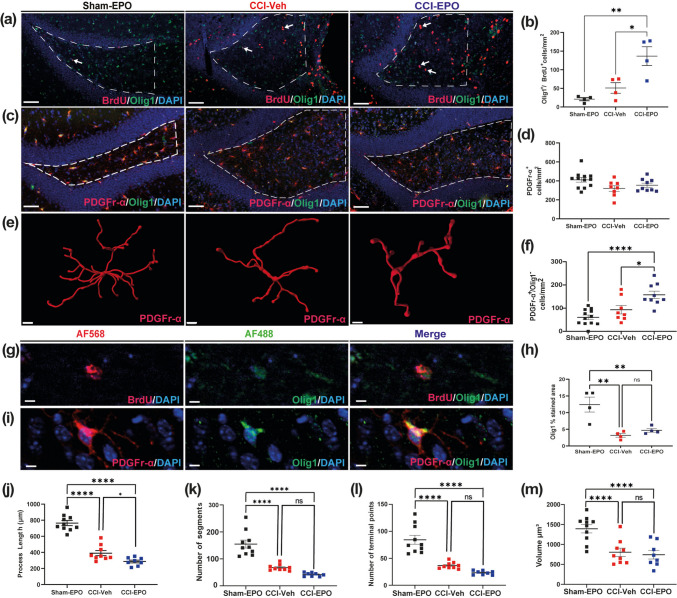
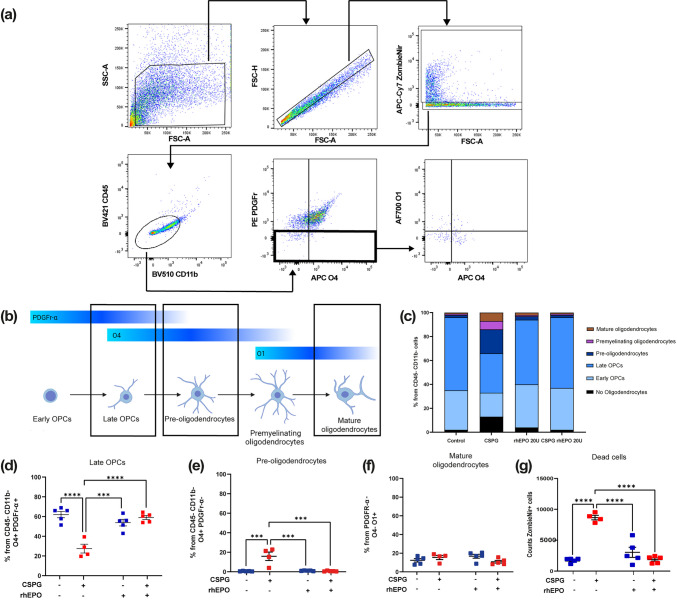
Traumatic brain injury (TBI) can result in axonal loss and demyelination, leading to persistent damage in the white matter. Demyelinated axons are vulnerable to pathologies related to an abnormal myelin structure that expose neurons to further damage. Oligodendrocyte progenitor cells (OPCs) mediate remyelination after recruitment to the injury site. Often this process is inefficient due to inadequate OPC proliferation. To date, no effective treatments are currently available to stimulate OPC proliferation in TBI. Recombinant human erythropoietin (rhEPO) is a pleiotropic neuroprotective cytokine, and its receptor is present in all stages of oligodendroglial lineage cell differentiation. Therefore, we hypothesized that rhEPO administration would enhance remyelination after TBI through the modulation of OPC response. Utilizing a murine model of controlled cortical impact and a primary OPC culture in vitro model, we characterized the impact of rhEPO on remyelination and proliferation of oligodendrocyte lineage cells. Myelin black gold II staining of the peri-contusional corpus callosum revealed an increase in myelinated area in association with an increase in BrdU-positive oligodendrocytes in injured mice treated with rhEPO. Furthermore, morphological analysis of OPCs showed a decrease in process length in rhEPO-treated animals. RhEPO treatment increased OPC proliferation after in vitro CSPG exposure. Erythropoietin receptor (EPOr) gene knockdown using siRNA prevented rhEPO-induced OPC proliferation, demonstrating that the rhEPO effect on OPC response is EPOr activation dependent. Together, our findings demonstrate that rhEPO administration may promote myelination by increasing oligodendrocyte lineage cell proliferation after TBI.
Keywords: Erythropoietin; Myelination; Oligodendrocyte progenitor cells; Traumatic brain injury; White matter injury.
© 2023. The American Society for Experimental Neurotherapeutics, Inc.
Conflict of interest statement
The authors have no conflict of interests.
Figures


References
-
- James SL, Theadom A, Ellenbogen RG, Bannick MS, Mountjoy-Venning WC, Lucchesi LR, et al. Global, regional, and national burden of traumatic brain injury and spinal cord injury, 1990–2016: a systematic analysis for the Global Burden of Disease Study 2016. Lancet Neurol. 2019;18(1):56–87. doi: 10.1016/S1474-4422(18)30415-0. - DOI - PMC - PubMed
-
- Lipton ML, Gellella E, Lo C, Gold T, Ardekani BA, Shifteh K, et al. Multifocal white matter ultrastructural abnormalities in mild traumatic brain injury with cognitive disability: a voxel-wise analysis of diffusion tensor imaging. J Neurotrauma. 2008;25(11):1335–1342. doi: 10.1089/neu.2008.0547. - DOI - PubMed
Publication types
MeSH terms
Substances
Grants and funding
LinkOut - more resources
Full Text Sources
Medical
