Epidemiological and molecular evidence of intrafamilial transmission through sexual and vertical routes in Bahia, the state with the highest prevalence of HTLV-1 in Brazil
- PMID: 37769013
- PMCID: PMC10593241
- DOI: 10.1371/journal.pntd.0011005
Epidemiological and molecular evidence of intrafamilial transmission through sexual and vertical routes in Bahia, the state with the highest prevalence of HTLV-1 in Brazil
Abstract
Introduction: Familial clustering of HTLV-1 and related diseases has been reported in Brazil. However, intrafamilial transmission of HTLV-1 based on molecular analysis has been studied only in a few communities of Japanese immigrants and African-Brazilians.
Objective: To investigate the familial clustering of HTLV-1 infection and to determine the likely routes of transmission through epidemiological and genetic analyzes.
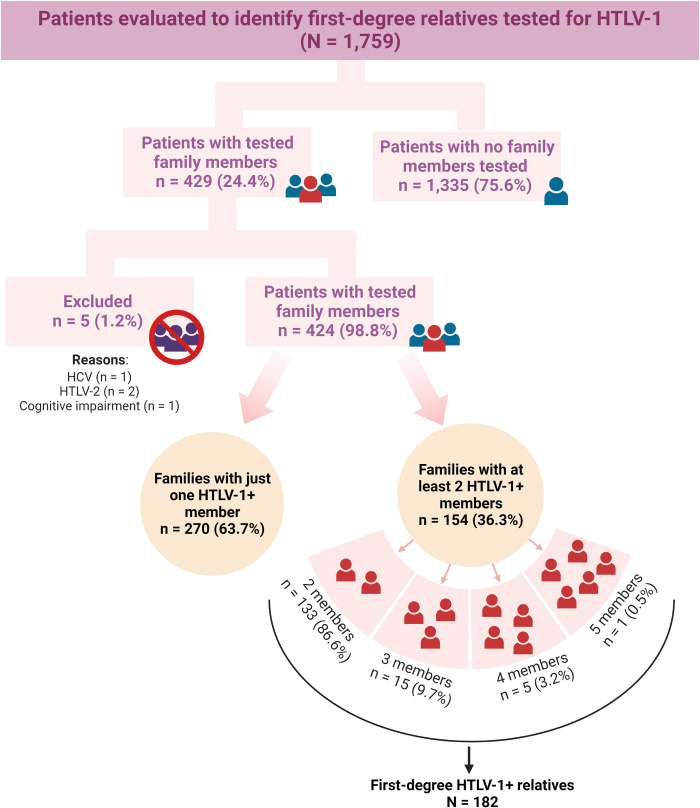
Methods: Medical records of 1,759 HTLV-1+ patients from de the Center for HTLV in Salvador, Brazil, were evaluated to identify first-degree relatives previously tested for HTLV-1. Familial clustering was assumed if more than one member of the same family was HTLV-1+. LTR regions of HTLV-1 sequences were analyzed for the presence of intrafamilial polymorphisms. Family pedigrees were constructed and analyzed to infer the likely transmission routes of HTLV-1.
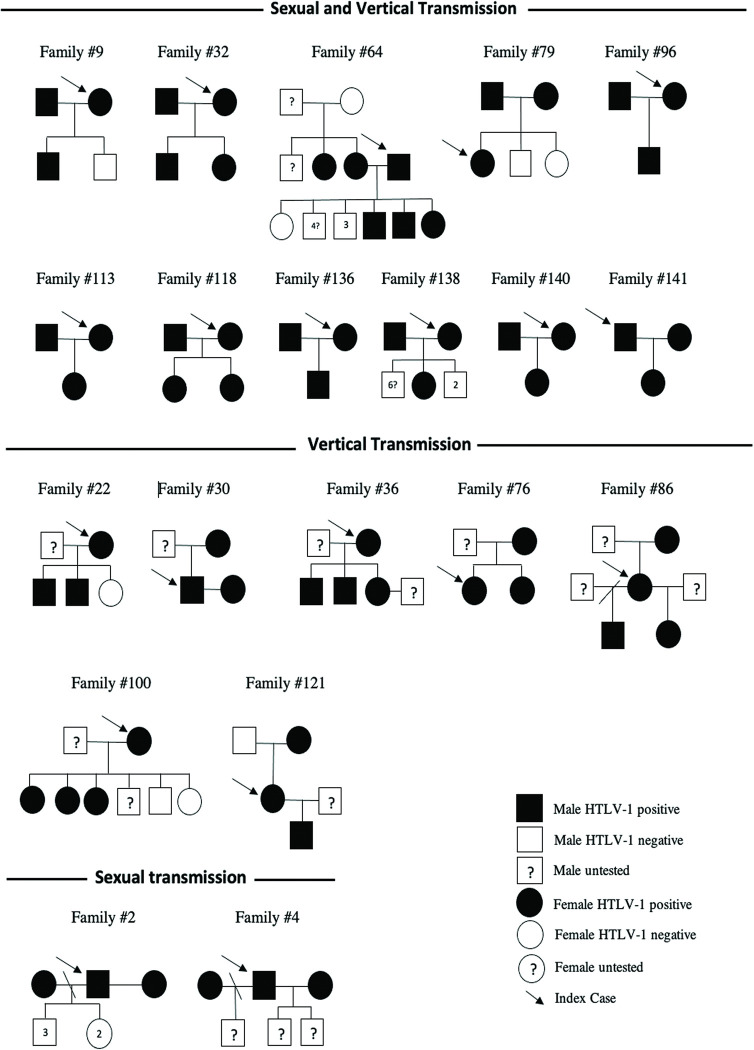
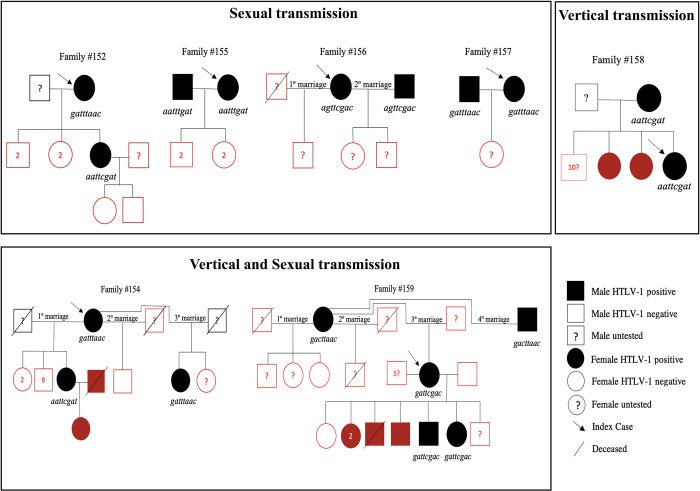
Results: In 154 patients at least one other family member had tested positive for HTLV-1 (a total of 182 first-degree relatives). Of the 91 couples (182 individuals), 51.6% were breastfed, and 67.4% reported never using a condom. Of the 42 mother-child pairs, 23.8% had a child aged 13 years or younger; all mothers reported breastfeeding their babies. Pedigrees of families with 4 or more members suggests that vertical transmission is a likely mode of transmission in three families. Three families may have had both vertical and sexual transmission routes for HTLV-1. The genetic signatures of the LTR region of 8 families revealed 3 families with evidence of vertical transmission, another 3 families (spouses) with sexual transmission, and one family with both transmission routes. HTLV-1 sequences belonged to Cosmopolitan subtype HTLV-1a Transcontinental subgroup A.
Conclusion: Sexual and vertical transmission routes contribute to the intrafamilial spread of HTLV-1 in the state of Bahia.
Copyright: © 2023 Nunes da Silva et al. This is an open access article distributed under the terms of the Creative Commons Attribution License, which permits unrestricted use, distribution, and reproduction in any medium, provided the original author and source are credited.
Conflict of interest statement
The authors declare that the research was conducted in the absence of any commercial or financial relationships that could be construed as a potential conflict of interest.
Figures
References
-
- Poiesz BJ, Ruscetti FW, Gazdar AF, Bunn PA, Minna JD, Gallo RC. Detection and isolation of type C retrovirus particles from fresh and cultured lymphocytes of a patient with cutaneous T-cell lymphoma. Proc Natl Acad Sci U S A. dezembro de 1980;77(12):7415–9. doi: 10.1073/pnas.77.12.7415 - DOI - PMC - PubMed
-
- Roucoux DF, Murphy EL. The epidemiology and disease outcomes of human T-lymphotropic virus type II. AIDS Rev. setembro de 2004;6(3):144–54. - PubMed
Publication types
MeSH terms
LinkOut - more resources
Full Text Sources