


Biological properties of experimental dental alginate modified for self-disinfection using green nanotechnology
- PMID: 37775587
- PMCID: PMC10630233
- DOI: 10.1007/s00784-023-05277-8
Biological properties of experimental dental alginate modified for self-disinfection using green nanotechnology
Abstract
Objectives: Disinfection of alginate impression materials is a mandatory step to prevent cross-infection in dental clinics. However, alginate disinfection methods are time-consuming and exert a negative impact on accuracy and mechanical properties. Thus, this study aimed to prepare disinfecting agents (CHX and AgNO3) and silver nanoparticles reduced by a natural plant extract to produce a self-disinfecting dental alginate.
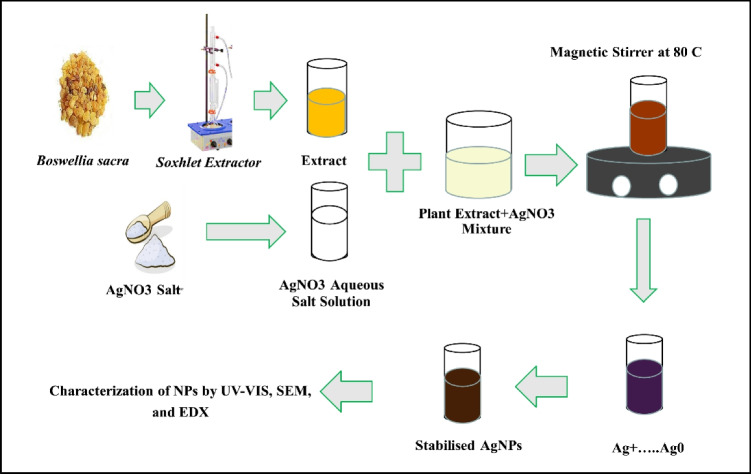
Methods: Conventional alginate impression material was used in this study. Silver nitrate (0.2% AgNO3 group) and chlorohexidine (0.2% CHX group) solutions were prepared using distilled water, and these solutions were later employed for alginate preparation. Moreover, a 90% aqueous plant extract was prepared from Boswellia sacra (BS) oleoresin and used to reduce silver nitrate to form silver nanoparticles that were incorporated in the dental alginate preparation (BS+AgNPs group). The plant extract was characterized by gas chromatography/mass spectrometry (GC/MS) analysis while green-synthesized silver nanoparticles (AgNPs) were characterized by UV-visible (UV-vis) spectroscopy and scanning electron microscopy (SEM). An agar disc diffusion assay was used to test the antimicrobial activity against Candida albicans, Streptococcus mutans, Escherichia coli, methicillin-resistant and susceptible Staphylococcus aureus strains, and Micrococcus luteus. Agar plates were incubated at 37 ± 1 °C for 24 h to allow microbial growth. Diameters of the circular inhibition zones formed around each specimen were measured digitally by using ImageJ software.
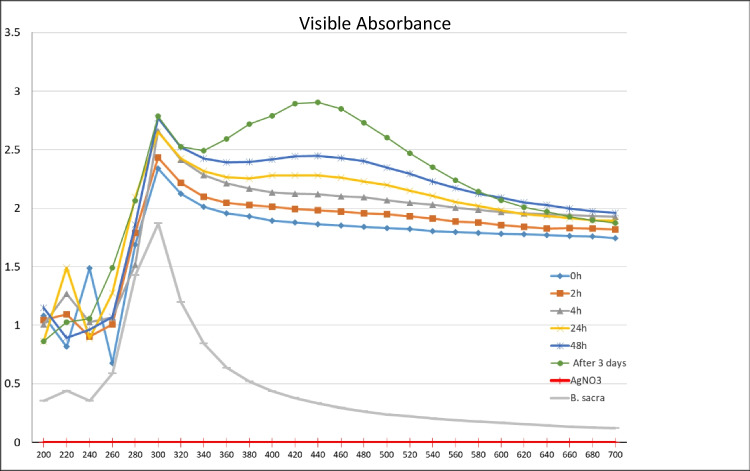
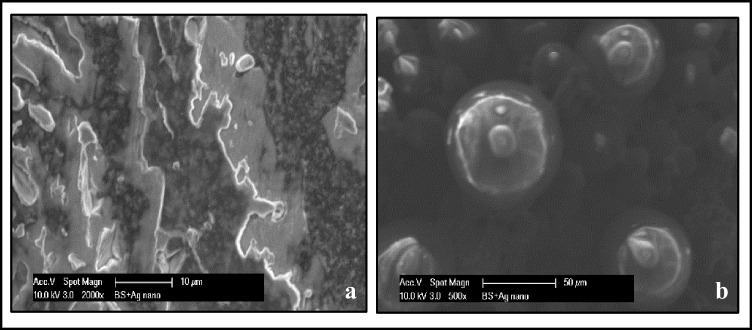
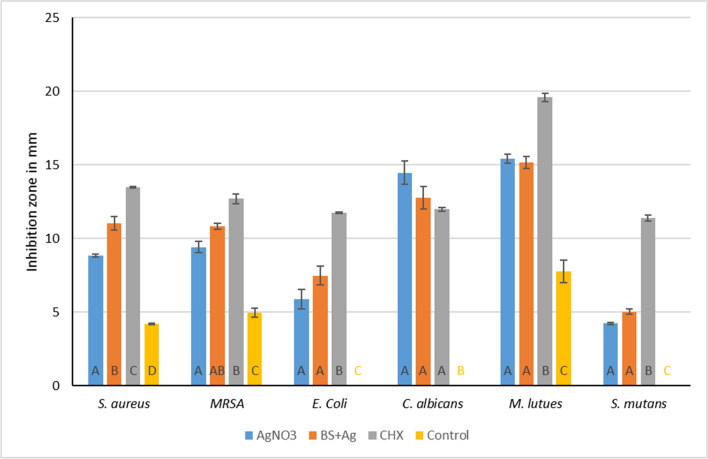
Results: Chemical analysis of the plant extract revealed the presence of 41 volatile and semi-volatile active compounds. UV-Vis spectrophotometry, SEM, and EDX confirmed the formation of spherical silver nanoparticles using the BS extract. CHX, AgNO3, and the BS+AgNPs modified groups showed significantly larger inhibition zones than the control group against all tested strains. BS+AgNPs and CHX groups showed comparable efficacy against all tested strains except for Staphylococcus aureus, where the CHX-modified alginate had a significantly higher effect.
Conclusions and clinical relevance: CHX, silver nitrate, and biosynthesized silver nanoparticles could be promising inexpensive potential candidates for the preparation of a self-disinfecting alginate impression material without affecting its performance. Green synthesis of metal nanoparticles using Boswellia sacra extract could be a very safe, efficient, and nontoxic way with the additional advantage of a synergistic action between metal ions and the phytotherapeutic agents of the plant extract.
Keywords: Antimicrobial activity; Boswellia sacra; Green synthesis; Irreversible hydrocolloids; Nanotechnology.
© 2023. The Author(s).
Conflict of interest statement
All authors declare that there is no conflict of interest in this study.
Figures


References
-
- van Noort R. Introduction to dental materials. 3. Mosby, Elsevier; 2007. pp. 191–195.
-
- Saji S, Hebden A, Goswami P, Du C. A Brief review on the development of alginate extraction process and its sustainability. Sustainability. 2022;14:5181. doi: 10.3390/su14095181. - DOI
-
- Shen C, Rawls HR. Phillips’ science of dental materials. 18. St. Louis: Elsevier/Saunders; 2013.
-
- Cervino G, Fiorillo L, Herford AS, Laino L, Troiano G, Amoroso G, Crimi S, Matarese M, D’Amico C, Nastro Siniscalchi E, Cicciù M. Alginate materials and dental impression technique: a current state of the art and application to dental practice. Mar Drugs. 2018;17:18. doi: 10.3390/md17010018. - DOI - PMC - PubMed
MeSH terms
Substances
LinkOut - more resources
Full Text Sources
Molecular Biology Databases
Miscellaneous
