A case of cold agglutinin disease in a bottlenose dolphin (Tursiops truncatus)
- PMID: 37779092
- PMCID: PMC10686766
- DOI: 10.1292/jvms.23-0037
A case of cold agglutinin disease in a bottlenose dolphin (Tursiops truncatus)
Abstract
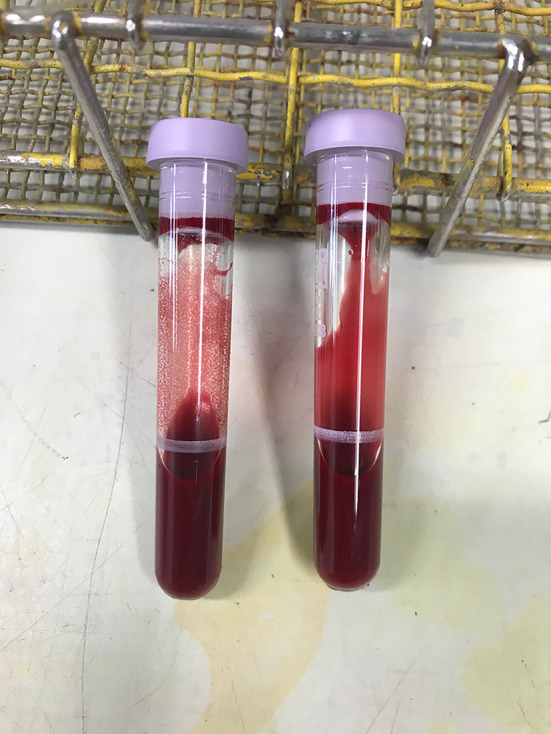
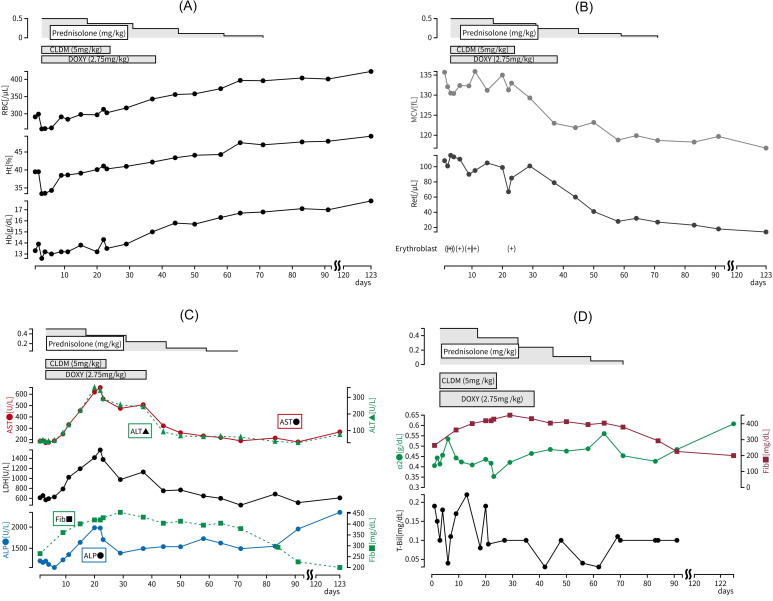
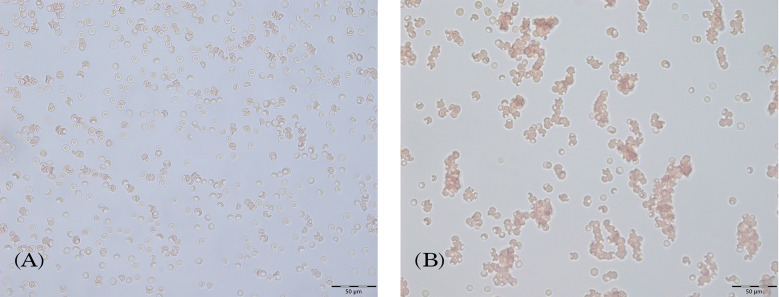
Cold agglutinin disease, one of the serological classifications of immune-mediated hemolytic anemia, is caused by the production of autoantibodies that react with erythrocytes at low temperatures. A captive bottlenose dolphin presented with regenerative and hemolytic anemia. Anticoagulated whole blood was agglutinated at room temperature (approximately 18°C), with reversal of agglutination on warming to 37°C, indicating the presence of cold agglutinin. Based on these findings, this animal was diagnosed with cold agglutinin disease. Clindamycin, doxycycline, and prednisolone were administered orally to treat the infection and immune-mediated hemolytic anemia. Anemia gradually improved after initiation of pharmacotherapy, and erythrogenesis slowed as erythroblasts disappeared and reticulocyte count decreased in peripheral blood. This represents the first report of cold agglutinin disease in a cetacean.
Keywords: anemia; cold agglutinin disease; dolphin; immune-mediated hemolytic anemia.
Conflict of interest statement
The authors have nothing to disclose.
Figures
References
-
- Aoki M. 2015. Overview of infectious disease therapeutics; Tetracycline antibiotics. pp.178–183. In: Manual of Infectious Diseases Principle and Practice 3rd ed., Igaku-Shoin, Tokyo.
-
- Bossart GD, Reiderson TH, Dierauf LA, Duffield DA. 2001. Clinical pathology. pp. 383–435. In: CRC Handbook of Marine Mammal Medicine 2nd ed. (Dierauf LA, Gulland FMD eds.), CRC Press, Boca Raton.
-
- Carle SM, Staggs LA, Holmes-Douglas MS, Erwin MD. 2012. Toxoplasma gondii infection in a bottlenose dolphin (Tursiops truncatus) and rough-toothed dolphin (Steno bredanensis) in human care. pp. 14–15. In: IAAAM 43rd Annual Conference proceedings, Atlanta.