


The Indonesian Young-Adult Attachment (IYAA): An audio-video dataset for behavioral young-adult attachment assessment
- PMID: 37780464
- PMCID: PMC10539883
- DOI: 10.1016/j.dib.2023.109599
The Indonesian Young-Adult Attachment (IYAA): An audio-video dataset for behavioral young-adult attachment assessment
Abstract
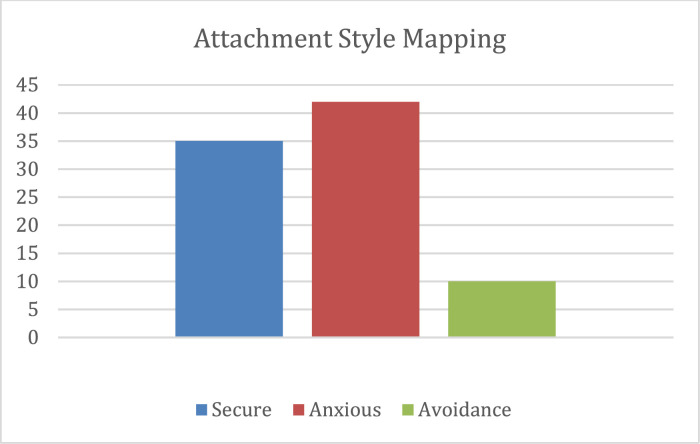
The attachment system is an innate human instinct to gain a sense of security as a form of self-defense from threats. Adults with secure attachment can maintain the balance of their relationships with themselves and significant others such as parents, romantic partners, and close friends. Generally, the adult attachment assessment data are collected primarily from subjective responses through questionnaires or interviews, which are closed to the research community. Attachment assessment from behavioral traits has also not been studied in depth because attachment-related behavioral data are still not openly available for research. This limits the scope of attachment assessment to new alternative innovations, such as the application of machine learning and deep learning-based approaches. This paper presents the Indonesian Young Adult Attachment (IYAA) dataset, a facial expression and speech audio dataset of Indonesian young adults in attachment projective-based assessment. The assessment contains two stages: exposure and response of 14 attachment-based stimuli. IYAA consists of audio-video data from age groups between 18-29 years old, with 20 male and 67 female subjects. It contains 1216 exposure videos, 1217 response videos, and 1217 speech response audios. Each data has a varying duration; the duration for exposure video ranges from 25 seconds to 1 minute 39 seconds, while for response video and speech response audio ranges from 40 seconds to 8 minutes and 25 seconds. The IYAA dataset is annotated into two kinds of labels: emotion and attachment. First, emotion labeling is annotated on each stimulus for all subject data (exposure videos, response videos, speech response audios). Each data is annotated into one or more labels among eight basic emotion categories (neutral, happy, sad, contempt, anger, disgust, surprised, fear) since each attachment-related event involves unconscious mental processes characterized by emotional changes. Second, each subject is annotated into one among three attachment style labels: secure, insecure-anxious, and insecure-avoidance. Given these two kinds of labeling, the IYAA dataset supports several research purposes, either using one kind of label separately or using them together for attachment classification research. It also supports innovative approaches to build automatic attachment classification through collaboration between the study of Behavioral, Developmental, and Social Psychology with Social Signal Processing.
Keywords: Affective computing; Attachment system; Emotion; Facial expression; Multi-modal; Social signal processing; Speech.
© 2023 The Author(s).
Conflict of interest statement
The authors declare that they have no known competing financial interests or personal relationships that could have appeared to influence the work reported in this paper.
Figures
References
-
- Bowlby J. 1958. The Nature of the Child's Tie to His Mother; pp. 350–373. no. 39. - PubMed
-
- Mikulincer M., Shaver P.R. 2016. Attachment in Adulthood, Second Edition: Structure, Dynamics, and Change.
-
- Bowlby J. 1969. Attachment and Loss: Attachment Vol 1.
LinkOut - more resources
Full Text Sources
