Meta-Analysis
. 2023 Oct 3;330(13):1255-1265.
doi: 10.1001/jama.2023.17465.

Adherence to CPAP Treatment and the Risk of Recurrent Cardiovascular Events: A Meta-Analysis

Affiliations
Meta-Analysis

Adherence to CPAP Treatment and the Risk of Recurrent Cardiovascular Events: A Meta-Analysis

Manuel Sánchez-de-la-Torre et al. JAMA. .

Abstract

Importance: The effect of continuous positive airway pressure (CPAP) on secondary cardiovascular disease prevention is highly debated.

Objective: To assess the effect of CPAP treatment for obstructive sleep apnea (OSA) on the risk of adverse cardiovascular events in randomized clinical trials.

Data sources: PubMed (MEDLINE), EMBASE, Current Controlled Trials: metaRegister of Controlled Trials, ISRCTN Registry, European Union clinical trials database, CENTRAL (Cochrane Central Register of Controlled Trials), and ClinicalTrials.gov databases were systematically searched through June 22, 2023.

Study selection: For qualitative and individual participant data (IPD) meta-analysis, randomized clinical trials addressing the therapeutic effect of CPAP on cardiovascular outcomes and mortality in adults with cardiovascular disease and OSA were included.

Data extraction and synthesis: Two reviewers independently screened records, evaluated potentially eligible primary studies in full text, extracted data, and cross-checked errors. IPD were requested from authors of the selected studies (SAVE [NCT00738179], ISAACC [NCT01335087], and RICCADSA [NCT00519597]).

Main outcomes and measures: One-stage and 2-stage IPD meta-analyses were completed to estimate the effect of CPAP treatment on risk of recurrent major adverse cardiac and cerebrovascular events (MACCEs) using mixed-effect Cox regression models. Additionally, an on-treatment analysis with marginal structural Cox models using inverse probability of treatment weighting was fitted to assess the effect of good adherence to CPAP (≥4 hours per day).

Results: A total of 4186 individual participants were evaluated (82.1% men; mean [SD] body mass index, 28.9 [4.5]; mean [SD] age, 61.2 [8.7] years; mean [SD] apnea-hypopnea index, 31.2 [17] events per hour; 71% with hypertension; 50.1% receiving CPAP [mean {SD} adherence, 3.1 {2.4} hours per day]; 49.9% not receiving CPAP [usual care], mean [SD] follow-up, 3.25 [1.8] years). The main outcome was defined as the first MACCE, which was similar for the CPAP and no CPAP groups (hazard ratio, 1.01 [95% CI, 0.87-1.17]). However, an on-treatment analysis by marginal structural model revealed a reduced risk of MACCEs associated with good adherence to CPAP (hazard ratio, 0.69 [95% CI, 0.52-0.92]).

Conclusions and relevance: Adherence to CPAP was associated with a reduced MACCE recurrence risk, suggesting that treatment adherence is a key factor in secondary cardiovascular prevention in patients with OSA.


Conflict of interest statement

Conflict of Interest Disclosures: Dr Adams reported receiving grants from the National Health and Medical Research Institute during the conduct of the study and grants from the National Health and Medical Research Institute, ResMed Foundation, The Hospital Research Foundation, and Flinders Foundation; nonfinancial support from Philips Equipment; and personal fees from SomnoMed outside the submitted work. Dr Labarca reported receiving grants from the National Institutes of Health/National Heart, Lung, and Blood Institute, CHEST Foundation, Sleep Research Society, ResMed Foundation, and American Academy of Sleep Medicine outside the submitted work. Dr Thunström reported receiving lecture fees from ResMed. Dr Peker reported receiving grants from ResMed Foundation for the RICCADSA trial outside the submitted work. Dr Anderson reported receiving grants from National Health and Medical Research Council of Australia and fellowships to his institution during the conduct of the study and grants from Medical Research Council of UK, Penumbra, and Takeda paid to his institution outside the submitted work. Dr McEvoy reported receiving grants from the National Health and Medical Research Council during the conduct of the study. Dr Barbé reported receiving grants from ResMed, the Health Research Fund, Spanish Ministry of Health, Sociedad Española de Neumología y Cirugía Torácica, Societat Catalana de Pneumologia, Esteve Teijin (Spain), Oxigen Salud (Spain), and ALLER during the conduct of the study. No other disclosures were reported.

Figures

Figure 1.
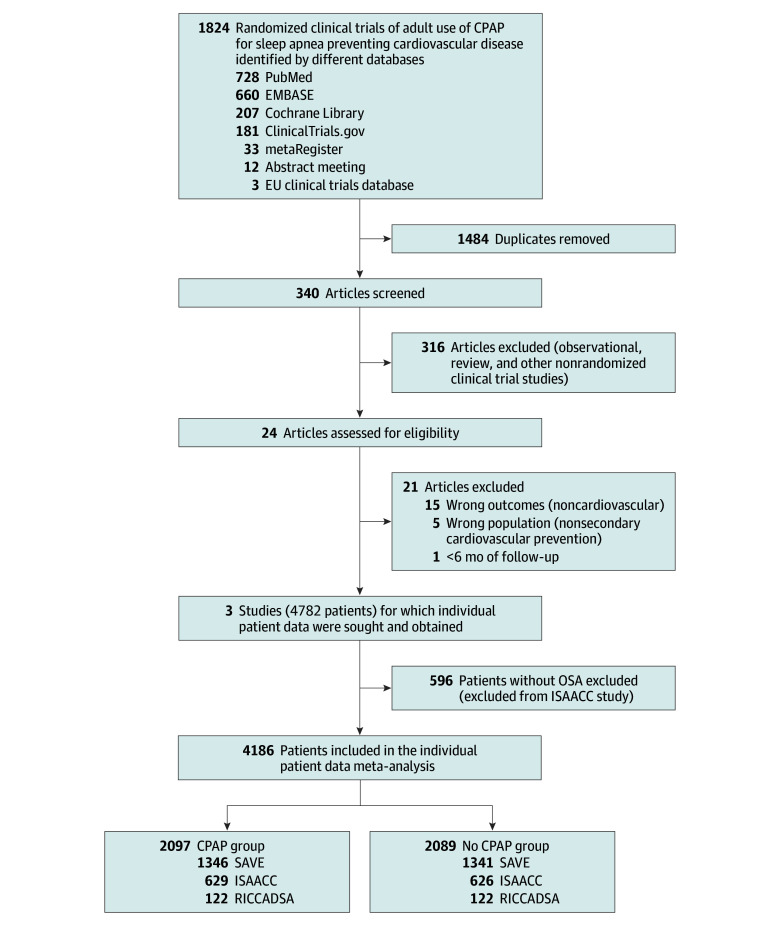
Figure 1.. Selection of Randomized Trials Evaluating the Effect of the Use of CPAP on Major Cardiovascular and Cerebrovascular Adverse Events
CPAP indicates continuous positive airway pressure; EU, European Union; ISAACC, Impact of Sleep Apnea Syndrome in the Evolution of Acute Coronary Syndrome; OSA, obstructive sleep apnea; RICCADSA, Randomized Intervention With CPAP in Coronary Artery Disease and Sleep Apnea; and SAVE, Sleep Apnea cardioVascular Endpoints.
Figure 2.
Figure 2.. Cumulative Incidence of MACCEs and CPAP Adherence Over Time in the Individual Participant Data Meta-Analysis
A, Cumulative incidence from the 1-stage individual participant data meta-analysis of a first primary major adverse cardiac and cerebrovascular events (MACCEs); a composite of cardiovascular death, nonfatal acute myocardial infarction, nonfatal stroke, hospital admission for heart failure, and new hospitalization for unstable angina or transient ischemic attack) in the group that received continuous positive airway pressure (CPAP) and in the group with no CPAP. Mixed-effects Cox proportional hazards model adjusted by clinical trial as random effects. The median follow-up time was 37 months (IQR, 24.1-56.2). B, CPAP adherence (hours/d) during follow-up. Box-and-whiskers plot showing median (IQR), 1.5 times the IQR. Blue smooth line over time was performed using generalized additive model.
Figure 3.
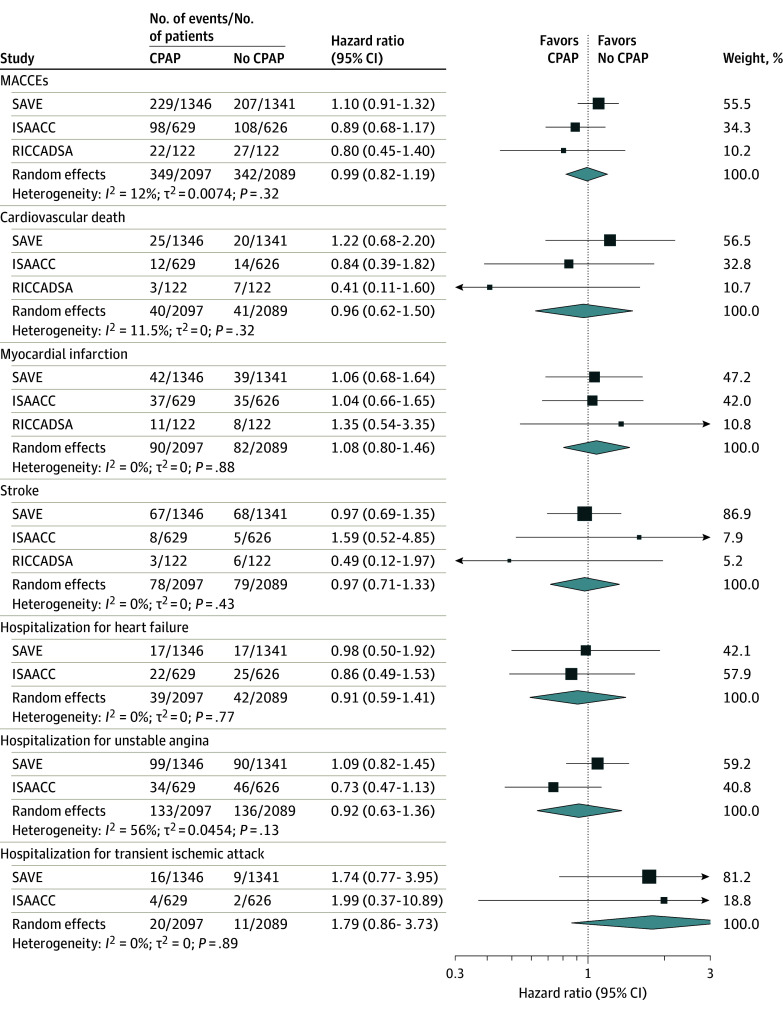
Figure 3.. Overall Hazard Ratio Forest Plot From the 2-Stage IPD Meta-Analysis for MACCEs and Individual Components
Forest plot from the 2-stage individual participant data (IPD) meta-analysis showing the hazard ratio (95%CI) for the major adverse cardiac and cerebrovascular events (MACCEs) and for individual components of the MACCEs. Repeat revascularization was excluded because it was only included in the RICADSSA trial. The area of the squares is proportional to the study weight and diamonds represent pooled hazard ratios (95% CIs). The dashed line depicts a null effect. ISAACC indicates Impact of Sleep Apnea Syndrome in the Evolution of Acute Coronary Syndrome; RICCADSA, Randomized Intervention With CPAP in Coronary Artery Disease and Sleep Apnea; and SAVE, Sleep Apnea Cardiovascular Endpoints.

Comment in

References

    1. Benjafield AV, Ayas NT, Eastwood PR, et al. Estimation of the global prevalence and burden of obstructive sleep apnoea: a literature-based analysis. Lancet Respir Med. 2019;7(8):687-698. doi: 10.1016/S2213-2600(19)30198-5 - DOI - PMC - PubMed
    1. Sánchez-de-la-Torre M, Campos-Rodriguez F, Barbé F. Obstructive sleep apnoea and cardiovascular disease. Lancet Respir Med. 2013;1(1):61-72. doi: 10.1016/S2213-2600(12)70051-6 - DOI - PubMed
    1. Hu X, Fan J, Chen S, Yin Y, Zrenner B. The role of continuous positive airway pressure in blood pressure control for patients with obstructive sleep apnea and hypertension: a meta-analysis of randomized controlled trials. J Clin Hypertens (Greenwich). 2015;17(3):215-222. doi: 10.1111/jch.12472 - DOI - PMC - PubMed
    1. Barbé F, Durán-Cantolla J, Sánchez-de-la-Torre M, et al. ; Spanish Sleep and Breathing Network . Effect of continuous positive airway pressure on the incidence of hypertension and cardiovascular events in nonsleepy patients with obstructive sleep apnea: a randomized controlled trial. JAMA. 2012;307(20):2161-2168. doi: 10.1001/jama.2012.4366 - DOI - PubMed
    1. Labarca G, Schmidt A, Dreyse J, et al. Efficacy of continuous positive airway pressure (CPAP) in patients with obstructive sleep apnea (OSA) and resistant hypertension (RH): systematic review and meta-analysis. Sleep Med Rev. 2021;58:101446. doi: 10.1016/j.smrv.2021.101446 - DOI - PubMed

Publication types

Associated data