


Opioid prescription rates associated with surgery among adolescents in the United States from 2015 to 2020
- PMID: 37789737
- PMCID: PMC10872763
- DOI: 10.1111/pan.14753
Opioid prescription rates associated with surgery among adolescents in the United States from 2015 to 2020
Abstract
Introduction: The United States currently faces an epidemic of opioid misuse which extends to adolescent surgical populations. Opioid prescriptions after surgery are associated with persistent opioid use and serve as a reservoir for diversion. However, it is unclear what proportion of opioid prescriptions are surgical, and little is known about trends in opioid prescription rates associated with surgery in adolescents in the United States. This study aims to describe national trends in postsurgical opioid prescription rates over time among adolescents in the United States.
Methods: We conducted a population-based cross-sectional analysis of data captured in the Medical Expenditure Panel Survey (MEPS) from 2015 to 2020. MEPS classified adolescents 10-19 years of age (n = 26 909) as having a surgical procedure if they had any inpatient, outpatient, or emergency department visit during which a surgical procedure was performed.
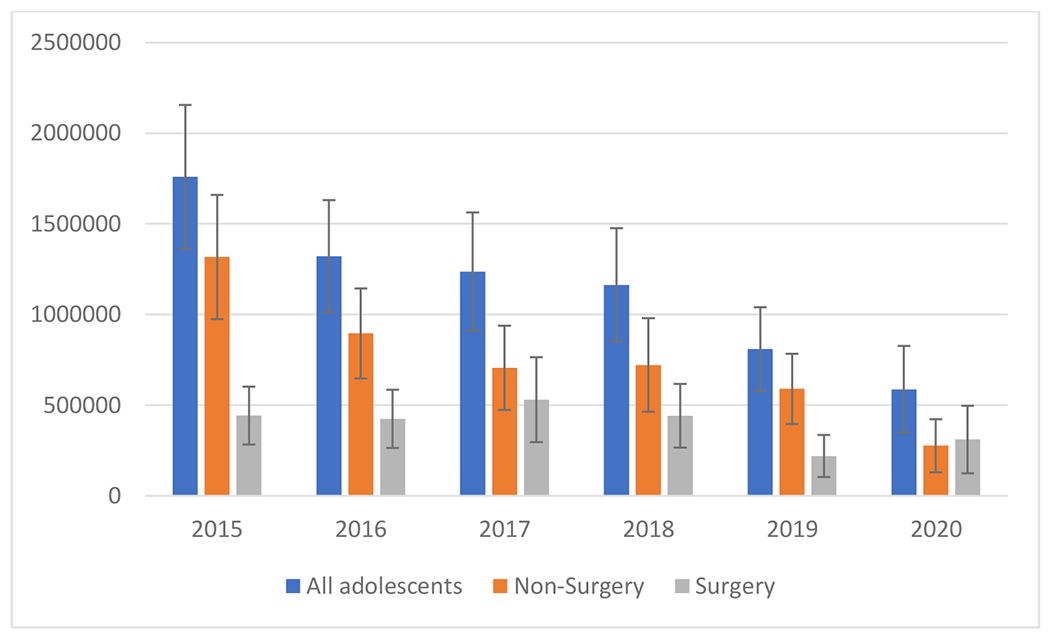
Results: Mean age (SD) of the sample was 14.4 (0.01) years. Sociodemographic characteristics were representative of the USA adolescent population. In total, 4.7% of adolescents underwent a surgical procedure. The surgery rate remained stable between 2015 (4.3%): and 2020 (4.4%) and was lower among minority populations. The combined rate of opioid prescribing for surgical and nonsurgical indications significantly decreased from 4.1% in 2015 to 1.4% in 2020 among all adolescents, an estimated difference of 2.7% (95% confidence interval (CI): 1.7%-3.7%, p < .0001). However, opioid prescribing for surgery remained relatively stable (1% in 2015 vs. 0.8% in 2020).
Discussion: Opioid prescription rates associated with surgery remained stable between 2015 and 2020 in the United States, despite significant decreases in prescribing among nonsurgical populations. Surgery is now a leading source of medical prescribed opioids among adolescents. Secondary findings included a stable trend in surgery utilization between 2015 and 2020, as well as continued racial disparities, both in terms of surgery utilization and opioid prescribing.
Conclusion: The large number of adolescents being prescribed opioids for surgery in the USA each year, suggests there is a need for national guidelines aimed at adolescent opioid use, similar to the recent CDC guidelines aimed at adult opioid use.
Keywords: adolescents; opioid; surgery.
© 2023 John Wiley & Sons Ltd.
Conflict of interest statement
Figures
References
-
- C.S. Mott Children’s Hospital National Poll on Children’s Health. Narcotics in the medicine cabinet: provider talk is key to lower risk, volume 26:4. Published May 2016. . Available at: https://mottpoll.org/sites/default/files/documents/051616_painmeds.pdf Accessed December 7, 2022
-
- Center for Behavioral Health Statistics and Quality. (2022). Results from the 2021 National Survey on Drug Use and Health: Detailed tables. Substance Abuse and Mental Health Services Administration.
-
- Ali MM, Dowd WN, Classen T, Mutter R, Novak SP. Prescription drug monitoring programs, nonmedical use of prescription drugs, and heroin use: Evidence from the National Survey of Drug Use and Health. Addict Behav. 69:65–77, 2017 - PubMed
-
- Cordray H, Galvin J, Clark A, Alfonso K, Prickett KK. Opioid Prescribing Trends After Major Pediatric Ear Surgery: A 12-Year Analysis. Laryngoscope. 2022 - PubMed
MeSH terms
Substances
Grants and funding
LinkOut - more resources
Full Text Sources
Medical
